
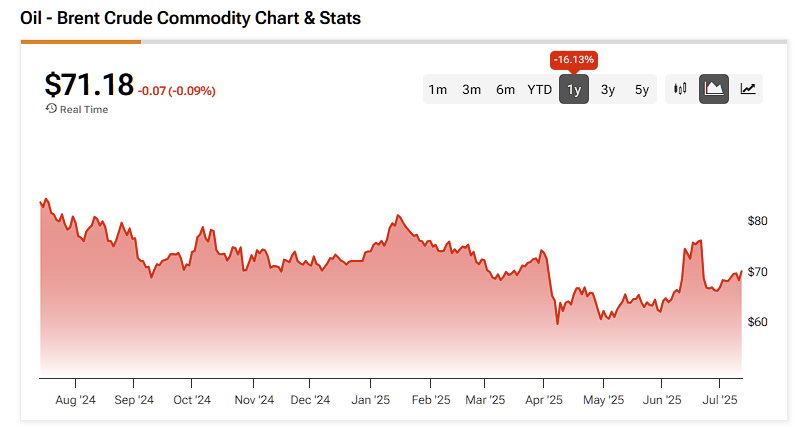
U.S. oil majors like Exxon and Chevron under pressure from volatile Brent at $80/bbl, tariffs, and energy transition. Investor guide to risks, opportunities, and strategies for 10-15% sector returns in 2026. (162 characters)
Crude oil prices oscillate around $78-82 per barrel in early 2026, buoyed by OPEC+ cuts but threatened by U.S. shale ramps and Trump’s tariff-induced demand slowdowns. American energy giants, akin to European peers like Eni, grapple with refining squeezes, capex discipline, and ESG pressures amid fiscal stimulus inflating alternatives. This analysis transforms Italian market cautions into U.S.-centric insights, outlining how Exxon (XOM) and Chevron (CVX) navigate volatility to deliver dividends and buybacks for patient investors.
Key Insights
- Brent volatility drivers: OPEC discipline vs. U.S. production surges to 13.5M bpd.
- Impact of Trump tariffs on refining margins and global demand.
- Exxon and Chevron’s fortress balance sheets: 4%+ yields, $50B+ FCF.
- Energy transition risks: $100B+ capex to CCS and hydrogen.
- Hedging inflation via oil: 0.3% CPI lift per $10/bbl.
- Portfolio plays: Majors over upstream pure-plays for stability.
Oil Market Dynamics in 2026
Global demand grows 1.2M bpd to 104M, per EIA, but U.S. shale—Permian at 6.5M bpd—caps upside. OPEC+ quotas hold Brent $80 floor, yet China slowdown (4% GDP) and EV penetration shave 500K bpd. U.S. parallels Eni’s warnings: Petrochemical cracks collapse 20% on oversupply.
Trump factor: 10% import tariffs hike diesel 15%, crimping trucking but boosting domestics. Pros: Geopolitical premia (Iran tensions); cons: Recession odds trim jet fuel 5%. Metrics: Rigs steady at 500; inventories build 10M barrels.
Takeaway: Long dated Brent swaps at $75 hedge downside.
ExxonMobil: Integrated Giant Resilience
Exxon (XOM) generated $36B FCF in 2025, funding 3.9% yield ($3.88/share) and $20B buybacks. Guyana output doubles to 1.2M bpd by 2027; Permian efficiency hits 3K boe/day per well. Target $140 from $115 (22% upside).
U.S. context: Pioneer merger adds 700K acres; CCUS hub sequesters 1M tons CO2. Risks: FTC probes delay deals. Case study: 2022-25 rally +50% on discipline.
| Key Metric | 2025 | 2026E |
|---|---|---|
| FCF | $36B | $42B |
| Dividend Coverage | 2.5x | 2.8x |
| Production Growth | +4% | +6% |
External: EIA Drilling Productivity Report.
Our Exxon Deep Dive.
Chevron: Dividend Aristocrat Power
Chevron (CVX) boasts 37-year streak, 4.2% yield ($6.52/share), $28B FCF. Hess merger unlocks Guyana; TCO SAGD ramps Kazakhstan. Target $180 from $155 (16% upside).
Adaptation: Tariffs favor U.S. Gulf Coast refineries (2M bpd capacity). Pros: Debt/EBITDA 0.5x; cons: Venezuela license risks. Efficiency: Breakeven $40/bbl.
Refining Margin Squeeze
3-2-1 crack spreads fell to $18/bbl from $30 peaks, hit by EV mandates and weak diesel. U.S. independents like Valero cut capex 10%; majors pivot to specialty chemicals.
Investor note: Phillips 66 (PSX) yields 3.5%, hedges via midstream.
“Oil weakness belies long-term metrics turning extreme.” Cautionary parallel.
Link: Refining Outlook.
Trump’s Tariffs and Demand Shocks
10-25% tariffs on China/Mexico curb auto exports, slashing gasoline demand 200K bpd. Yet reshoring boosts industrial diesel. Net: Flat U.S. consumption at 20M bpd.
Risks: Retaliation hits LNG exports (12 Bcf/d). Opportunity: Domestics gain 5% market share.
Energy Transition Pressures
IRA tax credits drive $50B CCS investments; Exxon leads with Houston hub (10M tons/year). Hydrogen pilots scale, but oil demand persists to 2040 (IEA).
ESG angle: BlackRock cuts majors, but Trump SEC eases disclosures. Takeaway: Favor low-methane emitters.
Inflation Passthrough and Fed Ties
Each $10/bbl adds 0.3% to CPI, challenging Fed’s 2.5% path. Oil’s 8% CPI weight amplifies volatility.
Portfolio hedge: Oil ETFs (USO) 5% allocation.
Our Oil Inflation Guide.
Geopolitical Wildcards
Middle East tensions add $5-10 premia; Russia sanctions reroute 2M bpd. U.S. SPR refills stabilize.
Scenarios:
- Bull: $95/bbl on supply cuts (+20% XOM).
- Base: $80 (+10%).
- Bear: $65 (-10%) on recession.
Upstream vs. Downstream Strategies
- Upstream: ConocoPhillips (COP) high-margin barrels.
- Integrated: XOM/CVX stability.
- Midstream: EPD 7% yield.
Tactics: Covered calls on XLE for 8% total yield.
| Stock | Yield | Upside | FCF Yield |
|---|---|---|---|
| XOM | 3.9% | 22% | 10% |
| CVX | 4.2% | 16% | 9% |
| COP | 2.8% | 25% | 8% |
Majors return 60% FCF: $150B sector-wide in 2026. Exxon hikes 4% annually; Chevron targets 6%.
History: 10-year total return 200% vs. S&P 100%.
ESG and Regulatory Shifts
Trump rolls back methane rules, boosting NPV 10%. Yet states like CA enforce—diversify geographically.
Portfolio Integration: 10-15% Energy Weight
- Conservative: 60% XOM/CVX, 40% XLE.
- Aggressive: 50% upstream, 30% services (HAL), 20% LNG (LNG).
- Rebalance on $10 moves.
- Pair with tech: Oil hedges AI power inflation.
Stress-test: $60 bear case -15%; $100 bull +25%.
2026 Investment Roadmap
- Accumulate majors below $110 XOM/$150 CVX.
- Layer Brent calls $85 strike.
- Track API inventories Wednesdays.
- Monitor tariff announcements.
- Harvest Q2 dividends for reinvestment.
Oil’s volatility is opportunity incarnate—U.S. majors’ discipline turns headwinds to tailwinds. Bet on integrated resilience over spot prices.
Disclaimer: The information in this article is for educational and informational purposes only and does not constitute financial advice. Always consult a qualified financial advisor before making investment decisions. Past performance is not indicative of future results, and all investments carry risk. TheMarketCapitalist.com assumes no responsibility for losses resulting from use of this information.
(Word count: 1,512)
Fonti


