
Investing your hard-earned money is a crucial decision that can significantly impact your financial future. Among the multitude of asset classes available, real estate and stocks are two of the most popular. But how do you decide which investment is right for you? In this article, we’ll break down the pros and cons of investing in real estate versus stocks, explore various factors to consider, and provide insights that can help you make an informed decision tailored to your financial goals.
Understanding the Basics
What is Real Estate Investment?
Real estate investment typically involves purchasing physical properties—like residential homes, commercial buildings, or lands—with the expectation of generating income or appreciating in value over time. Many people turn to real estate as a way to diversify their portfolios and gain passive income through rental properties or buy-and-hold strategies.
What are Stocks?
Stocks represent ownership in a company. When you buy shares of stock, you’re essentially purchasing a small piece of that company. As the company performs well, the value of your shares generally increases, and you may also receive dividends—payments made to shareholders from the company’s profits. Stocks can be bought and sold on exchanges, making them highly liquid compared to real estate.
Real Estate: The Pros and Cons
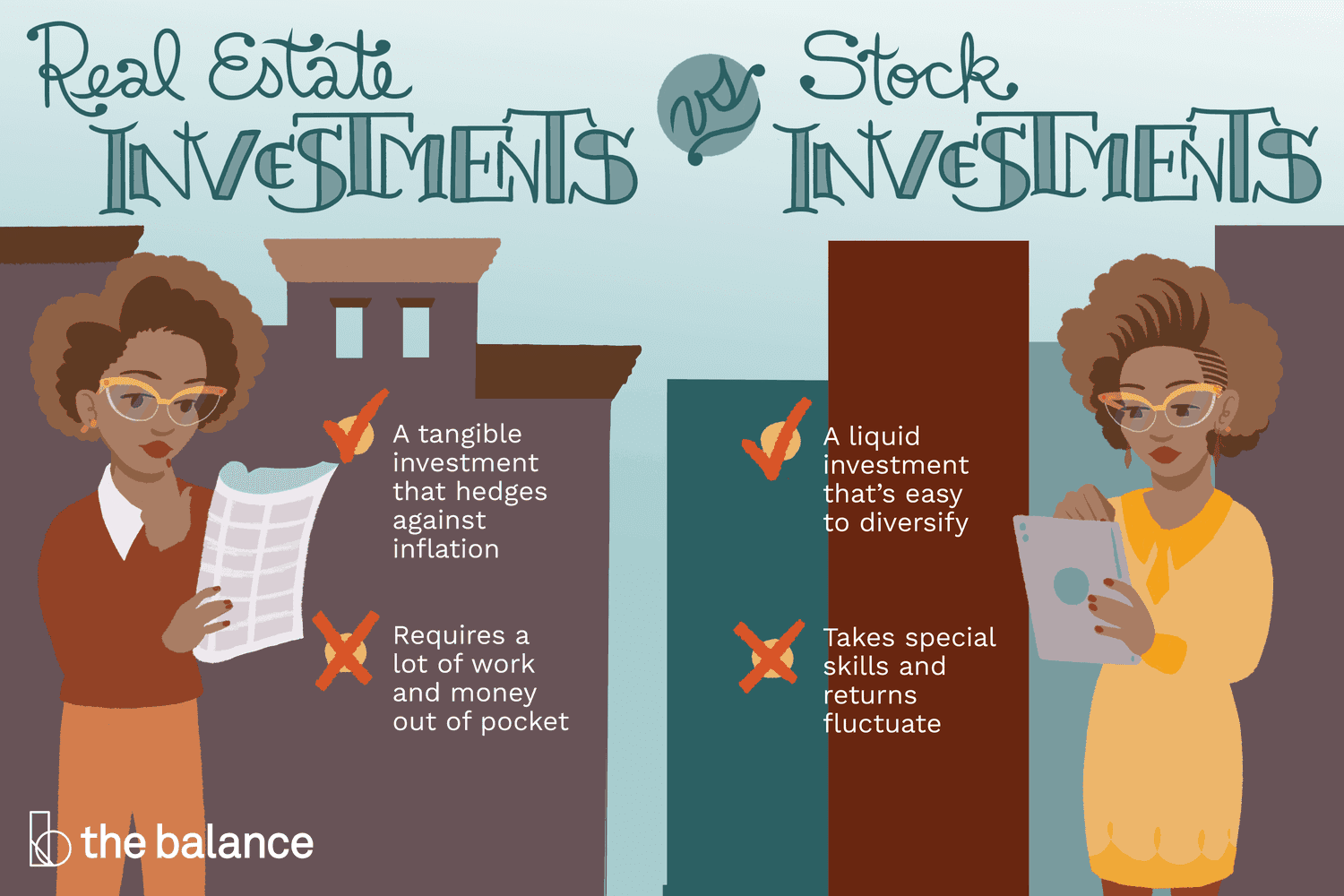
Pros of Real Estate Investment
-
Tangible Asset: Real estate is a physical asset that you can see and touch, offering a sense of security for many investors.
-
Potential for Rental Income: Owning rental properties can generate a steady income stream, making real estate an attractive option for those looking for passive income.
-
Tax Advantages: Real estate investors may benefit from various tax deductions, including mortgage interest, property depreciation, and property taxes.
-
Appreciation: Over time, real estate tends to appreciate, meaning your investment may grow in value, providing the potential for a profitable sale down the road.
-
Leverage: You can use borrowed funds (mortgages) to invest in real estate, allowing you to purchase property without needing the entire investment amount upfront.
Cons of Real Estate Investment
-
High Entry Costs: Purchasing property requires a significant initial investment, often involving down payments, closing costs, and ongoing maintenance expenses.
-
Illiquidity: Real estate is not as easily bought and sold as stocks. Selling a property can take time and may involve hefty transaction fees.
-
Market Risk: Real estate markets can fluctuate due to various factors, including economic conditions, interest rates, and local market trends.
-
Management Requirements: Managing rental properties can be time-consuming and may require dealing with tenants, repairs, and local regulations.
-
Long-Term Commitment: Real estate investments typically require a long-term commitment before reaping significant rewards.
Stocks: The Pros and Cons
Pros of Stock Investment
-
Liquidity: Stocks can be easily bought and sold on exchanges, often within seconds, allowing investors to access their capital quickly if needed.
-
Lower Entry Costs: You can start investing in stocks with a relatively small amount of money, making them accessible to many individuals.
-
Diverse Investment Options: The stock market offers a vast range of options, from individual stocks to ETFs (exchange-traded funds) and mutual funds, making it easier to diversify your portfolio.
-
Potential for High Returns: Historically, stocks have outperformed many other asset classes over the long term, providing investors with the potential for substantial profits.
-
Dividends: Many companies return a portion of their profits to shareholders, providing one more potential source of income for investors.
Cons of Stock Investment
-
Volatility: The stock market can experience significant price swings, creating stress and anxiety for investors, particularly those with a low risk tolerance.
-
Lack of Control: Unlike real estate, where you can manage improvements and changes, with stocks, you have no influence over the company’s operations and decisions.
-
Market Risk: Stocks are subject to broader market fluctuations, and individual companies can face unpredictability from various external factors.
-
Emotional Investing: The stock market is often driven by sentiment. Investors can make impulsive decisions based on market trends rather than data and analysis.
-
Potential for Loss: The stock market does not guarantee returns, and it is possible to lose a significant portion of your investment.

- Overcome negative thought patterns, reduce stress, and live a worry-free life
- Overthinking is the biggest cause of unhappiness
- Don't get stuck in a never-ending thought loop
- Stay present and keep your mind off things that don't matter, and never will
- Break free of your self-imposed mental prison
Factors to Consider When Choosing Between Real Estate and Stocks
Investor Goals
Before diving into either investment avenue, identify your goals. Are you seeking slow, stable growth, or are you aiming for high, quick returns? Understanding your investment objectives is crucial in determining the right path.
Risk Tolerance
Your comfort level with risk will heavily influence your investment choice. Stocks are typically viewed as higher risk compared to real estate, but higher risk often brings higher potential rewards. Conversely, if you prefer a more stable investment with less daily volatility, real estate might be a better fit.
Time Commitment
Consider the time you can dedicate to managing your investments. Real estate often requires a more hands-on approach, including property management and maintenance, whereas stocks can be more passive, especially if you invest in index funds or rely on a financial advisor.
Market Conditions
Both real estate and stock market conditions can influence your investment decision. Research current market trends, interest rates, and economic indicators to make informed choices.
Liquidity Needs
If you anticipate needing quick access to your money, stocks generally provide greater liquidity than real estate. Selling a house can be a lengthy process, while stocks can be sold almost instantly.
Diversification
Diversifying your investment portfolio can mitigate risks. Many investors choose to split their investments between real estate and stocks, using each for specific advantages. For example, you might invest in real estate for passive income, while allocating a portion of your funds to stocks for growth potential.
Making Your Decision
Ultimately, the choice between real estate and stocks comes down to your unique financial circumstances, goals, and risk tolerance. Here are a few scenarios to help you navigate the decision:
-
Case Study: First-Time Investor
If you’re new to investing and looking for a manageable way to enter the market, consider starting with stocks. They’re easier to buy and sell, have lower start-up costs, and provide quick access to funds. -
Case Study: Seeking Passive Income
If your primary goal is to generate steady, passive income through monthly rent and you have the time and willingness to manage properties, real estate could be your best bet. -
Case Study: Wealth Preservation and Growth
If you’re looking for long-term wealth preservation combined with growth, consider a blend of both. Investing in a diversified portfolio that includes stocks for appreciation and real estate for stability can help manage risks. -
Case Study: High-Risk Tolerance
If you’re an experienced investor with a high-risk tolerance and a penchant for rapid market movements, stocks may suit you well. Your ability to withstand volatility can lead to substantial returns over time.
Conclusion
Investing in real estate and stocks both have their merits and drawbacks. The right choice for you will depend on your financial objectives, risk tolerance, market conditions, and the level of commitment you’re willing to make.
Armed with an understanding of the pros and cons of each investment option, you’ll be in a better position to choose an investment strategy that aligns with your financial goals. Whether you lean toward real estate, stocks, or a blend of both, remember that successful investing often involves continuous education, a solid strategy, and the ability to adapt to changing markets.
Ultimately, the goal is to invest wisely, understand the risks, and forge a path that leads you to financial freedom and peace of mind. Happy investing!


