
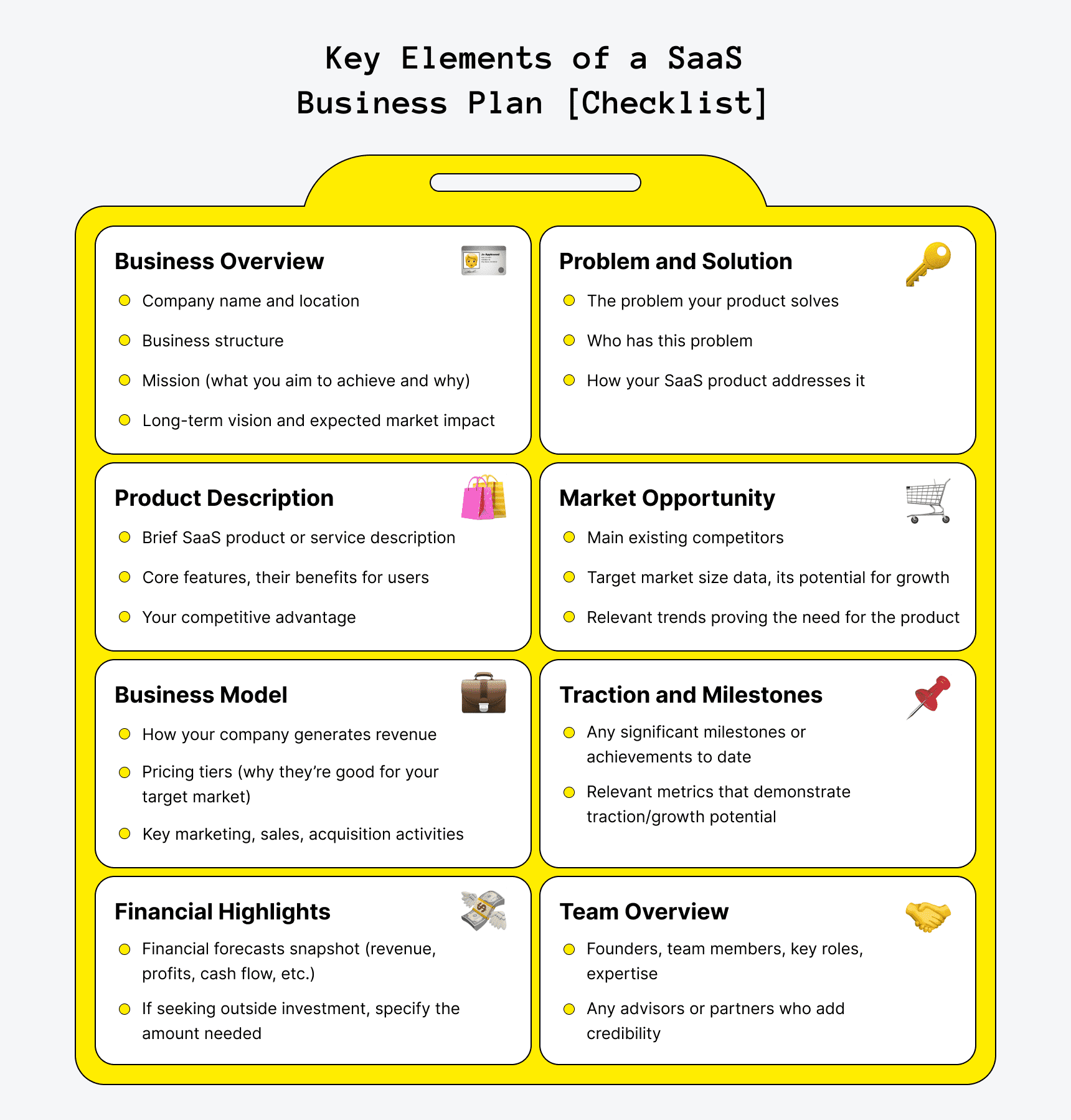
Starting a Software as a Service (SaaS) business is an exciting venture, but it can also be daunting. One of the most important aspects of a successful SaaS startup is having a comprehensive business plan that incorporates key financial metrics. Understanding these metrics is critical not just for securing funding but also for managing your business effectively as it grows. In this article, we will explore the essential SaaS financial metrics that should be included in your startup business plan to help you lay a strong foundation for sustainable growth.
Understanding SaaS Financial Metrics
Before delving into specific metrics, it’s crucial to understand why they matter. SaaS businesses often operate on subscription models, which means that revenue is recognized over time rather than upfront. This unique aspect makes traditional financial metrics less applicable, necessitating a new set of KPIs (Key Performance Indicators) tailored to the SaaS model.
Importance of Financial Metrics
-
Investor Insights: Investors rely on financial metrics to evaluate the potential success of your startup. Having accurate and relevant metrics can enhance your credibility.
-
Growth Tracking: Metrics provide insights into your company’s growth trajectory and help you forecast future performance.
-
Decision-Making: They facilitate data-driven decisions, allowing you to allocate resources, scale efficiently, and identify potential risks.
Key SaaS Financial Metrics to Include
Here’s a breakdown of the essential SaaS financial metrics to include in your business plan:
1. Monthly Recurring Revenue (MRR)
What it is: Monthly Recurring Revenue is the total predictable revenue that your business expects to receive each month.
Why it matters: MRR is a cornerstone metric for any SaaS business. It provides a clear picture of revenue stream stability and growth potential. Calculating MRR is relatively straightforward; simply sum up all the recurring revenue generated from active subscriptions.
How to calculate:
[
\text{MRR} = \sum (\text{Monthly Subscription Price} \times \text{Number of Customers})
]
2. Annual Recurring Revenue (ARR)
What it is: Similar to MRR, but annualized, ARR gives a broader view of your recurring revenue over a year.
Why it matters: ARR is especially useful for investors, as it provides a long-term perspective on your revenue potential. It also helps in financial forecasting and planning.
How to calculate:
[
\text{ARR} = \text{MRR} \times 12
]
3. Customer Acquisition Cost (CAC)
What it is: This metric quantifies the total resources spent on acquiring a new customer.
Why it matters: Understanding CAC is essential for assessing the efficiency of your marketing and sales strategies. A lower CAC means you’re spending less to acquire customers, which is crucial for profitability.
How to calculate:
[
\text{CAC} = \frac{\text{Total Marketing Expenses}}{\text{Total New Customers Acquired}}
]
4. Customer Lifetime Value (CLV or LTV)
What it is: The total revenue expected from a customer throughout their relationship with your business.
Why it matters: LTV helps you understand how much you can afford to spend on acquiring customers. Ideally, your CLV should be significantly higher than your CAC to ensure profitability.
How to calculate:
[
\text{CLV} = \text{Average Revenue Per User (ARPU)} \times \text{Customer Lifespan}
]
or more accurately:
[
\text{CLV} = \frac{\text{ARPU}}{1 – \text{Churn Rate}}
]
5. Churn Rate
What it is: The percentage of subscribers who cancel their subscriptions during a given timeframe.
Why it matters: Churn is a critical metric because high churn rates can significantly affect revenue growth. Understanding your churn can help you devise strategies to improve customer retention.
How to calculate:
[
\text{Churn Rate} = \frac{\text{Customers Lost During Period}}{\text{Total Customers at Start of Period}}
]
6. Average Revenue Per User (ARPU)
What it is: The revenue generated per user, averaged over a specific period.
Why it matters: ARPU gives insights into how much value each customer brings to your business, and tracking this metric can help identify opportunities for upselling or cross-selling.

- Overcome negative thought patterns, reduce stress, and live a worry-free life
- Overthinking is the biggest cause of unhappiness
- Don't get stuck in a never-ending thought loop
- Stay present and keep your mind off things that don't matter, and never will
- Break free of your self-imposed mental prison
How to calculate:
[
\text{ARPU} = \frac{\text{Total Revenue}}{\text{Total Customers}}
]
7. Gross Margin
What it is: The difference between revenue and the cost of goods sold (COGS), expressed as a percentage.
Why it matters: A high gross margin reflects operational efficiency and is important for long-term sustainability and profitability.
How to calculate:
[
\text{Gross Margin} = \left( \frac{\text{Revenue} – \text{COGS}}{\text{Revenue}} \right) \times 100
]
8. Net Revenue Retention (NRR)
What it is: This metric measures how much recurring revenue grows or declines from existing customers, factoring in expansions, contractions, and churn.
Why it matters: NRR is a crucial indicator of business health, showing how effectively you’re retaining and growing your customer base.
How to calculate:
[
\text{NRR} = \left( \frac{\text{Existing Revenue at End of Period}}{\text{Recurring Revenue at Start of Period}} \right) \times 100
]
9. Burn Rate
What it is: The rate at which your company is spending its venture capital before reaching profitability.
Why it matters: Understanding your burn rate is essential for managing cash flow, especially in the early stages of your business.
How to calculate:
[
\text{Burn Rate} = \text{Monthly Operating Expenses} – \text{Monthly Revenue}
]
10. Payback Period
What it is: The time it takes to recoup the cost of customer acquisition.
Why it matters: A shorter payback period indicates that your company can quickly turn customer acquisition costs into profits, making your business model more sustainable.
How to calculate:
[
\text{Payback Period} = \frac{\text{CAC}}{\text{Monthly Gross Margin}}
]
How to Use These Metrics in Your Business Plan
Incorporating these financial metrics into your business plan is essential for illustrating the viability and growth potential of your startup. Here’s how to effectively present this information:
1. Executive Summary
Briefly summarize your key metrics, highlighting MRR, LTV, CAC, and churn rate. This snapshot will pique investor interest and set the tone for your financial projections.
2. Market Analysis
In your market analysis section, include benchmark metrics from similar companies to contextualize your projections. This approach demonstrates your understanding of market dynamics and competitive positioning.
3. Financial Projections
Create detailed financial projections for the next three to five years. Use the metrics above to support your revenue forecasts, showing how you expect MRR and ARR to grow as you gain customers.
4. Risks and Challenges
Be honest about the potential risks associated with each metric. For example, if your CAC is high, discuss strategies for improving efficiencies in your marketing channels.
5. Implementation Plan
Outline how you plan to monitor these metrics effectively and make data-driven decisions. Highlight the tools or software you will use to track performance.
Final Thoughts
Understanding and effectively presenting SaaS financial metrics in your startup business plan is fundamental to your success. These metrics not only help potential investors see the viability of your business, but they also provide valuable insights for your operational strategy. By focusing on these key performance indicators, you can track your growth, make informed decisions, and ultimately create a sustainable and profitable SaaS business.
Remember, a well-crafted business plan built on solid financial metrics will be your roadmap for long-term success. Good luck with your SaaS journey! If you need more guidance or resources, don’t hesitate to reach out to professionals in the SaaS space to share their experiences and insights.
This article should set you on the right path as you prepare your SaaS startup’s business plan. With careful consideration of these financial metrics, you’re better equipped to guide your business toward success in an increasingly competitive landscape. Happy planning!


