
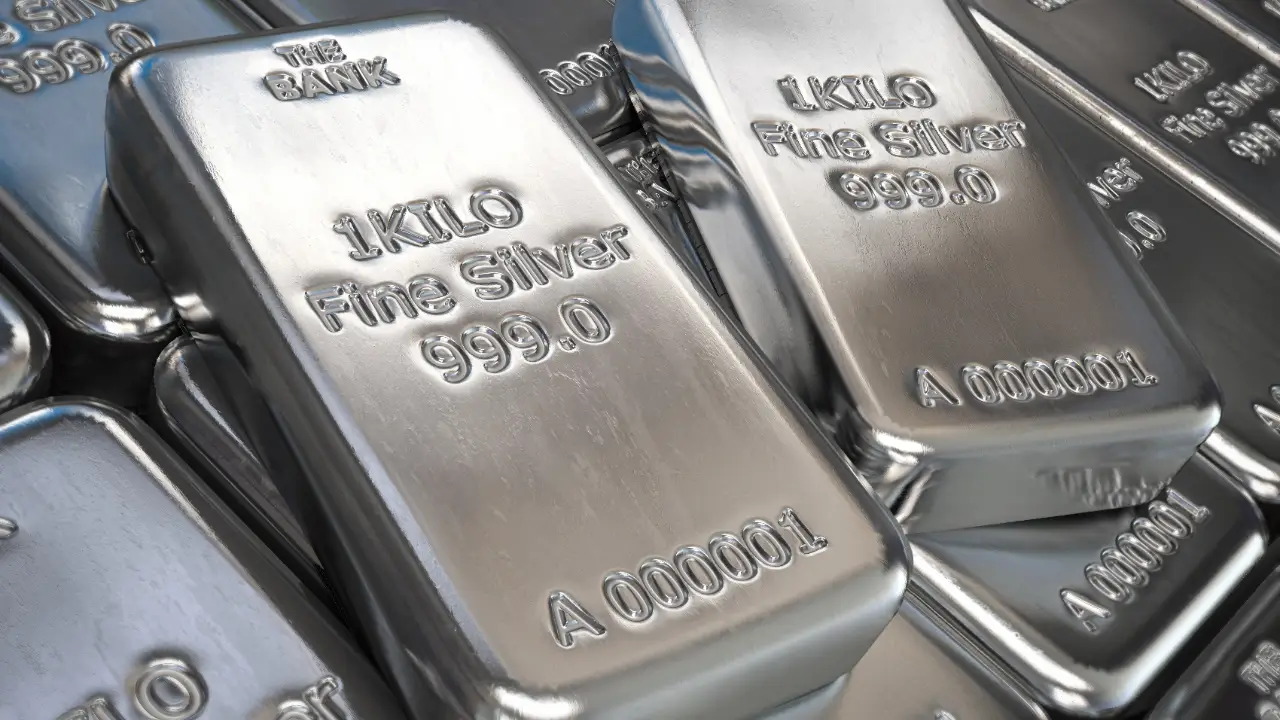
Silver is often overshadowed by gold, but it can move far more dramatically when the right conditions line up. In 2026, several factors are suggesting that silver may be closer to a breakout than many investors realize. Industrial demand, limited supply, and tight inventories are creating a backdrop where the metal could move quickly once sentiment shifts.
For U.S. investors, silver is interesting not because it is a safe‑haven asset alone, but because it is a hybrid of precious metal and industrial commodity. That dual nature makes it sensitive to both macro fear and hard‑headed demand from manufacturers.
Key insights
- Silver is both a precious metal and an industrial input.
- Industrial demand is rising, particularly in energy and electronics.
- Supply tightness can amplify price moves.
- Silver is more volatile than gold.
- U.S. investors can access it through ETFs, futures, and miners.
Why silver matters beyond jewelry
The common image of silver is jewelry and coins, but the reality is far more industrial. Silver plays a role in solar panels, electronics, batteries, and other high‑tech applications. That means demand can grow with the energy transition, digitalization, and the expansion of global infrastructure.
When the industrial cycle is strong, silver demand can rise faster than supply. That imbalance is exactly what many analysts see developing in 2026, as inventories are already lean and production growth is limited.
The industrial‑demand story
Industrial demand is not static. It can ramp up quickly when solar installations, electric vehicles, and data centers are all expanding at the same time. Silver is used in multiple parts of those systems, from conductors and contacts to specialized components. When those sectors grow, the metal’s demand profile improves.
That is especially true in the energy transition space. Solar panels are a major source of silver demand, and if global solar deployment accelerates, the metal’s industrial base grows at the same time as investors look for hedges against inflation and financial stress.
The supply‑side risk
On the supply side, silver is constrained. It is often a by‑product of base‑metal mining rather than a primary focus, which means its production is partly determined by the economics of copper, lead, or zinc. When those metals are in a downturn, silver production can fall even if demand is strong.
That dynamic can create a feedback loop. When supply is tight and demand is rising, price spikes can occur quickly because the market has limited slack. That is why silver often moves faster than more established industrial metals or even gold.
How U.S. investors can participate
American investors have several ways to gain exposure to silver:
- Physical silver and coins: Direct ownership, but with storage and liquidity issues.
- Silver ETFs: Low‑cost, liquid funds that track the metal’s price.
- Miners and exploration stocks: Higher‑risk, higher‑volatility names that benefit from higher silver prices but also carry business risk.
- Futures and options: Derivatives that can be used for speculation or hedging, often with leverage.
Each of these options carries different levels of risk, liquidity, and tracking quality. The choice depends on investment goals, time horizon, and risk tolerance.
The risk and volatility
Silver is a high‑conviction, often high‑volatility asset. It can surge in short periods, but it can also correct sharply. That is why it is usually best treated as a satellite allocation rather than a core holding. Position sizing is critical, because emotional responses are more likely when the metal swings wildly.
Investors should also remember that industrial demand can change quickly if the global economy slows. A recession or a disorderly energy‑transition path could dent silver demand faster than gold demand, which relies more heavily on macro fear and central‑bank buying.
Conclusion
Silver is not a passive, low‑volatility investment, but it may be one of the more compelling opportunities in 2026 if the industrial‑supply story holds up. For U.S. investors willing to accept the volatility, it can add a unique mix of macro and industrial exposure that complements a broader portfolio.
Disclaimer
This article is for educational and informational purposes only and does not constitute financial advice. Always consult a qualified financial advisor before making investment decisions. Past performance is not indicative of future results, and all investments carry risk.


