
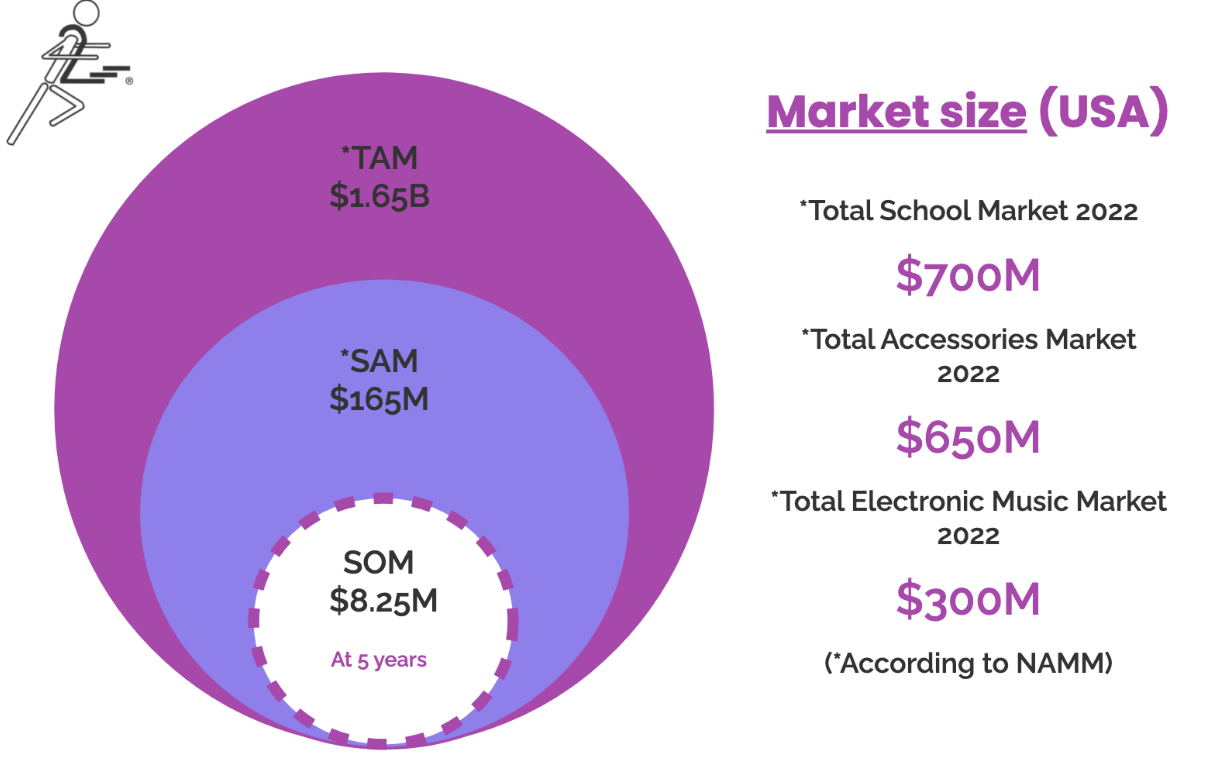
When embarking on the journey of launching a Software as a Service (SaaS) startup, it’s vital to understand the foundational elements that can dictate your success in the market. One of the most critical aspects is understanding the market landscape—including potential customers, revenue possibilities, and market share. Herein lies the significance of TAM, SAM, and SOM—three key acronyms that stand at the core of any efficient SaaS business plan.
As a travel blog magazine, we know that clarity and thoroughness are essential when planning any adventure, whether it be a trip to exotic locations or embarking on a SaaS venture. So, what do these acronyms mean, and how can they be applied to your business plan? In this article, we will delve deep into the concepts of Total Addressable Market (TAM), Serviceable Available Market (SAM), and Serviceable Obtainable Market (SOM), illuminating their roles and offering a framework for you to build a successful SaaS strategy.
Understanding TAM, SAM, and SOM
Let’s break these concepts down one by one, examining their definitions, importance, and how they interrelate.
Total Addressable Market (TAM)
The Total Addressable Market represents the entire revenue opportunity available if your product or service were to realize 100% market share. Essentially, it embodies the total demand for your type of product or service. For instance, if your SaaS product is a project management tool, the TAM would encompass all possible revenues from businesses that require project management solutions.
Importance of TAM
Understanding your TAM provides a big-picture view of your business’s potential growth and scalability. It acts as a guiding star for your strategy, helping you understand where to focus your efforts and resources. A large TAM often indicates a substantial unmet need in the market, creating a robust opportunity for innovative solutions.
How to Calculate TAM
Calculating TAM can be accomplished through several methods:
-
Top-Down Approach: This involves researching industry reports, market research, and existing data to estimate total revenues in your market sector.
-
Bottom-Up Approach: This method begins with current or projected sales, multiplying the average revenue per user (ARPU) by the number of potential users you identify.
-
Value Theory: Here, you calculate the value your product adds—monetarily—to customers and extrapolate this into a market-wide figure.
Serviceable Available Market (SAM)
Next in line is SAM, which is a segment of TAM that can be targeted based on your business model, geographical reach, and product capabilities. It represents the revenues available to your business under ideal circumstances considering specific market constraints.
Importance of SAM
While TAM provides a broad view, SAM offers a more realistic picture of your business’s revenue potential. By focusing on a specific market segment, you’re able to tailor your service offerings and marketing efforts. This valuable data aids in establishing achievable business objectives and informs product development.
How to Calculate SAM
Finding your SAM involves defining your market segment more closely. Consider using the following methods:
-
Market Segmentation: Identify the specific demographics, industries, or verticals that would benefit most from your service.
-
Geographical Focus: Narrow your focus to regions where your SaaS could thrive, accounting for local economic conditions and competition.
-
Industry-Specific Research: Utilize case studies, reports, and surveys to ascertain the needs of specific segments and tailor your solution accordingly.
Serviceable Obtainable Market (SOM)
Finally, taking it a step further, we arrive at the Serviceable Obtainable Market—this is the subset of SAM that you can realistically capture within a specific timeframe. This number is often shaped by your current resources, competition, market trends, and marketing strategies.
Importance of SOM
Understanding your SOM allows you to set logical sales and marketing targets. It helps in forecasting sales more accurately and provides a realistic view of where to allocate resources for maximum effectiveness.

- Overcome negative thought patterns, reduce stress, and live a worry-free life
- Overthinking is the biggest cause of unhappiness
- Don't get stuck in a never-ending thought loop
- Stay present and keep your mind off things that don't matter, and never will
- Break free of your self-imposed mental prison
How to Calculate SOM
Calculating SOM usually involves a few straightforward steps:
-
Assess Competition: Analyze your competitors and their market shares. Understand your positioning relative to them.
-
Set Realistic Goals: Based on your marketing and sales strategies, estimate what percentage of the SAM you believe you can effectively convert into customers over the next period (usually one to five years).
-
Continuous Refinement: Regularly evaluate your assumptions and adjust your SOM based on evolving market conditions and business growth.
Integrating TAM, SAM, and SOM into Your SaaS Business Plan
With a firm grasp of what TAM, SAM, and SOM entail, the next step is to integrate these elements into your SaaS business plan. Here’s how you can accomplish this effectively:
-
Market Research: Start with thorough research that includes surveys, industry reports, competitor analysis, and customer interviews. Understanding their pain points, preferences, and needs will improve your estimates of TAM, SAM, and SOM.
-
Clear Strategies: Each of these market segments should inform your business strategies. For instance, if you discover a vast TAM but a narrow SAM, focus on narrowing your target market without losing sight of opportunities to expand.
-
Business Goals: Integrating these concepts into your business goals helps ensure they are aligned with market realities. Rather than vague objectives, crystallize your goals based on measurable targets derived from SOM.
-
Marketing Efforts: Tailor marketing campaigns around your SAM and SOM to ensure that you’re reaching the right audience effectively and efficiently.
-
Sales Forecasting: Use these insights to inform your financial projections. Consider the challenges associated with moving from TAM to SAM and ultimately to SOM, as variances can arise.
-
Regular Re-evaluation: As a travel blogger reconsiders routes and travel plans based on new information, be prepared to revisit and adjust your TAM, SAM, and SOM as market conditions evolve.
Real-world Examples
To further contextualize TAM, SAM, and SOM, let’s consider a few hypothetical SaaS businesses:
Example 1: An Online Booking System for Travel Agencies
- TAM: The overall global market for travel agency software solutions, valued at $10 billion.
- SAM: The market available within the U.S. and Europe, estimated at $4 billion due to travel agencies primarily operating in these regions.
- SOM: Based on competitive analysis and marketing strategy, the startup could realistically target $100 million within its launch year.
Example 2: A Project Management Tool for Small Businesses
- TAM: All possible project management tool revenues globally, with estimates reaching around $30 billion.
- SAM: The specific market of small businesses in the U.S. valuing $6 billion, particularly focusing on industries like marketing and design.
- SOM: Projecting realistic adoption and marketing efforts, the goal may be to capture about $60 million in the first few years.
Conclusion: Mapping the Journey Ahead
Just as a travel blogger meticulously plans out every part of a journey—from destinations to accommodations to itineraries—understanding and effectively utilizing TAM, SAM, and SOM will ensure your SaaS business plan is comprehensive and data-driven. By giving you clarity on the market landscape and providing the necessary targeting strategies, these concepts empower you to set realistic expectations, achieve meaningful objectives, and ultimately navigate the competitive SaaS environment with confidence.
In a world teeming with possibilities, understanding where you fit in the market can mean the difference between merely existing and achieving enduring growth. Equip yourself with this knowledge, and let TAM, SAM, and SOM illuminate your path to success!


