
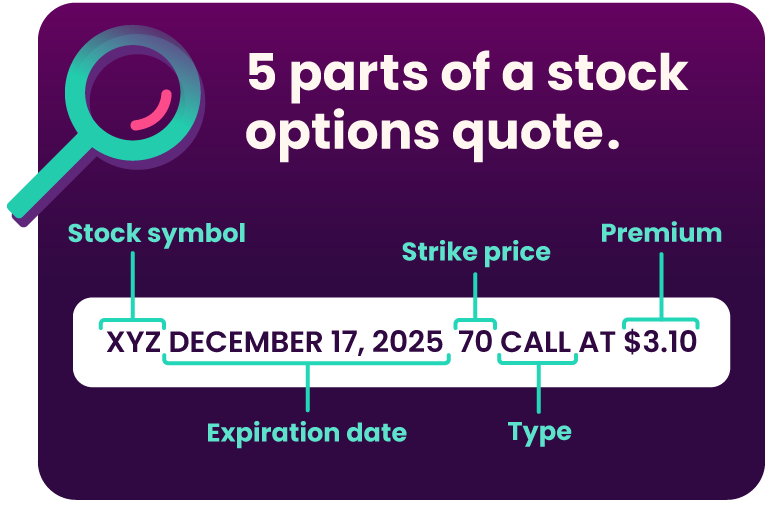
Financial options are derivative contracts that give investors the right, but not the obligation, to buy or sell an asset at a predetermined price within a specific timeframe. In the U.S. market—where options volumes hit nearly 48 million contracts traded per day in 2025, according to updated December CBOE data—options have become one of the most powerful (and risky) tools available to traders.
Used correctly, they can hedge risk, generate income, or amplify returns. Used poorly, they can destroy capital in minutes.
The U.S. options market is huge, liquid, and full of opportunity—if you know what you’re doing.
Key Insights
- Options come in two forms: calls (right to buy) and puts (right to sell).
- They let investors trade market direction, volatility, income, and hedging.
- U.S. options trading exploded in 2024–2025, setting multiple volume records.
- Options require understanding expiration, strike price, intrinsic value, theta decay, and implied volatility.
- As of December 2025, retail options activity represents 27% of all U.S. options volume—an all-time high.
What Financial Options Are
Options are contracts based on an underlying asset—usually a stock, ETF, or index. Every contract controls 100 sharesof the underlying asset.
Two types exist:
Call Option
The right to buy shares at a set price (strike price) before expiration.
Calls profit when the underlying asset goes up.
Put Option
The right to sell shares at a set price before expiration.
Puts profit when the underlying asset goes down.
Example (updated for 2025):
If you buy a call option on Microsoft with a $380 strike expiring in February 2026, and MSFT trades at $405, the call is “in the money” because buyers can acquire shares below market price.
Option Pricing: What Moves a Contract’s Value
Five forces shape an option’s price—known as the Greeks:
- Delta: sensitivity to price movement
- Theta: time decay (most painful for buyers)
- Vega: reaction to volatility
- Gamma: change in delta
- Rho: sensitivity to interest rates
As detailed in Understanding the Beta Coefficient: How U.S. Investors Measure Market Risk and Volatility, volatility is often the most influential component in pricing risk assets.
How Options Are Used in the U.S. Market
1. Speculation
Traders use options to multiply exposure with minimal capital.
This became extremely popular again in 2025, as retail traders returned to weekly options—now representing 46% of total options volume.
2. Income Strategies
Covered calls generated strong interest in 2025 as investors sought yield above elevated Treasury rates. Popular ETFs like JPMorgan’s JEPI accelerated this trend.
3. Hedging
Institutions continue to buy put options to hedge downside risk.
This became more common in late 2025 as recession odds briefly rose above 38%, according to Federal Reserve models.
Why Options Trading Grew So Much in 2024–2025
- The return of market volatility after 2023’s rally
- Zero-commission trading
- Weekly and daily expirations
- AI-assisted tools for retail traders
- High interest in mega-cap tech stocks (Apple, Nvidia, Amazon)
According to Morningstar’s December 2025 Options Market Outlook, total U.S. options volume is up 22% year-over-year.
The Role of Options in Valuation
Options traders track earnings forecasts, the equity risk premium, and P/E ratios to evaluate whether a stock’s price justifies its volatility.
As discussed in Understanding the P/E Ratio: How U.S. Investors Use Price-to-Earnings to Value Stocks in 2025, options can reveal how much uncertainty is priced into earnings announcements.
Implied volatility tends to spike before major events such as:
- Fed meetings
- CPI inflation releases
- Tech earnings (Apple, Nvidia, Meta)
- Geopolitical tensions
Common U.S. Options Strategies
Covered Call (conservative)
Own shares + sell a call option above current price.
Generates income; widely used in 2025 with yields between 8%–12% annually.
Protective Put (hedge)
Own shares + buy a put to limit losses.
Used heavily during the Q2–Q3 2025 volatility spike.
Vertical Spreads (controlled risk)
Two options of same type with different strikes.
Popular for traders wanting limited risk.
Iron Condors (volatility strategy)
Bet that a stock will remain in a defined range.
Used often during low-volatility phases.
Risks of Options Trading
The Federal Reserve’s Financial Stability Overview highlights three systemic risks associated with options in 2024–2025:
- Concentrated speculative trading in weekly options
- Liquidity mismatches in fast-moving markets
- Gamma-driven volatility during major events
Retail traders must also consider:
- Rapid time decay
- Leverage magnifying losses
- High volatility costs
- Assignment risk
The FDIC’s Quarterly Banking Profile warns that increased leveraged derivatives exposure among retail accounts could amplify market stress in sharp downturns.
Updated 2025 Market Data You Should Know
- U.S. options volume: 48M contracts/day
- Weekly options: 46% of all trades
- Average S&P 500 implied volatility (VIX): 15.9 YTD
- Most traded option in 2025: Nvidia (NVDA)
- Retail share of options volume: 27%, an all-time high
Conclusion
Options are powerful, flexible instruments—perfect for hedging, income, and speculation. But their complexity and leverage make them dangerous for unprepared traders.
“Options are like power tools. In the right hands, they build wealth. In the wrong ones, they cut fast.”
Master the basics, understand the risks, and treat options as a strategic tool—not a lottery ticket.
Disclaimer:
The information in this article is for educational and informational purposes only and does not constitute financial advice. Always consult a qualified financial advisor before making investment decisions. Past performance is not indicative of future results, and all investments carry risk. TheMarketCapitalist.com assumes no responsibility for losses resulting from use of this information.


