
Investing in the stock market can often feel like navigating a labyrinth of opportunities, pitfalls, and questions. One of the most crucial concepts every investor must grasp is the balance between risk and reward. While the promise of substantial returns can be enticing, understanding the associated risks is equally essential. In this article, we’ll break down the nuances of risk versus reward in stock market investments, helping you make informed decisions on your financial journey.
What is Risk in Stock Market Investments?
Before diving into strategies and examples, let’s define what we mean by risk. In the context of stock market investments, risk refers to the potential of losing money or experiencing a decrease in your investment value. Market volatility, economic changes, and company-specific factors can all contribute to investment risk. Here are a few key types of risk every investor should be aware of:
-
Market Risk: This is the risk of losses in positions arising from movements in market prices. Market risk can be influenced by various factors such as economic indicators, interest rates, and geopolitical events.
-
Credit Risk: While this is more relevant in bond investing, it’s still essential to know. This involves the possibility that a borrower will default on a financial obligation.
-
Liquidity Risk: This is the risk of not being able to buy or sell an investment quickly enough to prevent or minimize a loss. In some markets, an asset may lack sufficient buyers, causing its price to fall sharply.
-
Inflation Risk: This is the risk that the returns on your investments will not keep pace with inflation, effectively reducing your purchasing power over time.
-
Concentration Risk: Investing too heavily in one particular stock or sector can expose you to losses if that area underperforms.
Understanding these risks is fundamental to developing a strategic investment philosophy. But how does one weigh these risks against potential rewards? Let’s explore that further.
Defining Reward: The Potential Returns on Investments
Reward, on the other hand, refers to the potential gains you can achieve from your investments. This can happen in several ways, primarily through capital appreciation (increase in stock price) and dividends (income paid to shareholders). It’s important to set realistic expectations regarding what you might earn and to consider the types of investments that generally yield higher returns.
-
Capital Appreciation: This occurs when the price of your stocks increases over time. For example, if you buy shares at $50 and they rise to $75, your reward is the increase in value.
-
Dividend Income: Certain companies pay dividends (a portion of their earnings) to shareholders. Companies that consistently increase their dividends can offer a reliable income stream, even in uncertain markets.
-
Total Return: This is the overall gain or loss on an investment, factoring in both capital gains and dividends. For instance, if you held a stock that appreciated by 15% in a year and paid out 3% in dividends, your total return would be 18%.
The Reward-to-Risk Ratio: A Key Metric for Investors
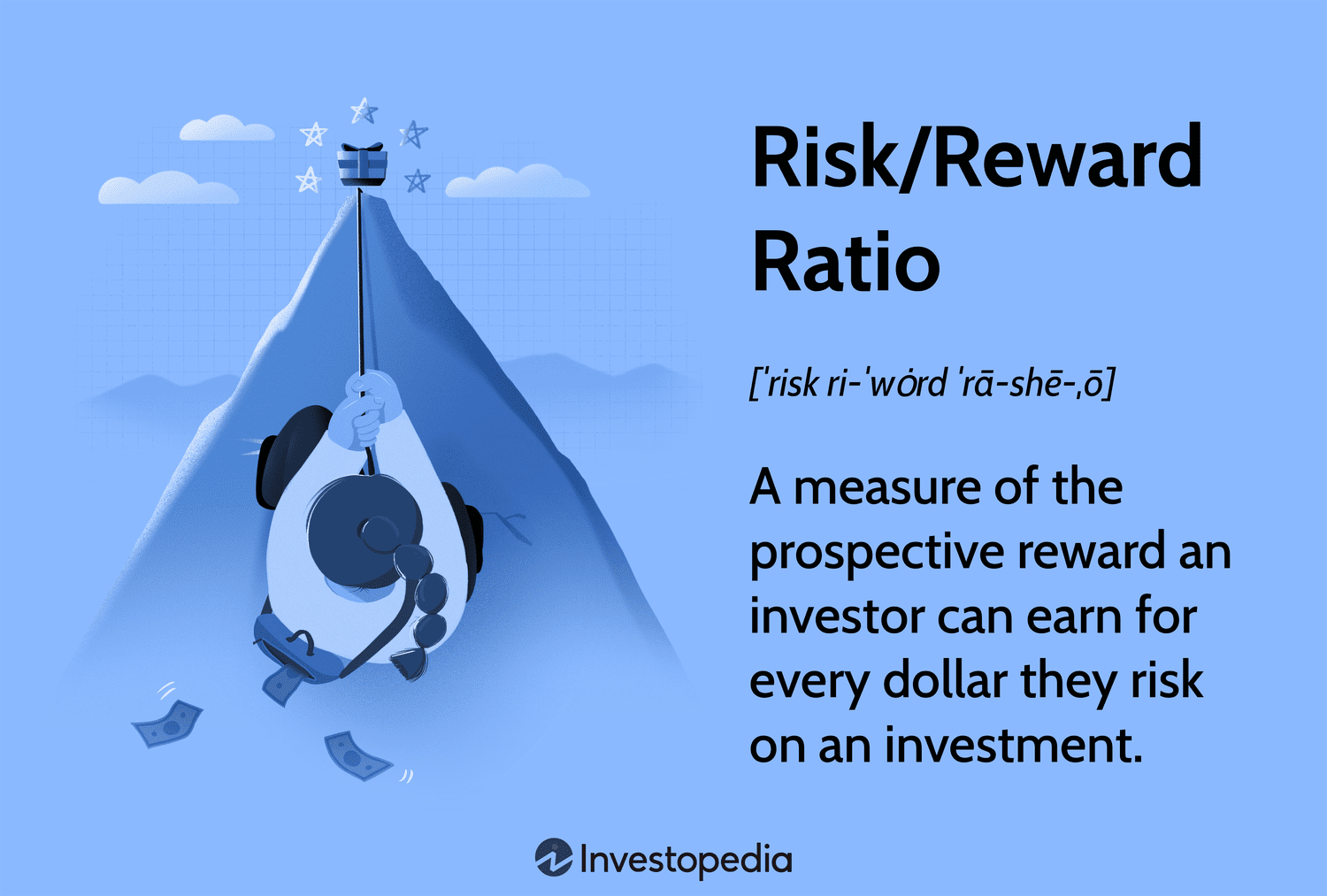
One of the best ways to evaluate the balance between risk and reward is through the reward-to-risk ratio. This metric helps you understand how much risk you’re taking on for each dollar of potential reward. Simply put, a higher ratio suggests that the potential reward justifies the risk, while a lower ratio indicates that the risk may not be worth it.
Calculating the Reward-to-Risk Ratio
To calculate your reward-to-risk ratio, follow this simple formula:
Reward-to-Risk Ratio = Potential Gain / Potential Loss
For example, if you believe that a stock could rise from $100 to $120, your potential gain is $20. If the stock could also fall to $90, your potential loss is $10. Therefore, your reward-to-risk ratio would be:
Reward-to-Risk Ratio = $20 / $10 = 2
This means that for every dollar you risk, you could gain two dollars, making it a compelling investment proposition.

- Overcome negative thought patterns, reduce stress, and live a worry-free life
- Overthinking is the biggest cause of unhappiness
- Don't get stuck in a never-ending thought loop
- Stay present and keep your mind off things that don't matter, and never will
- Break free of your self-imposed mental prison
Strategies to Mitigate Risks While Maximizing Rewards
While it’s impossible to eliminate risk entirely, several strategies can help you mitigate risks while still aiming for attractive rewards.
Diversification: The Safety Net for Investors
One of the most effective ways to manage risk is through diversification. This involves spreading your investments across a range of asset classes—stocks, bonds, real estate, and more—to reduce exposure to any single asset’s risk. By diversifying:
- You minimize losses in any one area, as gains in one investment can offset losses in another.
- You can potentially enhance overall returns by capturing gains across various sectors and industries.
Understanding Your Risk Tolerance
Risk tolerance varies widely among investors based on factors such as age, financial situation, investment goals, and psychological readiness to face fluctuations in the market. Here are the typical categories of risk tolerance:
- Aggressive: Typically younger investors who can afford to take risks for potential high returns.
- Moderate: Investors seeking a balanced approach with a mix of risk and safety.
- Conservative: Older investors or those averse to risk who prefer to preserve capital and earn steady returns.
By assessing your risk tolerance, you can tailor your investment strategy to match your comfort level, making it easier to stay invested even during turbulent times.
Long-Term Investment Strategies
Investing with a long-term view can soften the impact of market volatility. Historically, the stock market has trended upwards over long periods, even after experiencing dips and corrections. By holding your investments for the long haul, you can ride out fluctuations and take advantage of compounding returns. Dollar-cost averaging, where you consistently invest a fixed amount regardless of market conditions, can also help smooth the effects of volatility.
Research and Due Diligence
Finally, never underestimate the power of research. Before investing, thoroughly examine potential stocks or funds:
- Look at financial statements, including revenue, earnings, and debt levels.
- Consider industry trends and competitive positioning.
- Take into account macroeconomic factors that might impact the stock’s performance.
Psychological Factors Influencing Risk and Reward
Investing is not just about numbers—it’s also about psychology. Emotional factors can lead to irrational decisions that skew the risk-reward balance. Here are some psychological biases to watch for:
- Overconfidence: Investors often overestimate their knowledge or ability to predict market movements, leading to excessive risk-taking.
- Loss Aversion: Many investors become overly cautious after experiencing losses, resulting in missed opportunities for gains.
- Herd Behavior: Following the crowd can lead to poor investment decisions, especially during market bubbles or crashes.
By acknowledging these psychological factors, investors can work towards making more rational choices in their investment strategies.
Conclusion: Finding the Right Balance
Understanding the intricate dance between risk and reward is essential for successful stock market investing. By evaluating your risk tolerance, employing effective strategies like diversification, and committing to a long-term perspective, you can better position yourself to achieve your financial goals. Remember, every investment carries risk, but with careful planning and informed decision-making, the potential rewards can be significant. The key is to remain disciplined, stay informed, and never stop learning as you navigate the complex world of stock market investments.
Investing is as much an art as it is a science, and by mastering the delicate balance of risk versus reward, you’re one step closer to becoming a savvy, informed investor. Whether you’re a newcomer or a seasoned pro, ensuring you understand these concepts will not only make you feel more confident in your investment decisions but will also help pave the way for your financial success.


