
In today’s fast-paced digital landscape, where technology rapidly evolves and competition grows fierce, Software as a Service (SaaS) businesses need a robust strategy to ensure sustained growth and profitability. But how can they effectively reach their target audience and convert leads into loyal customers? The answer often lies in the power of content marketing. In this article, we’ll explore how employing content marketing can bolster your SaaS business plan, enhance visibility, and drive success.
Understanding Content Marketing
At its core, content marketing involves creating and sharing valuable, relevant content to attract and engage an audience. This strategy goes beyond traditional advertising; it focuses on building trust and fostering relationships with potential customers. For SaaS companies, this approach is especially crucial, as the buying cycle can be complex and lengthy, often involving multiple stakeholders.
Why Content Marketing Matters for SaaS
-
Establishing Authority and Trust
In a crowded market, establishing your brand as an authority is vital. Regularly publishing high-quality content—such as blog posts, whitepapers, and case studies—demonstrates your expertise and showcases the benefits of your software. By addressing common problems and offering solutions, you position your business as a trusted resource for potential customers. -
Improving SEO and Online Visibility
Search engine optimization (SEO) is crucial for attracting organic traffic to your website. By creating optimized content that targets relevant keywords, your SaaS company can improve its search engine rankings. Higher visibility leads to increased traffic, which can translate into more leads and conversions. -
Educating Your Audience
Many potential customers may not fully understand the benefits of your software or how it works. Content marketing allows you to educate your audience through tutorials, webinars, and explainer videos. The more informed your audience is about your product, the more likely they are to convert into paying customers. -
Nurturing Leads
The SaaS buying cycle can be lengthy, with decision-makers needing time to evaluate various options. Content marketing provides a way to nurture leads by offering valuable content at every stage of the buyer’s journey. By sending targeted email campaigns with case studies, product updates, and relevant articles, you stay top of mind for potential customers. -
Enhancing Customer Retention
Post-sale, content marketing continues to play a crucial role. By providing resources like how-to guides, best practices, and community forums, you help your existing customers maximize the value of your software. This not only enhances customer satisfaction but also increases the chances of renewals and upsells.
Crafting Your Content Marketing Strategy
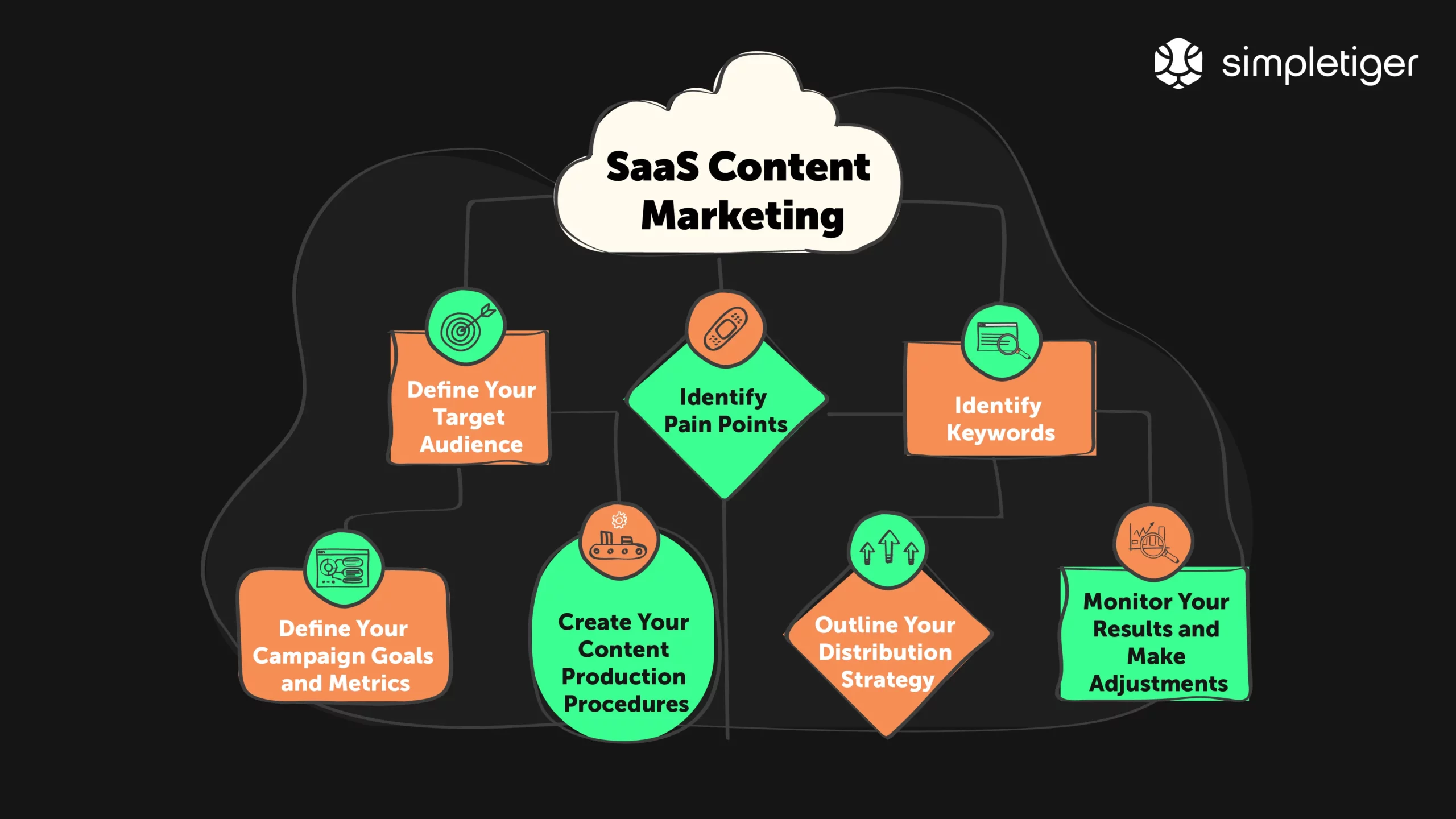
To effectively integrate content marketing into your SaaS business plan, it’s essential to develop a well-thought-out strategy. Here are the key steps to consider:
1. Define Your Target Audience
Understanding your audience is the first step in creating effective content. Identify the pain points, needs, and interests of your target customers. Create detailed buyer personas to guide your content creation efforts. This will ensure that your content resonates with your intended audience.
2. Set Clear Goals
Every content marketing campaign should be driven by specific, measurable, achievable, relevant, and time-bound (SMART) goals. Whether you want to increase website traffic, generate leads, or improve customer retention, having clear goals will keep your efforts focused.
3. Choose the Right Content Types
Diverse content types can cater to different preferences within your audience. Some popular options include:
- Blog Posts: Regularly publishing blog articles can drive traffic, improve SEO, and establish authority.
- Whitepapers and E-books: In-depth resources that can be used as lead magnets to capture email addresses.
- Infographics: Visually appealing content that simplifies complex information and is highly shareable.
- Webinars and Videos: Engaging formats that allow for deeper interaction and demonstration of your software.
4. Plan a Content Calendar
A content calendar will help you organize your publishing schedule, ensuring a consistent flow of content. Include topics, formats, publication dates, and distribution channels. Planning ahead also allows you to align your content with key industry events, product launches, and marketing campaigns.

- Overcome negative thought patterns, reduce stress, and live a worry-free life
- Overthinking is the biggest cause of unhappiness
- Don't get stuck in a never-ending thought loop
- Stay present and keep your mind off things that don't matter, and never will
- Break free of your self-imposed mental prison
5. Promote Your Content
Creating great content is only half the battle; you must also ensure it reaches your target audience. Use social media, email marketing, and SEO techniques to promote your content. Consider collaborations with industry influencers or guest posting on relevant sites to expand your reach.
6. Measure and Analyze Your Results
Regularly review the performance of your content marketing efforts. Use tools like Google Analytics, HubSpot, or SEMrush to track metrics such as website traffic, conversion rates, and engagement levels. Analyzing this data allows you to refine your strategy and improve future content efforts.
Best Practices for SaaS Content Marketing
To maximize the effectiveness of your content marketing strategy, consider the following best practices:
1. Focus on Quality Over Quantity
While it’s essential to publish content consistently, producing high-quality content should always take precedence. Invest time in research, writing, and editing to ensure your content is valuable and informative.
2. Optimize for SEO
Incorporate relevant keywords naturally within your content to improve its searchability. Use SEO best practices, such as optimizing meta titles and descriptions, adding alt text to images, and ensuring mobile responsiveness.
3. Promote User-Generated Content
Encourage your existing customers to share their success stories and experiences with your software. User-generated content adds credibility and helps potential customers visualize the value of your offering.
4. Leverage Social Proof
Testimonials, reviews, and case studies serve as powerful tools to build trust among potential customers. Showcase positive feedback prominently on your website and incorporate it into your content marketing efforts.
5. Keep Up with Industry Trends
The SaaS landscape is ever-evolving, and staying updated on industry trends is crucial to producing relevant content. Regularly read industry publications, attend webinars, and join online communities to gather insights for your content strategy.
6. Foster Community Engagement
Building a sense of community around your brand can enhance customer loyalty. Establish forums, social media groups, or online events where users can connect, share insights, and discuss their experiences with your software.
Case Study: Successful SaaS Content Marketing
Let’s take a look at a real-world example of how content marketing can drive SaaS business success. Consider HubSpot, a well-known provider of marketing, sales, and service software. HubSpot has leveraged content marketing effectively to build its brand and acquire customers:
-
Educational Resources: HubSpot offers an extensive library of free resources, including blog posts, e-books, webinars, and templates, that educate users on inbound marketing strategies.
-
Lead Magnets: By providing valuable resources in exchange for email addresses, HubSpot has built a robust email marketing list and nurtured leads effectively.
-
Community Engagement: HubSpot’s community forums allow users to connect, ask questions, and share experiences, fostering a sense of belonging and loyalty.
As a result of these efforts, HubSpot has successfully established itself as an industry leader and continues to grow its customer base.
Conclusion
In a competitive SaaS landscape, a well-executed content marketing strategy can provide the fuel your business needs to thrive. By focusing on building trust, enhancing visibility, and nurturing leads, your company can differentiate itself from the competition and achieve sustained success. Remember, it’s not just about selling software; it’s about building relationships and providing value to your customers. By embracing the principles of content marketing, you’ll be well on your way to creating a successful SaaS business plan that resonates with your audience and drives growth.
So, how are you planning to leverage content marketing for your SaaS business? The journey to success starts with a single step—now is the time to embrace content marketing and watch your business soar.


