
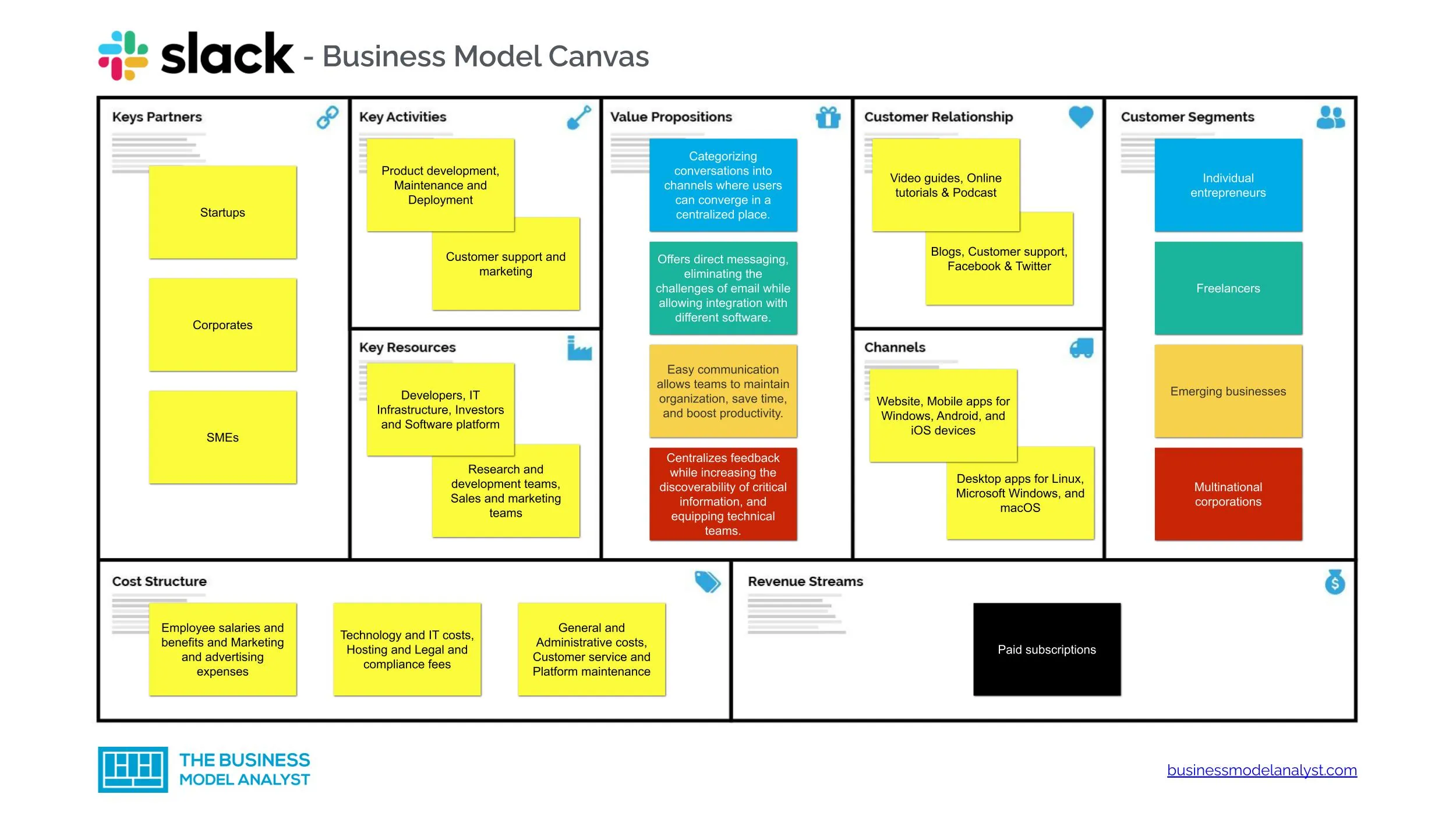
In the dynamic landscape of Software as a Service (SaaS) startups, distinguishing oneself can seem daunting. Every entrepreneur dreams of crafting a service that not only meets the needs of the market but also helps define it. One of the most illustrative examples of this endeavor is Slack, the collaboration tool that has transformed how teams communicate. With its innovative approach and a business model that has resonated with millions, Slack’s early strategies provide invaluable lessons for SaaS startups today. This article will explore key aspects of Slack’s early business plan, extracting insights that modern entrepreneurs can implement to enhance their chances of success.
The Birth of Slack: Understanding Its Origins
Slack was founded in 2013 out of the ashes of a game development company called Tiny Speck. The company had initially created a game called Glitch, which, due to various market challenges, ultimately failed to resonate with a broad audience. However, within the framework of this development, Tiny Speck created an internal communication tool—a platform for team members to collaborate more effectively. This tool laid the foundation for what would soon become Slack.
Recognizing the power and potential of their internal communications tool, the founders pivoted away from gaming to focus solely on this application. This transition highlights a crucial lesson for any SaaS startup: Embrace adaptability. The ability to pivot based on market needs and personal experiences can sometimes lead to greater success than initially planned.
Problem-Solution Fit: Targeting Real Pain Points
At its core, Slack was developed to solve real communication challenges that teams face daily. Before Slack, collaboration tools were often clunky, fragmented, and not user-friendly. This gap in the market was identified by the founders, who understood that teams required a unified platform where they could communicate seamlessly.
Lesson: Identify a Genuine Problem
For SaaS startups, the first lesson from Slack’s journey is to ensure that your product addresses a genuine problem experienced by your target audience. Before launching your service, invest time into researching and understanding the pain points of your potential users. Conduct surveys, hold focus groups, and gather feedback to validate that your solution fills a significant gap.
Zeroing in on a specific problem not only shapes your product development but also helps in crafting your marketing message. As Slack grew, it focused heavily on its ability to combat the chaos of email overload and disjointed communication, which resonated with users and drove adoption.
Building an Engaging User Experience
Another pivotal aspect of Slack’s early business plan was its dedication to user experience. From the beginning, the team emphasized interface design and usability, creating an application that felt intuitive. The onboarding process was smooth and engaging, allowing new users to explore the platform with ease.
Lesson: Prioritize User Experience and Onboarding
In the highly competitive SaaS market, delivering an exceptional user experience can make or break a product. Startups need to prioritize usability by investing in talented designers and conducting user testing throughout the development cycle.
Creating a frictionless onboarding experience can significantly increase user retention. One effective practice is to incorporate interactive tutorials or walkthroughs for new users, guiding them through key features and encouraging exploration. Remember, a product that is easy to use is more likely to be adopted widely and recommended to others.
Leveraging Early Adopters
Slack initially relied on a group of enthusiastic early adopters who contributed to refining the product and spreading the word about its capabilities. This community became the backbone of Slack’s early marketing strategy. These users weren’t just passive consumers; they were engaged participants who provided valuable feedback and actively promoted the product within their networks.
Lesson: Cultivate Early Adopters
SaaS startups should aim to cultivate a community of early adopters. Engaging users from the get-go not only helps refine your product but can also create loyal advocates who will promote your brand.
Strategies to Build a Community Include:
-
Beta Testing Programs: Offer early access to your product in exchange for feedback. Choose a diverse group of users who reflect your target market.
-
Incentivize Referrals: Create referral programs that reward users for bringing in new customers.
-
Engage on Social Media: Build online communities through platforms like Twitter, LinkedIn, and Slack itself. Regularly interact with your users, respond to inquiries, and share updates.
Utilizing a Freemium Model
Slack’s business strategy included a freemium model that allowed users to access basic features for free, with the option to upgrade to premium versions with enhanced capabilities. This strategy enabled them to grow a user base quickly, converting many free users to paying customers over time.
Lesson: Consider a Freemium Approach
For SaaS startups, the freemium model can be particularly effective, especially when competing against established brands. Allow potential users to try your product risk-free, demonstrate its value, and convert them to paying customers.
Consider which features to include in your free tier versus premium offerings. The key is to offer sufficient value in the free version so that users can experience the product fully, making the upsell to premium services more enticing.

- Overcome negative thought patterns, reduce stress, and live a worry-free life
- Overthinking is the biggest cause of unhappiness
- Don't get stuck in a never-ending thought loop
- Stay present and keep your mind off things that don't matter, and never will
- Break free of your self-imposed mental prison
Crafting a Clear Value Proposition
From the outset, Slack effectively communicated its value proposition: a single platform to streamline team communication. While the market was saturated with various communication tools, Slack’s emphasis on clarity, simplicity, and efficiency resonated with users who were exhausted by cluttered inboxes.
Lesson: Define Your Unique Value Proposition
A clear value proposition is essential for any SaaS startup seeking to carve a niche in a crowded market. Your value proposition should succinctly convey what sets your product apart and why users should choose it over competitors.
Develop a concise elevator pitch that articulates your product’s benefits and unique features. This strategic message will form the backbone of your branding and marketing efforts, ensuring consistency across all communication channels.
Data-Driven Decision-Making
One of Slack’s prominent strategies was its focus on gathering user data to inform decisions. By analyzing how users interacted with their product, Slack could continuously improve the features and performance based on real-world feedback. This data-driven approach helped Slack prioritize updates that had a meaningful impact on user engagement.
Lesson: Make Data-Driven Decisions
For contemporary SaaS startups, leveraging data analytics is crucial. Collect data on user behavior, product engagement, and customer feedback to inform product iterations and development.
Utilize analytics tools such as Google Analytics, Mixpanel, or other relevant platforms to track key performance indicators. By understanding how users interact with your product, you can make informed decisions that enhance value and improve customer satisfaction.
Building Strategic Partnerships
In the early days, Slack formed strategic partnerships with various companies that enhanced its functionality. By integrating with third-party tools such as Google Drive, Trello, and others, Slack positioned itself as a central hub for productivity, making its platform indispensable for teams.
Lesson: Build Strategic Partnerships
For SaaS startups, forming strategic alliances can help enhance product offerings and expand reach. Identify complementary tools and services that your target audience uses and explore opportunities for integration.
Partnering with established brands can facilitate co-marketing initiatives that benefit all parties, increase brand visibility, and attract new users to your platform.
Scaling Smartly
As Slack gained traction and enjoyed rapid growth, the company had to scale effectively to handle the influx of users without sacrificing quality. This included investing in infrastructure, customer support, and operational processes to maintain a high level of service.
Lesson: Plan for Scalable Growth
SaaS startups must develop a scalable business model from the outset. This means not only investing in technology but also ensuring that support systems, operational frameworks, and customer acquisition strategies can grow alongside your user base.
Consider scalability at every stage—design your product architecture with growth in mind, establish a customer support strategy that can expand, and create marketing initiatives that easily accommodate broader audiences.
Continual Innovation and Adaptation
Slack’s journey has been marked by continual innovation. The team behind the platform has consistently sought to enhance the product by adding new features, services, and integration capabilities. This commitment to evolution has allowed Slack to stay relevant in a rapidly changing technology landscape.
Lesson: Focus on Continuous Improvement
For SaaS startups, innovation should be a fundamental hallmark. Regularly gather user feedback, keep an eye on market trends, and be willing to evolve. The technology landscape is always shifting, and staying ahead requires a proactive approach to improvement.
Implement agile methodologies in your operation to respond quickly to feedback and changes. Encourage a culture of creativity among your team to foster innovative ideas that can further enhance your offering.
Conclusion: Apply the Lessons of Slack
The journey of Slack serves as a compelling case study for SaaS startups looking to make their mark. By learning from Slack’s early business plan and strategic decisions, entrepreneurs can gain insights into problem identification, user experience, effective marketing, community building, and scaling.
Success in the SaaS industry is not solely about having a great product; it’s about understanding your user base, adapting to their needs, and fostering an environment of continuous growth and innovation. By following Slack’s example, you’ll position your startup for long-term success and sustainability in an ever-evolving marketplace.
Whether you’re embarking on a new SaaS venture or looking to refine your existing product, remember that the principles laid down by Slack can illuminate your path forward in this exciting journey. Your strategy today can shape tomorrow’s industry leaders—make it count.


