
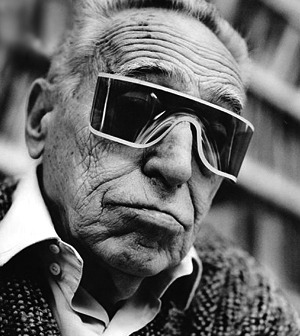
Achille Castiglioni, born on February 16, 1918, in Milan, Italy, stands as one of the most influential and celebrated figures in the world of design. His contributions to industrial design, architecture, and furniture design have left an indelible mark on modern aesthetics and functionality. A key figure in the post-war design movement, Castiglioni’s work is characterized by its playful yet practical approach, merging form and function in ways that have set new standards in the design industry.
Early Life and Family Influence
Achille Castiglioni was born into an artistic family. His father, Giannino Castiglioni, was a renowned sculptor, responsible for significant works such as the fountain of San Francesco in Piazza Sant’Angelo in Milan and the intricate designs on the door of the Milan Cathedral, particularly the life scenes of Saint Ambrose. This artistic environment profoundly influenced Achille, nurturing his early interest in design and architecture.
Achille’s older brothers, Livio (1911-1979) and Pier Giacomo (1913-1968), were also instrumental in shaping his career. They had already established an architecture and design studio in Piazza Castello, Milan, by the time Achille joined them. This studio became a creative hub where the Castiglioni brothers experimented with new forms, materials, and design techniques, laying the groundwork for many of their future successes.
Education and Early Career
Achille Castiglioni pursued his passion for design by studying architecture at the Politecnico di Milano, where he graduated in 1944. During his studies, he began assisting his brothers in their architectural and design projects, which ranged from urban planning to exhibition design and product development. The Castiglioni brothers were deeply involved in post-war reconstruction efforts, contributing to the rebuilding of Milan and other war-torn areas.
One of Achille’s early notable projects was his participation in the VII Triennale di Milano in 1944, where he and his brothers presented the IRR126, a radio designed for industrial production. This project showcased the Castiglioni brothers’ ability to merge aesthetic appeal with industrial functionality, a theme that would continue to define Achille’s work throughout his career.
The Formation of a Design Philosophy
Achille Castiglioni, along with his brothers, developed a unique design philosophy centered on the idea of “integrated design.” This approach emphasized the importance of considering all aspects of a product, from its aesthetics and functionality to its production and user experience. The Castiglioni brothers were pioneers in exploring new materials and techniques, often repurposing everyday objects in innovative ways.
A defining aspect of Achille’s work was his focus on simplicity and usability. He believed that good design should be accessible to everyone and that products should be designed with the user in mind. This philosophy is evident in many of his most famous designs, which are characterized by their minimalist yet functional aesthetics.
Key Projects and Iconic Designs
Throughout his career, Achille Castiglioni created numerous iconic designs that have become classics in the world of industrial design. Some of his most famous works include:
-
Mezzadro Chair (1957): This innovative chair was designed in collaboration with his brother Pier Giacomo. It features a tractor seat mounted on a metal stem with a cross-shaped wooden base, exemplifying Achille’s ability to repurpose everyday objects in new and functional ways.
-
Arco Lamp (1962): Perhaps one of the most iconic designs in modern lighting, the Arco Lamp was designed for Flos. It features a long, curved arm that extends from a heavy marble base, allowing the light to be positioned above a table or seating area without the need for ceiling suspension. The Arco Lamp remains a symbol of modernist design and is still in production today.
-
Taccia Lamp (1962): Also designed for Flos, the Taccia Lamp resembles an inverted glass bowl that reflects light upward, providing indirect illumination. Its bold design and sculptural form have made it a favorite among design enthusiasts.
-
Toio Lamp (1962): The Toio Lamp, another collaboration with Pier Giacomo, was inspired by the idea of using an automobile headlight to create a floor lamp. The lamp’s playful yet functional design exemplifies Achille’s ability to find beauty and utility in unexpected places.
-
Sella Stool (1957): This stool, which features a bicycle seat mounted on a metal stem, was designed with the intention of providing a perch for users to rest while engaging in brief, informal activities. It is another example of Achille’s innovative use of everyday objects in design.
Achievements and International Recognition
Achille Castiglioni’s contributions to design were recognized with numerous awards and honors throughout his career. Between 1955 and 1979, he won seven Compasso d’Oro awards, one of the most prestigious honors in the field of industrial design. His work was also celebrated at the Triennale di Milano, where he received multiple medals, including gold and silver awards for his contributions to design.
In 1956, Achille was one of the founding members of the Associazione per il Disegno Industriale (ADI), an organization dedicated to promoting industrial design in Italy and beyond. His influence on the field of design extended beyond his own work; he was also a dedicated educator. In 1969, he was granted the title of Professor of Artistic Design for Industry by the Italian Ministry of Education. He taught industrial design at the Politecnico di Torino until 1980 and later at the Politecnico di Milano until 1993, where he inspired a new generation of designers.
International Exhibitions and Legacy
Achille Castiglioni’s work has been exhibited in some of the most prestigious museums and galleries around the world. Fourteen of his most significant works are part of the permanent collection at the Museum of Modern Art (MoMA) in New York, which hosted the largest retrospective ever dedicated to an Italian designer. This exhibition highlighted the global impact of Castiglioni’s work and cemented his status as a leading figure in modern design.
Beyond MoMA, his designs can be found in the collections of other major institutions, including the Victoria and Albert Museum in London, the Kunstgewerbe Museum in Zurich, and the Vitra Design Museum in Germany. These exhibitions and collections serve as a testament to the enduring appeal and relevance of Castiglioni’s designs.
Collaborations with Leading Companies
Achille Castiglioni’s innovative approach to design made him a sought-after collaborator for many leading companies in Italy and abroad. His partnerships with brands like Alessi, Zanotta, Kartell, and Flos resulted in products that have become icons of modern design. These collaborations were not limited to furniture and lighting; Castiglioni also worked on projects for companies in diverse industries, including automotive, telecommunications, and consumer electronics.
For Alessi, Castiglioni designed several household items that combined functionality with playful design elements, such as the Spirale ashtray and the Dry cutlery set. His work for Zanotta, including the Mezzadro chair and the Allunaggio stool, pushed the boundaries of traditional furniture design.
Teaching and Influence on Future Generations
Achille Castiglioni was not only a prolific designer but also a passionate educator. His teaching career spanned several decades, during which he mentored countless students who would go on to become influential designers in their own right. Castiglioni’s approach to teaching was hands-on and collaborative, encouraging students to think critically about design and to experiment with materials and forms.
His influence on the design world extended far beyond his own work. Castiglioni’s emphasis on functionality, simplicity, and user-centered design has become a cornerstone of modern design education. Many of his students have cited him as a major influence on their careers, and his teaching methods continue to be studied and emulated in design schools around the world.
Later Life and Continuing Impact
Achille Castiglioni continued to work on design projects well into his later years. Even after the death of his brother Pier Giacomo in 1968, Achille remained active in the design world, constantly exploring new ideas and pushing the boundaries of what was possible in design.
Castiglioni’s work has been the subject of numerous retrospectives and exhibitions, and his designs remain in production today, a testament to their timeless appeal. His influence can be seen in the work of contemporary designers who continue to draw inspiration from his innovative use of materials and his commitment to functionality and simplicity.
Achille Castiglioni passed away on December 2, 2002, at the age of 84, after an accidental fall in his studio in Milan. He was laid to rest in the Abbey of Chiaravalle, leaving behind a legacy that continues to inspire and influence the world of design.
Conclusion: Achille Castiglioni’s Enduring Legacy
Achille Castiglioni’s contributions to design are unparalleled. His ability to combine form and function in innovative ways has left a lasting impact on the world of industrial design. From iconic furniture pieces to everyday household items, Castiglioni’s work is a testament to his creative genius and his commitment to improving the user experience through thoughtful design.
Today, Achille Castiglioni is remembered not only for his groundbreaking designs but also for his role as a mentor and educator. His influence continues to be felt in the design world, where his philosophy of simplicity, functionality, and user-centered design remains a guiding principle for designers across the globe. Castiglioni’s work is not just a part of design history; it is a living legacy that continues to inspire and shape the future of design.


