
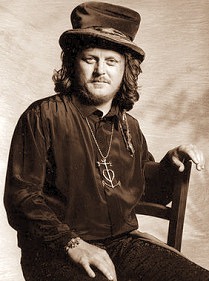
Adelmo Fornaciari, better known by his stage name Zucchero, is one of Italy’s most celebrated musicians. Born on September 25, 1955, in Roncocesi, a small agricultural town in the province of Reggio Emilia, Zucchero’s journey to fame is a remarkable tale of passion, talent, and perseverance. With a career spanning several decades, he has become an iconic figure in the global music scene, known for his unique blend of blues, rock, and Italian pop. This article delves into the life, fame, and key highlights of Adelmo Fornaciari’s illustrious career.
Early Life and Musical Beginnings
Adelmo Fornaciari’s early life was deeply rooted in the Italian countryside, where he was raised by his parents, who were farmers. His childhood in Roncocesi, surrounded by the simplicity of rural life, would later influence his music, imbuing it with a deep sense of authenticity and connection to his roots. Interestingly, his nickname “Zucchero” (which means “sugar” in Italian) was given to him by one of his schoolteachers, who affectionately called him “zucchero e marmellata” (sugar and jam) during his elementary school years.
Zucchero’s first love was not music, but soccer. As a young boy, he played as a goalkeeper for the youth team of Reggiana, a local football club. However, his passion for music soon took over, and by the time he was in his teens, he had picked up the guitar. His initial foray into music was influenced by a black American student who was studying veterinary medicine in Bologna. This student introduced him to the sounds of the Beatles, Bob Dylan, and the Rolling Stones—artists who would leave a lasting impact on Zucchero’s musical style.
In 1968, Zucchero’s family moved to Forte dei Marmi, a seaside town in Versilia, Tuscany. It was here that his love for rhythm and blues truly began to blossom. He formed a small band called “Le Nuove Luci” with other local boys, and they started performing at local dance halls and clubs. While attending a technical industrial institute in Carrara, Zucchero continued to hone his musical skills. Although he enrolled in the University of Veterinary Medicine, his passion for music ultimately led him to abandon his academic pursuits.
During this period, Zucchero supported himself as a musician, touring with various bands. Notably, he played with “Sugar & Daniel,” where he played guitar and saxophone. This was followed by the formation of “Sugar & Candies,” a band that marked the beginning of Zucchero’s journey as a songwriter.
The Breakthrough: From Songwriter to Performer
Zucchero’s early career was characterized by his work as a songwriter. He penned songs for several Italian artists, including Fred Bongusto and Michele Pecora. His big break came in 1981 when Gianni Ravera, a prominent Italian music promoter, recognized the unique timbre of Zucchero’s voice and encouraged him to participate in the Festival di Castrocaro, an important Italian music competition. Zucchero won the festival, which led to a contract with Polygram and an invitation to participate in the prestigious Sanremo Music Festival the following year.
While Zucchero’s initial performances at Sanremo were not particularly successful, they marked the beginning of his career as a performer. His 1985 entry, “Donne,” performed with the Randy Jackson Band, did not win any awards but became a sleeper hit. The song is now considered one of the classics of Italian pop music, often cited as an example of a song that was initially overlooked by the Sanremo judges but later gained widespread acclaim.
Zucchero’s first album, Un po’ di Zucchero, was released in 1983, but it was not until his 1985 album, Zucchero & The Randy Jackson Band, that he began to gain significant attention. The album, which included the hit single “Donne,” established Zucchero as a credible artist in the Italian music scene. His unique blend of blues, rock, and Italian pop set him apart from his contemporaries and laid the foundation for his future success.
Rise to Fame: International Recognition and Collaborations
The late 1980s and early 1990s were a period of significant growth for Zucchero, both in Italy and internationally. His 1986 album, Rispetto, was well-received, but it was his 1989 album, Oro, Incenso e Birra (Gold, Incense, and Beer), that truly catapulted him to fame. The album became one of the best-selling records in Italian music history, with nearly a million pre-orders before its release. It featured several hit singles, including “Diavolo in Me” and “Diamante,” the latter of which was written by the renowned Italian singer-songwriter Francesco De Gregori. “Diamante” is a touching tribute to Zucchero’s grandmother, whose name was Diamante.
Zucchero’s success with Oro, Incenso e Birra opened doors to numerous international collaborations. Over the years, he has worked with some of the biggest names in music, including Paul Young, Joe Cocker, Luciano Pavarotti, Eric Clapton, Stevie Ray Vaughan, and many others. His 1991 duet with Paul Young, “Senza una Donna” (Without a Woman), was a major hit, reaching the top of the charts in several countries, including the UK, where it peaked at number four.
In 1992, Zucchero was the only Italian artist invited to perform at the Freddie Mercury Tribute Concert in London, an event held in memory of the late Queen frontman. This performance solidified his status as an international star and marked the beginning of a long-standing friendship with Queen’s guitarist Brian May and drummer Roger Taylor.
Zucchero’s global appeal was further demonstrated when he was the only Italian artist to perform at Woodstock ’94, the 25th-anniversary edition of the legendary music festival. His performance at Woodstock showcased his ability to connect with audiences of different cultural backgrounds and solidified his reputation as one of Italy’s most successful musical exports.
The 1990s: Continued Success and Evolution
The 1990s were a period of continued success and artistic evolution for Zucchero. His 1995 album, Spirito DiVino, was another commercial success, featuring hits like “X colpa di chi?” and “Così Celeste,” a duet with the Algerian singer Cheb Mami. The album showcased Zucchero’s ability to blend different musical genres, from blues and rock to pop and world music, creating a sound that was uniquely his own.
In 1997, Zucchero released The Best of Zucchero: Sugar Fornaciari’s Greatest Hits, a compilation album that included his most popular songs, as well as new tracks like “Menta e Rosmarino.” The album was a commercial success, particularly in Europe and Latin America, where Zucchero’s music continued to resonate with audiences.
Zucchero’s collaborations with international artists reached new heights with the release of Zu & Co. in 2004, an album that featured duets with some of the biggest names in music, including Miles Davis, Sheryl Crow, B.B. King, and John Lee Hooker. The album was a major success in the United States, selling over 200,000 copies, thanks in part to its distribution through Starbucks coffee shops. The success of Zu & Co. in the U.S. was widely covered by major publications like The Wall Street Journal Europe and the Los Angeles Times, further cementing Zucchero’s status as a global music icon.
The 2000s and Beyond: Reinvention and Legacy
As Zucchero entered the 2000s, he continued to reinvent himself while staying true to his roots. His 2006 album, Fly, marked a departure from his earlier work, featuring a more pop-oriented sound with several ballads. The album included collaborations with notable Italian artists like Ivano Fossati and Jovanotti, further demonstrating Zucchero’s ability to evolve as an artist while maintaining his signature style.
In 2007, Zucchero released All the Best, a greatest hits compilation that included the single “Wonderful Life,” a cover of the 1987 hit by the British artist Black. The song was a global success, bringing Zucchero’s music to new audiences around the world.
Zucchero’s 2010 album, Chocabeck, was another critical and commercial success. The album’s title, Chocabeck, was a term used by Zucchero’s father during his childhood to describe the lack of a Sunday dessert, symbolizing the modest, yet joyful, life of the Fornaciari family. The album’s themes of nostalgia and family resonated with listeners, and it was released simultaneously worldwide, further underscoring Zucchero’s international appeal.
Zucchero’s Impact on Music and Culture
Zucchero’s impact on music and culture extends far beyond his commercial success. He is widely credited with popularizing the blues in Italy, introducing a genre that was largely unfamiliar to Italian audiences before his emergence. His unique blend of blues, rock, and Italian pop has influenced countless artists in Italy and around the world, making him a pioneer in the fusion of different musical styles.
Throughout his career, Zucchero has remained true to his roots, often drawing inspiration from his childhood and his deep connection to the Italian countryside. His music reflects a deep sense of authenticity, with lyrics that often explore themes of love, loss, and the human experience. This authenticity, combined with his exceptional musical talent, has endeared him to fans around the world, making him one of Italy’s most beloved musicians.
Zucchero’s contributions to music have been recognized with numerous awards and honors, including the World Music Award for Best Selling Italian Artist and the Tenco Prize for Lifetime Achievement. His influence on Italian and global music is undeniable, and his legacy continues to grow with each new generation of listeners.
Conclusion
Adelmo Fornaciari, better known as Zucchero, is a true icon of Italian music. From his humble beginnings in Roncocesi to his rise as an international superstar, Zucchero’s journey is a testament to the power of passion, talent, and perseverance. His unique blend of blues, rock, and Italian pop has left an indelible mark on the global music scene, and his influence continues to be felt today. As one of Italy’s most successful musical exports, Zucchero’s legacy is one of artistic innovation, cultural impact, and timeless music.


