
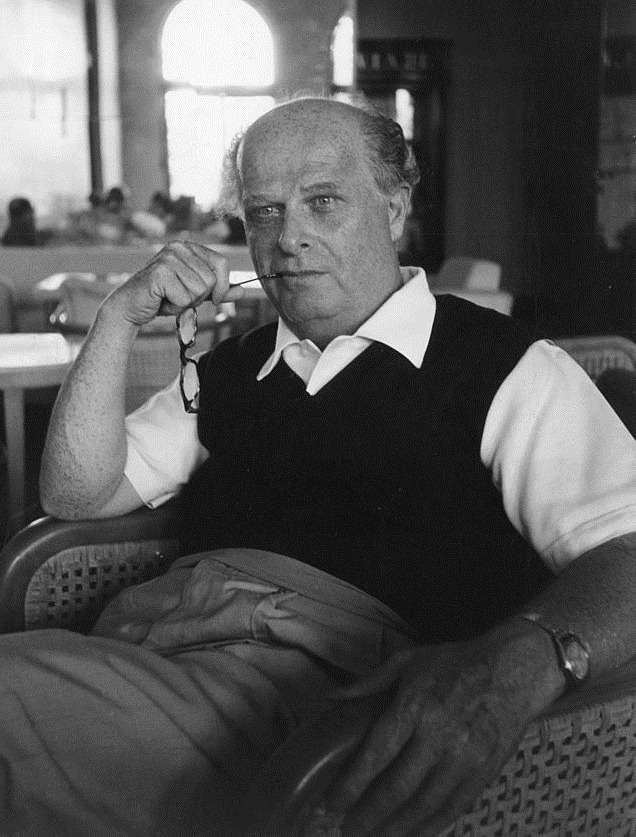
Adriano Olivetti was an extraordinary figure who combined his talents as an entrepreneur, intellectual, and visionary to leave a lasting impact on the world. Born on April 11, 1901, in Ivrea, Italy, Olivetti’s legacy extends far beyond his role as an industrialist. He was a man deeply committed to the ideas of community, social responsibility, and the humanization of industrial labor. His life’s work, which included pioneering contributions in business, urban planning, and publishing, continues to resonate today, reflecting his forward-thinking approach to integrating business success with social good.
Early Life and Education
Adriano Olivetti was born into a family that was already established in the world of industry. His father, Camillo Olivetti, was an engineer who founded the first Italian typewriter factory in Ivrea in 1908. This factory would eventually become the Olivetti company, known worldwide for its innovative designs and high-quality products. Growing up in this environment, Adriano was naturally inclined toward the industrial sector, but his interests and talents extended well beyond mere business.
Adriano pursued his education at the Polytechnic University of Turin, where he earned a degree in industrial chemistry. However, rather than immediately taking a managerial role in the family business, Adriano chose to start his career as a factory worker in 1924. This decision was emblematic of his belief in understanding the experiences and challenges of workers before assuming leadership roles. He once stated, “You cannot be a manager if you do not know what others do.” This hands-on experience provided him with invaluable insights into the daily lives of the workers, shaping his approach to business and management.
Influence of American Industrial Practices
In 1925, Olivetti traveled to the United States, a trip that would profoundly influence his views on industrial production and management. During his time in America, he visited numerous factories that were at the forefront of industrial innovation. He was particularly struck by the efficiency and the advanced techniques used in these factories, as well as the relationship between employers and employees.
Upon his return to Italy, Adriano set out to modernize the Olivetti factory in Ivrea. He introduced a range of innovative practices aimed at improving productivity while also enhancing the well-being of the workers. These included decentralized personnel management, a restructuring of the company’s leadership hierarchy, and the rationalization of production processes. Under his direction, Olivetti also expanded its commercial network both in Italy and internationally.
One of his most significant innovations was the development of the first portable typewriter, the MP1, which was released in 1932. This product marked a turning point for Olivetti, transforming the company from a local manufacturer into a global brand known for its blend of cutting-edge technology and exceptional design.
Leadership and Expansion
Adriano Olivetti’s rise within the family business was rapid. By 1932, he was appointed General Manager of Olivetti, and in 1938, he became the company’s President, succeeding his father. Under his leadership, Olivetti not only grew in size and scale but also in reputation. The company’s products became synonymous with innovation, quality, and aesthetic appeal.
Adriano was not content with simply running a successful business. He was deeply interested in the broader implications of industrialization and sought to create a work environment that was humane and respectful of the individual. His philosophy was rooted in the belief that the welfare of workers was integral to the success of the business. This led to the establishment of numerous social initiatives within the company, including the construction of housing for employees, the creation of child care facilities, and the provision of medical services.
One of his most ambitious projects was the construction of a residential neighborhood for Olivetti employees, designed by the architects Figini and Pollini. This initiative was part of a broader effort to create a community-oriented environment that fostered social cohesion and improved the quality of life for workers and their families.
Adriano also made significant changes to the workweek at Olivetti, reducing the standard working hours from 48 to 45 per week without cutting pay, a move that was ahead of its time and reflected his commitment to worker welfare.
Contributions to Design and Technology
The period between the late 1940s and the late 1950s was particularly fruitful for Olivetti, both in terms of technological advancements and design achievements. During these years, the company introduced several products that would become iconic for their design and functionality.
Among the most notable was the Lexikon 80 typewriter, released in 1948, and the Lettera 22 portable typewriter, launched in 1950. The Lettera 22, in particular, became a symbol of Olivetti’s design excellence. In 1959, it was named the best product of the century by an international jury of designers, highlighting its blend of aesthetic appeal and practical functionality. Another key product from this era was the Divisumma 24, a groundbreaking calculator that further solidified Olivetti’s reputation for innovation.
These products were not only technologically advanced but also beautifully designed, embodying Adriano Olivetti’s belief that industrial products should be both functional and aesthetically pleasing. This philosophy earned Olivetti numerous awards, including the prestigious Compasso d’Oro in 1955 for achievements in industrial design.
Cultural and Intellectual Pursuits
Adriano Olivetti was much more than an industrialist; he was also a man of deep intellectual curiosity and cultural engagement. After World War II, his activities as a publisher, writer, and cultural advocate intensified. He had previously co-founded the Nuove Edizioni Ivrea (NEI) publishing house, which later became Edizioni di Comunità in 1946. Through this publishing house, Olivetti sought to disseminate ideas that were at the cutting edge of political thought, sociology, philosophy, and industrial organization.
One of his most significant literary contributions was his book L’ordine politico delle comunità (The Political Order of Communities), written during his temporary exile in Switzerland during World War II. In this work, Olivetti articulated his vision for a new social and political order based on the principles of community and social responsibility. These ideas later became the foundation of the Movimento Comunità (Community Movement), which Olivetti founded in 1947.
The magazine Comunità, which began publication in 1946, became the cultural voice of the Movement, promoting discussions on a wide range of social, economic, and political issues. Through his publishing and intellectual activities, Olivetti sought to influence the broader cultural landscape, advocating for a more humane and community-oriented approach to both business and governance.
Political Engagement and Vision
Olivetti’s commitment to social and political change extended into his involvement in politics. In 1955, he founded the IRUR (Institute for Urban and Rural Renewal of Canavese), an organization dedicated to combating unemployment in the Canavese region by promoting new industrial and agricultural activities. This initiative was part of his broader vision to integrate economic development with social welfare.
In 1956, Olivetti’s Movimento Comunità participated in local elections, and Adriano was elected mayor of Ivrea. His political success in Ivrea encouraged the Movement to contest the national elections in 1958, where Olivetti was elected to the Italian Parliament. Although the Movement did not achieve widespread political success, Olivetti’s election was a testament to his influence and the appeal of his ideas.
Legacy and Impact
Adriano Olivetti’s sudden death on February 27, 1960, during a train journey from Milan to Lausanne, marked the end of a life that was as dynamic as it was impactful. At the time of his death, Olivetti was at the helm of a company that had become a global leader in technology and design, with a workforce of approximately 36,000 employees, half of whom were based outside of Italy.
Olivetti’s legacy is not only in the products his company created but also in the values he espoused. He believed that industry should serve the community and that businesses had a responsibility to contribute to the well-being of society. His ideas about worker welfare, community planning, and the integration of social and economic objectives remain relevant today, influencing contemporary discussions about corporate social responsibility and sustainable business practices.
In recognition of his contributions, Olivetti received numerous awards and honors, including honorary membership in the American Institute of Planners and the International Federation for Housing and Town Planning. His approach to business, which seamlessly blended innovation with social consciousness, continues to inspire entrepreneurs and business leaders around the world.
Conclusion
Adriano Olivetti was a visionary who saw beyond the confines of conventional business practices. His life was a testament to the belief that industry and humanity need not be at odds, but can instead coexist in a mutually beneficial relationship. Through his innovations in design, his commitment to worker welfare, and his intellectual contributions, Olivetti left a legacy that continues to influence the fields of business, urban planning, and social responsibility. His work serves as a reminder that true progress is not just about technological advancement, but also about creating a better, more equitable society.


