
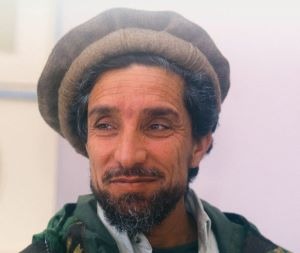
Ahmad Shah Massoud, a prominent figure in Afghan history, is celebrated for his resolute fight against the Taliban and his pivotal role in the defense of Afghanistan. His legacy, marked by bravery, intellect, and a deep commitment to his homeland, continues to inspire many. This article delves into his life, exploring his early years, rise to fame, and significant contributions, while also reflecting on the historical context that shaped his journey.
Early Life and Background
Ahmad Shah Massoud was born on September 2, 1953, in the Panjshir Valley, a region of northern Afghanistan known for its rugged terrain and strategic significance. Massoud’s early education was conducted at the French Lycée in Kabul, where he was introduced to the broader world beyond his mountainous homeland. His academic journey began with a focus on architecture, a field he was passionate about during his formative years.
Despite his early academic inclinations, Massoud’s path took a dramatic turn towards political activism and armed resistance. The geopolitical landscape of Afghanistan in the 1970s was marked by political instability and the rise of revolutionary movements. This environment catalyzed Massoud’s transition from a student to a fighter.
The Mujahideen and the Fight Against the Soviets
Massoud’s entry into the Mujahideen movement began in the late 1970s. With a group of only 20 men, equipped with basic weaponry, he embarked on a formidable journey against the Soviet-backed Afghan government. His strategic acumen and charismatic leadership soon transformed his small group into a significant military force.
The Soviet invasion of Afghanistan in 1979 provided Massoud with an opportunity to emerge as a key resistance leader. The Soviets, seeking to consolidate their control over Afghanistan, faced a formidable adversary in Massoud, whose guerrilla tactics and intimate knowledge of the mountainous terrain proved invaluable. His ability to withstand numerous Soviet offensives and encircle military operations contributed to the eventual withdrawal of Soviet forces in 1989.
Massoud’s resistance was not just a military struggle but also a profound ideological battle. He advocated for a democratic and inclusive vision of Islam, contrasting sharply with the extremist views propagated by the Taliban. His vision was rooted in the principles of moderate Islam and sought to promote a society where education and progress were accessible to all, including women.
The Rise of the Taliban and Continued Resistance
Following the Soviet withdrawal, Afghanistan plunged into civil war, with various factions vying for control. Massoud, leading the Northern Alliance, emerged as a key figure in the resistance against the Taliban, who seized control of Kabul in 1996. The Taliban’s rule was marked by its strict interpretation of Sharia law and severe restrictions on personal freedoms, particularly for women.
Massoud’s leadership during this period was characterized by his steadfast commitment to combating the Taliban’s oppressive regime. His efforts were not only military but also aimed at uniting various anti-Taliban factions to present a cohesive opposition. Despite limited resources and facing significant challenges, Massoud managed to hold out against the Taliban’s advances, symbolizing hope for a more democratic and free Afghanistan.
Assassination and Legacy
Ahmad Shah Massoud’s life was tragically cut short on September 9, 2001, when he was assassinated by suicide bombers disguised as journalists. This assassination occurred just days before the September 11 attacks on the United States, an event that significantly altered global geopolitics and had repercussions for Afghanistan.
Massoud’s assassination was a strategic move by extremist forces to weaken the anti-Taliban resistance and diminish the prospects of a unified opposition to the Taliban. His death was a significant blow to the Northern Alliance and to those fighting for a democratic Afghanistan.
In the wake of his death, Massoud was remembered as a symbol of resistance and a champion of democratic ideals. His legacy endures in Afghanistan and beyond, reflecting his contributions to the fight against tyranny and his commitment to a better future for his country. He is often compared to figures like Che Guevara for his blend of intellectualism and revolutionary zeal.
Historical Context and Impact
Ahmad Shah Massoud’s life and career cannot be fully understood without considering the historical and geopolitical context of his times. The Cold War era, with its complex interplay of superpowers and regional conflicts, played a crucial role in shaping the Afghan resistance movements.
The Soviet invasion of Afghanistan was part of a broader Cold War strategy, and the U.S. and its allies supported various resistance groups, including Massoud’s Mujahideen, as part of their efforts to counter Soviet influence. This support was instrumental in the Mujahideen’s success but also contributed to the region’s long-term instability.
Massoud’s vision for Afghanistan was one of unity and progress, contrasting sharply with the factionalism and extremism that plagued the country. His emphasis on education and democratic values was a direct challenge to the Taliban’s restrictive policies. Despite his efforts, the post-Soviet period in Afghanistan was marked by continued conflict and instability, culminating in the return of the Taliban and the ongoing challenges faced by the Afghan people.
Personal Life and Values
Massoud’s personal life was characterized by a deep commitment to his family and cultural heritage. He was known for his humility and dedication, often working long hours with minimal rest. His lifestyle was marked by simplicity, and he was deeply connected to his roots in the Panjshir Valley.
In his spare time, Massoud enjoyed intellectual pursuits, including reading and playing chess. His love for Persian poetry and classical literature reflected his appreciation for Afghan culture and history. Despite his public persona as a fierce warrior, he harbored a deep passion for knowledge and personal growth.
Conclusion
Ahmad Shah Massoud remains a towering figure in the history of Afghanistan, symbolizing resistance, intellect, and unwavering commitment to his homeland. His life’s work, marked by his fight against both Soviet and Taliban forces, reflects his dedication to a vision of a democratic and progressive Afghanistan. Massoud’s legacy continues to inspire those who seek justice and freedom, and his contributions are remembered as a crucial chapter in Afghanistan’s ongoing quest for stability and peace.
Through his life and work, Massoud exemplified the spirit of resilience and hope, leaving an enduring impact on his country and the world.


