
Introduction
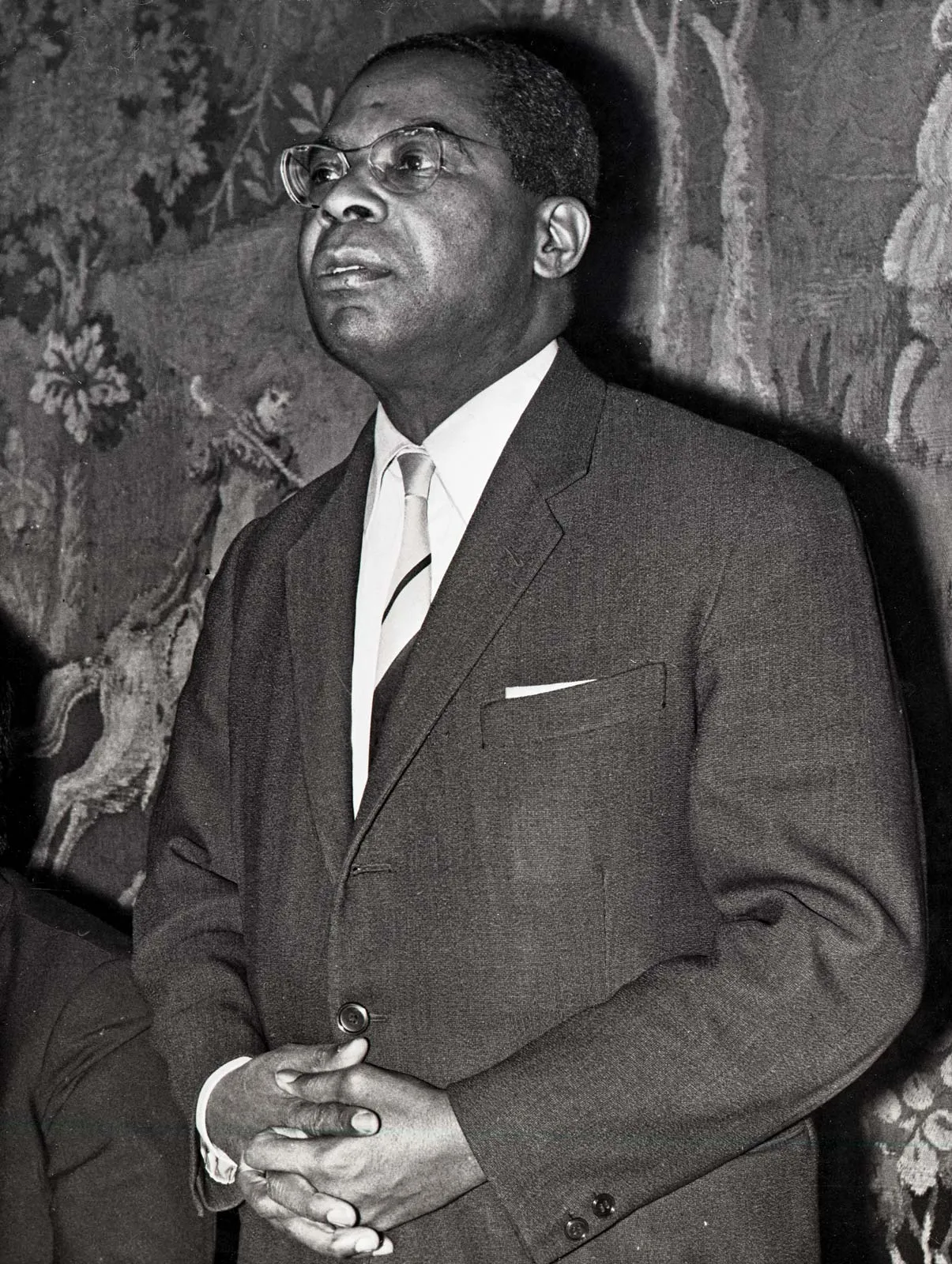
Aimé Césaire, a pivotal figure in the literary and political landscape of the 20th century, was a driving force behind the Negritude movement, a philosophy that celebrated African culture and identity. Born on June 26, 1913, in Basse-Pointe, Martinique, Césaire’s legacy is marked by his profound contributions to literature, his staunch opposition to colonialism, and his enduring influence on global intellectual thought.
Early Life and Education
Aimé Fernand David Césaire was born in Martinique, a Caribbean island that was, and remains, an overseas department of France. His early education took place in Martinique, but his intellectual journey truly began when he moved to Paris to attend the prestigious Lycée Louis-le-Grand, followed by advanced studies at the École Normale Supérieure. It was in Paris that Césaire met other key figures of the Negritude movement, including Léopold Sédar Senghor from Senegal and Léon Gontran Damas from French Guiana.
The Birth of Negritude
In the intellectual milieu of Paris, Césaire, Senghor, and Damas were deeply influenced by the writings of European authors who explored African culture. However, they felt that these works often misunderstood or misrepresented African heritage. In response, they founded the magazine “L’Étudiant Noir” (The Black Student), which became a cornerstone for black students in Paris. It was through this publication that the concept of Negritude was born—a philosophy that embraced the spiritual, artistic, and philosophical values of black Africa.
Negritude was more than just a literary movement; it was a form of resistance against the colonial narrative that sought to diminish African culture. Césaire and his contemporaries aimed to reclaim African identity, celebrate blackness, and fight against the dehumanizing effects of colonialism.
Literary Contributions
Aimé Césaire’s literary career is distinguished by his poetic and dramatic works that focus on the plight of colonized peoples, particularly those in French colonies. His most famous work, “Cahier d’un retour au pays natal” (“Notebook of a Return to My Native Land”), published in 1939, is a seminal text in the Negritude movement. This poem, written in a surrealist style, is both a personal reflection on Césaire’s identity and a broader commentary on the condition of black people under colonial rule. The work has been celebrated as an “encyclopedia” of the black experience under colonialism and a manifesto of hope for liberation.
In addition to poetry, Césaire also made significant contributions to drama. His plays often dealt with themes of colonialism, identity, and resistance. Notable among these are “La tragédie du roi Christophe” (“The Tragedy of King Christophe”) and “Une saison au Congo” (“A Season in the Congo”), which explore the challenges faced by post-colonial African leaders. His play “Une tempête” (“A Tempest”) is a reinterpretation of Shakespeare’s “The Tempest,” in which Césaire reimagines the story to highlight issues of race and colonialism.
Political Activism and Legacy
Aimé Césaire’s influence was not limited to the literary world. He was also a committed political activist who sought to improve the conditions of his native Martinique and other French colonies. In 1945, Césaire was elected as the mayor of Fort-de-France, the capital of Martinique, a position he held for over 50 years until his retirement in 2001. During this time, he also served as a deputy in the French National Assembly, where he advocated for the rights of the colonized peoples.
One of Césaire’s most significant political achievements was his role in the transformation of Martinique into a French overseas department in 1946. This change meant that Martinique would be fully integrated into France, with the same rights and responsibilities as any other French region. Césaire’s advocacy was instrumental in this process, as he sought to protect the cultural identity of Martinique while also ensuring its economic and political stability.
In 1956, Césaire broke with the French Communist Party, dissatisfied with its approach to colonial issues. He subsequently founded the Martinican Progressive Party, which focused on promoting Martinique’s autonomy within the French Republic. His political writings, such as the 1955 “Discours sur le colonialisme” (“Discourse on Colonialism”), were revolutionary in their critique of colonialism and its dehumanizing effects. This essay is considered a foundational text in post-colonial studies and has influenced generations of thinkers and activists.
Later Years and Death
In his later years, Aimé Césaire continued to write and speak out against injustices, even as he withdrew from active political life. His final years were spent in Fort-de-France, where he passed away on April 17, 2008, at the age of 94. Césaire’s death marked the end of an era, but his ideas and writings continue to resonate.
Césaire’s influence extends beyond the literary and political spheres. His work has been a source of inspiration for movements around the world that seek to reclaim cultural identity and resist oppression. The Negritude movement, which he helped to found, has had a lasting impact on the intellectual discourse around race, identity, and colonialism.
Historical Context and Nuances
Understanding Aimé Césaire’s life and work requires a deep appreciation of the historical context in which he lived. The early 20th century was a time of intense colonial exploitation in Africa and the Caribbean. European powers, including France, controlled vast territories, imposing their language, culture, and economic systems on indigenous populations. This colonial domination was justified by racist ideologies that dehumanized black people and depicted them as inferior.
In this context, the Negritude movement was a radical assertion of black identity and a challenge to colonial oppression. Césaire and his peers sought to reclaim the dignity of black people by celebrating African culture and history. They rejected the idea that European culture was superior and instead promoted a vision of a world in which all cultures were valued equally.
Césaire’s work also reflects the tensions and contradictions of his time. While he fought for the rights of black people, he also worked within the French political system, navigating the complexities of being both a critic of colonialism and a participant in the structures of power. His decision to push for Martinique’s status as a French department, for example, can be seen as both a pragmatic move to secure economic stability and a compromise that limited the island’s autonomy.
Aimé Césaire’s Fame and Influence
Aimé Césaire’s fame grew steadily throughout his life, both within his native Martinique and internationally. His writings were translated into multiple languages, and he became a prominent figure in global intellectual circles. Césaire’s influence can be seen in the work of later generations of writers, artists, and activists who have drawn on his ideas to explore issues of identity, resistance, and liberation.
In France, Césaire is celebrated as one of the country’s great literary figures, despite his often critical stance toward French colonialism. His works are studied in schools and universities, and his legacy is commemorated in public spaces. For example, the Aimé Césaire Cultural Centre in Fort-de-France stands as a testament to his enduring impact on Martinique and the broader Francophone world.
Conclusion
Aimé Césaire was a towering figure in the 20th century, whose contributions to literature, politics, and intellectual thought continue to resonate today. His work as a poet, playwright, and politician was deeply rooted in his commitment to justice and his belief in the power of culture to bring about social change. Césaire’s life is a testament to the enduring struggle for human dignity and the importance of reclaiming cultural identity in the face of oppression.
Through his writings and activism, Aimé Césaire not only shaped the course of Martinican history but also left a lasting legacy that continues to inspire people around the world. His story is one of resilience, creativity, and a deep commitment to the ideals of freedom and equality.


