
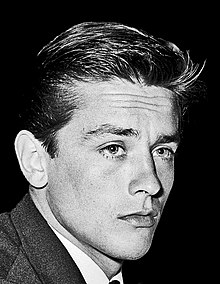
Alain Delon is a name synonymous with classic French cinema and timeless elegance. Born on November 8, 1935, in Sceaux, a suburb of Paris, Delon has captivated audiences for decades with his enigmatic screen presence, striking good looks, and versatile acting skills. His journey to fame is not just a story of cinematic success but also a narrative shaped by personal struggles, complex relationships, and an enduring legacy in the world of film. This article delves into the life highlights of Alain Delon, exploring his age, rise to fame, and the nuances of his storied career.
Early Life and Formative Years
Alain Delon’s early life was marked by turbulence and rebellion. Born to Édith Arnold and Fabien Delon, a café owner, Alain’s childhood was far from stable. His parents divorced when he was just four years old, leading to a difficult upbringing. He was sent to various foster homes and boarding schools, where his rebellious nature began to take shape. This rebellious streak continued throughout his adolescence, making him a difficult student and eventually leading to his expulsion from several schools.
At the age of 17, Delon sought a new direction by enlisting in the French Navy. He served as a paratrooper during the First Indochina War, a period that would later influence his tough and stoic on-screen persona. After his military service, Delon returned to Paris, where he took on various odd jobs while trying to find his footing in life. It was during this time that he caught the attention of the film industry, setting the stage for his future stardom.
The Breakthrough: Entry into Cinema
Alain Delon’s entry into cinema was almost accidental. While working as a waiter, he was discovered by a talent scout who recognized his potential. Delon soon found himself in Rome, where he auditioned for his first film role. In 1958, at the age of 23, he made his debut in the film “Quand la femme s’en mêle,” directed by Yves Allégret. His performance, though modest, caught the eye of filmmakers, and it wasn’t long before he was cast in more prominent roles.
Delon’s breakthrough came in 1960 with the Italian film “Rocco e i suoi fratelli” (Rocco and His Brothers), directed by the legendary Luchino Visconti. His portrayal of Rocco Parondi, a sensitive and conflicted young man, earned him critical acclaim and established him as a rising star in European cinema. The film, which also starred Claudia Cardinale, was a major success and remains one of the most important works of Italian neorealism.
Rise to International Fame
The 1960s were a transformative decade for Alain Delon. His collaboration with Luchino Visconti continued in 1963 with “Il Gattopardo” (The Leopard), where Delon played the role of Tancredi Falconeri, a charming yet ambitious young nobleman. The film, which also starred Burt Lancaster and Claudia Cardinale, was a critical and commercial success, further cementing Delon’s status as an international star.
Delon’s striking looks and brooding screen presence made him a natural fit for roles that required a mix of charm, danger, and complexity. In 1967, he starred in Jean-Pierre Melville’s “Le Samouraï,” where he played Jef Costello, a hitman with a strict code of honor. The film is now considered a classic of French cinema, and Delon’s performance is often cited as one of his best. His portrayal of the solitary, enigmatic assassin became iconic, influencing countless films and actors in the years to come.
During this period, Delon also starred in “La Piscine” (1969) alongside Romy Schneider, his former fiancée. The film, known for its sensual and tense atmosphere, was a box office hit and remains a staple of French cinema. Delon’s on-screen chemistry with Schneider, combined with his ability to convey both vulnerability and menace, made the film a standout in his career.
Personal Life: Love, Scandals, and Family
Alain Delon’s personal life has been as dramatic and eventful as his film roles. His relationship with Romy Schneider, which began in the late 1950s, was one of the most talked-about romances in Europe. The couple met on the set of “Christine” (1958) and quickly became one of the most glamorous pairs in the entertainment world. However, their relationship ended in 1963, leaving both Delon and Schneider heartbroken.
In 1964, Delon married Nathalie Barthélemy, a model with whom he had his first son, Anthony Delon. The marriage was short-lived, and the couple divorced in 1969. Delon then embarked on a long-term relationship with actress Mireille Darc, which lasted for over 15 years. After his relationship with Darc ended, Delon was linked to several other women, including Anne Parillaud, the star of “Nikita,” and Dutch model Rosalie van Breemen, with whom he had two more children, Anouchka and Alain-Fabien.
Delon’s personal life has also been marked by scandal. In 1968, his bodyguard, Stevan Marković, was found dead under mysterious circumstances. The incident led to a highly publicized investigation, during which Delon was questioned by the police. Although he was never charged, the case generated significant media attention and added to Delon’s reputation as a complex and sometimes controversial figure.
Awards and Recognition
Alain Delon’s contributions to cinema have been recognized with numerous awards and honors. In 1985, he was awarded the César Award for Best Actor for his role in “Notre histoire,” directed by Bertrand Blier. The film showcased Delon’s ability to tackle complex, emotionally charged characters, and his performance was widely praised by critics.
In 1995, Delon received a Lifetime Achievement Award at the Berlin International Film Festival, where he was honored with the Golden Bear. This award was a testament to his enduring influence and impact on global cinema. Delon was also made a Commander of the Ordre des Arts et des Lettres by the French government, recognizing his significant contributions to the arts.
In 2005, Delon was awarded the prestigious Legion of Honour, France’s highest civilian award, for his services to cinema. This honor was a fitting recognition of Delon’s status as a national icon and one of the most important figures in French film history.
The Later Years: A Complex Legacy
As Alain Delon entered the later stages of his career, he continued to take on challenging roles, though his appearances became less frequent. In the 1990s, he starred in films such as “Le Retour de Casanova” (1992) and “Un crime” (1993), where he explored more mature and introspective characters. While these films did not achieve the same level of success as his earlier works, they allowed Delon to showcase his range and depth as an actor.
In 2008, Delon returned to the screen as Julius Caesar in “Asterix at the Olympic Games,” a role that allowed him to bring a touch of humor to his otherwise serious persona. Although the film was not a critical success, Delon’s performance was a reminder of his enduring charisma and star power.
Delon’s legacy is not without its complexities. He has often been criticized for his outspoken views, particularly his comments on politics and social issues. Delon has expressed controversial opinions on topics such as immigration and gender roles, leading to accusations of misogyny and xenophobia. These controversies have, at times, overshadowed his achievements in cinema, complicating his public image.
Despite these challenges, Alain Delon remains a revered figure in the world of film. His influence can be seen in the work of countless actors and filmmakers who have drawn inspiration from his performances. Delon’s ability to portray characters that are both alluring and morally ambiguous has left an indelible mark on cinema, making him a true icon of the silver screen.
Conclusion
Alain Delon’s life and career are a testament to the power of charisma, talent, and perseverance. From his troubled youth to his rise as one of the most celebrated actors in the world, Delon’s journey is one of resilience and relentless pursuit of excellence. His performances in films like “Rocco e i suoi fratelli,” “Le Samouraï,” and “Il Gattopardo” have solidified his place in the pantheon of great actors, while his personal life continues to intrigue and captivate the public.
As Alain Delon continues to be honored and remembered for his contributions to cinema, his legacy as a symbol of French elegance and cinematic brilliance remains intact. Whether through his iconic roles or his complex off-screen persona, Delon’s influence will undoubtedly continue to be felt for generations to come.


