
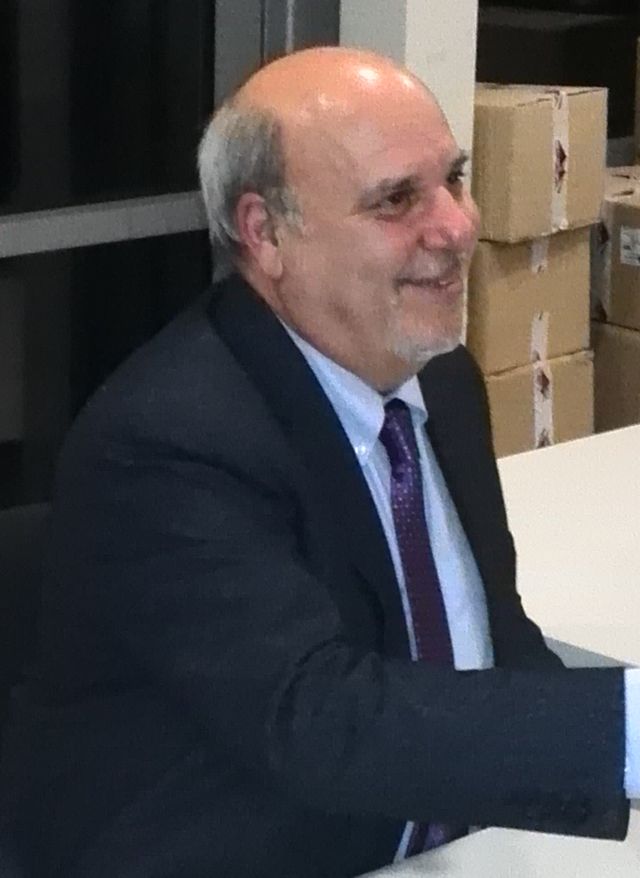
Alan Friedman, born on April 30, 1956, in New York City, is a renowned American journalist, author, and television host. Known for his incisive reporting and deep understanding of global economics and politics, Friedman has become a prominent figure in both American and European media. Over the decades, his work has spanned various continents and mediums, making him a significant voice in the discussion of international affairs. This article delves into the life of Alan Friedman, exploring his age, rise to fame, and the significant highlights of his life and career.
Early Life and Education
Alan Friedman was born into a Jewish family in New York City, where he spent his formative years. His academic journey was marked by excellence and a strong inclination toward economics and political science. Friedman pursued his undergraduate studies at New York University (NYU), a prestigious institution that laid the foundation for his future career in journalism and international relations.
His thirst for knowledge and global perspective led him to further his education at the London School of Economics (LSE) and the Johns Hopkins University School of Advanced International Studies (SAIS) in Washington, D.C. These institutions are known for producing some of the most influential thinkers and policymakers in the world, and Friedman’s time there equipped him with the analytical skills and theoretical knowledge that would define his career.
Early Career and Work with the U.S. Government
Before making his mark as a journalist, Alan Friedman had a brief but impactful stint in the U.S. government. He served as a Presidential Management Intern under President Jimmy Carter, working closely with figures like Bella Abzug and Donald Fraser. This experience provided Friedman with an insider’s view of U.S. political machinery and a deep understanding of international relations.
However, it was his move into journalism that truly set the stage for his rise to prominence. In 1979, Friedman began working for the Financial Times, initially writing from London before being posted to Italy as the paper’s correspondent. His work in Italy garnered significant attention, particularly for his insightful coverage of the country’s political and economic landscape.
Rise to Fame and Impact in Italy
Alan Friedman’s reputation as a journalist was solidified during his time in Italy. His in-depth reporting and analysis of Italian affairs won him the Premio Trento in 1987, recognizing him as the best foreign correspondent in the country. His reporting during this period was critical in shaping the global understanding of Italy’s complex political and economic challenges.
Friedman’s work extended beyond journalism into authorship. In 1988, he published Tutto in famiglia (originally titled Gianni Agnelli and the Network), a book that delved into the intricacies of Italy’s elite, particularly focusing on the Agnelli family, one of the most powerful and influential families in the country. This was followed by another book, Ce la farà il capitalismo italiano?, which examined the sustainability and challenges facing Italian capitalism. These works further established Friedman as an authoritative voice on Italian and European economic matters.
International Investigations and Global Impact
Friedman’s journalistic career took a significant turn when he began investigating international arms deals and political scandals. In the early 1990s, he gained widespread recognition for his work on the Iraq-gate scandal. As a global economy correspondent for the International Herald Tribune, Friedman co-produced a series of investigative reports for ABC’s Nightline with Ted Koppel. These reports exposed how the U.S. government had illegally sold arms to Iraq during the Iran-Iraq War, with the complicity of the National Bank of Labor. This investigation was a major scoop and demonstrated Friedman’s ability to navigate complex international issues with skill and precision.
His book Spider’s Web: The Secret History of How the White House Illegally Armed Iraq (co-authored with Emanuela Minnai) expanded on these revelations, shedding light on the secretive and often murky world of international arms deals. This work not only cemented his reputation as a hard-hitting investigative journalist but also highlighted the often-overlooked ethical dimensions of global politics and economics.
Transition to Television and Further Recognition
In addition to his print journalism, Alan Friedman became a familiar face on television, both in Italy and internationally. His ability to convey complex economic concepts in an accessible and engaging manner made him a popular figure on television networks. During the 1990s, he hosted several programs on Italian television, including Money Line on RAI Tre, and Maastricht Italia, which he co-created with Giovanni Minoli and Myrta Merlino. These programs focused on economic issues and were instrumental in educating the public about the implications of European integration and other global economic trends.
Friedman’s television presence was not confined to Italy. He also became a regular contributor to major networks in the United States and the United Kingdom, including the BBC, where he was a familiar face on the program Newsnight. His work on television further broadened his audience and reinforced his status as a leading commentator on global economic and political issues.
In 1997, Friedman received the Medaglia d’onore from the Italian Parliament, becoming the only American journalist to receive this prestigious award. This recognition underscored the significant impact of his work in Italy and his contributions to the country’s media landscape.
Later Career and the Creation of SkyTg24
As the new millennium approached, Alan Friedman continued to expand his influence in the media world. In 2003, he played a key role in the creation and launch of SkyTg24, the all-news channel of Sky Italia. Working alongside media mogul Rupert Murdoch and executives like Emilio Carelli and Tom Mockridge, Friedman helped shape the channel’s editorial direction, bringing his deep expertise in economics and international affairs to a broader audience.
During this period, Friedman also served as the global economy columnist for The Wall Street Journal Europe, where he continued to provide incisive commentary on economic issues. His columns were widely read and respected for their clarity, insight, and willingness to challenge conventional wisdom.
Controversy and Challenges
Despite his many successes, Alan Friedman’s career has not been without controversy. In 2011, his production company, FBC Media, came under scrutiny after the British newspaper The Independent published an article accusing the company of receiving millions of dollars from the Malaysian government to produce documentaries promoting the country’s interests. These documentaries were aired on the BBC, leading to an investigation by the BBC Trust’s Editorial Standards Committee.
The investigation found that several of the documentaries produced by FBC Media did not meet the BBC’s editorial guidelines, raising questions about conflicts of interest. This controversy was a significant challenge for Friedman, who had built his career on credibility and journalistic integrity. However, he continued to work in the media, adapting to the changing landscape and maintaining his presence as a prominent commentator.
Recent Work and Publications
In 2014, Alan Friedman published Ammazziamo il gattopardo with Rizzoli, a book that quickly became a bestseller in Italy. The book’s release was preceded by a series of explosive revelations published in Corriere della Sera, one of Italy’s leading newspapers. In these excerpts, Friedman disclosed that Giorgio Napolitano, then President of Italy, had been considering replacing Prime Minister Silvio Berlusconi with Mario Monti as early as the summer of 2011. These revelations sparked a media firestorm and intense political debate in Italy, further solidifying Friedman’s reputation as a journalist who was unafraid to tackle sensitive and controversial issues.
Friedman’s ability to weave together in-depth research, insider access, and a compelling narrative made Ammazziamo il gattopardo a critical and commercial success. The book’s impact extended beyond the realm of journalism, influencing public discourse and political developments in Italy during a time of significant economic and political uncertainty.
Legacy and Ongoing Influence
Alan Friedman’s career spans over four decades, during which he has consistently demonstrated a deep commitment to investigative journalism, economic analysis, and public service. His work has had a profound impact on both American and European media, shaping the way audiences understand complex economic and political issues.
Friedman’s influence extends beyond his written and televised work. He has also been a key figure in the development of 24-hour news channels in Europe, particularly with the creation of SkyTg24. His contributions to journalism and media have been recognized with numerous awards and honors, reflecting the breadth and depth of his impact.
In addition to his professional achievements, Friedman’s work has sparked important conversations about the role of journalism in a globalized world, the ethics of media production, and the responsibilities of journalists in holding power to account. His career serves as a reminder of the critical role that journalism plays in a healthy democracy, particularly in an era of increasing political and economic complexity.
Conclusion
Alan Friedman’s life and career are a testament to the power of journalism to inform, educate, and influence public discourse. From his early days as a correspondent for the Financial Times to his role in shaping the landscape of 24-hour news in Italy, Friedman has consistently pushed the boundaries of what journalism can achieve. His work has not only provided audiences with a deeper understanding of global economic and political issues but has also challenged the status quo and sparked important debates.
As a journalist, author, and media innovator, Alan Friedman has left an indelible mark on the field of journalism. His legacy is one of rigor, integrity, and a relentless pursuit of the truth, qualities that continue to inspire journalists and readers around the world.


