
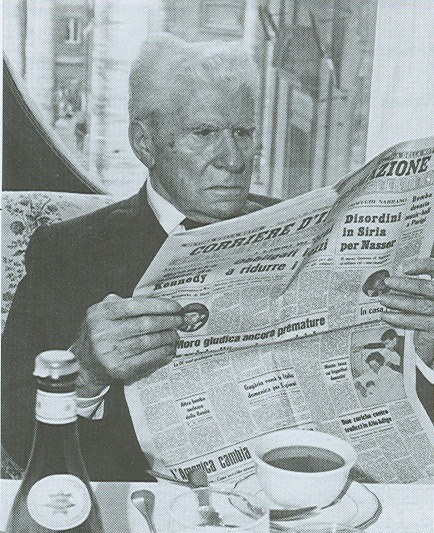
Alberto Bergamini, born on June 1, 1871, in San Giovanni in Persiceto, Bologna, was a prominent Italian journalist and a pivotal figure in the history of Italian media. His contributions to journalism and his influence on Italian politics during a transformative period in the nation’s history are noteworthy. This article delves into Bergamini’s life, career, and lasting impact, offering detailed insights and exploring the historical context of his achievements.
Early Life and Career Beginnings
Childhood and Education
Alberto Bergamini was born into a well-educated family, which laid the foundation for his intellectual pursuits. His early interest in literature and writing was evident, and he quickly gravitated toward journalism. By the age of twenty, he had already begun collaborating with “Il Resto del Carlino,” a significant newspaper in Bologna.
Early Journalism Career
Bergamini’s talent and dedication soon led him to more prominent roles. He became the director of the “Corriere del Polesine,” and his prowess as a journalist caught the attention of “Corriere della Sera,” one of Italy’s leading newspapers. As the correspondent and head of the Roman office for “Corriere della Sera,” Bergamini established himself as a critical voice in Italian journalism.
Founding of “Il Giornale d’Italia”
Collaboration with Sidney Sonnino and Antonio Salandra
In 1901, alongside Sidney Sonnino and Antonio Salandra, Bergamini founded “Il Giornale d’Italia.” This newspaper quickly became a mouthpiece for conservative liberal values. As its director for nearly two decades, Bergamini used the platform to support key political figures and policies, including the African expedition in Libya and Salandra’s government.
Innovating Journalism: The Third Page
Bergamini’s most notable contribution to journalism was the creation of the “third page,” dedicated to culture. This innovation, first introduced on December 10, 1901, was soon adopted by other major newspapers like “Corriere della Sera.” The third page provided a space for literary and cultural discussions, significantly enriching the journalistic landscape of the time.
Political Involvement and Anti-Fascism
Opposition to Fascism
Bergamini’s liberal ideals clashed with the rise of fascism in Italy. His staunch opposition to Benito Mussolini’s regime led to his departure from “Il Giornale d’Italia” in 1923 and a temporary withdrawal from journalism. This period marked a challenging phase in Bergamini’s life, as he navigated the political turmoil of the era.
Return to Journalism and Politics
With Mussolini’s fall and the establishment of the Badoglio government, Bergamini resumed his journalistic and political activities. In 1944, he founded a democratic-liberal movement, which later merged into the National Monarchist Party. His political career saw him return to the Senate, where he played a significant role in Italy’s post-war reconstruction.
Contributions to the Italian Republic
Role in the Italian Republic
After the establishment of the Italian Republic, Bergamini became a member of the National Council and the Constituent Assembly. He chaired the mixed group and re-entered the Senate from 1948 to 1953. His efforts during this period were instrumental in shaping the new Italian Republic, reflecting his enduring commitment to liberal democratic values.
Recognition and Honors
Bergamini’s professional excellence and contributions to journalism were widely recognized. In 1949, he was awarded the Saint-Vincent Prize for Journalism, and he served as president of the National Federation of the Italian Press twice—first in 1923, albeit briefly, and then from 1956 until his death in 1962.
Legacy and Archival Contributions
Bergamini’s Archival Legacy
Alberto Bergamini’s legacy is preserved through extensive archival collections. His document and book archive, enriched by numerous donations, is housed in his hometown, San Giovanni in Persiceto. Additionally, the Italian Senate maintains a significant collection of his letters and manuscripts, which includes correspondence with prominent figures such as Giovanni Giolitti, Sidney Sonnino, and Giovanni Gentile.
Impact on Journalism
Bergamini’s creation of the third page and his role in founding “Il Giornale d’Italia” had a lasting impact on Italian journalism. By prioritizing cultural content and political discourse, he elevated the standards of journalism and inspired future generations of journalists.
Historical Context and Influence
Italy in the Early 20th Century
Bergamini’s life and work must be understood within the broader context of early 20th-century Italy. This period was marked by significant social and political changes, including the rise and fall of fascism, the struggle for Italian unification, and the eventual establishment of the Italian Republic. Bergamini’s journalism and political activism were deeply intertwined with these historical developments.
Liberalism and Conservatism
Bergamini’s alignment with conservative liberalism reflected his belief in the importance of cultural and political progress grounded in traditional values. His support for figures like Sidney Sonnino and Antonio Salandra underscored his commitment to a balanced approach to governance, which sought to modernize Italy while preserving its core principles.
Personal Life and Final Years
Personal Relationships
Bergamini’s personal life was marked by his dedication to his work and his liberal values. He was known for his integrity and commitment to his beliefs, which often placed him at odds with the prevailing political forces of his time.
Death and Legacy
Alberto Bergamini passed away on December 22, 1962, in Rome, at the age of 91. His death marked the end of an era for Italian journalism and politics. However, his contributions continue to be celebrated, and his legacy lives on through the institutions and practices he helped establish.
Conclusion
Alberto Bergamini’s life and career are a testament to his enduring impact on Italian journalism and politics. From his early days at “Il Resto del Carlino” to his foundational role in “Il Giornale d’Italia,” Bergamini consistently championed liberal values and cultural enrichment. His opposition to fascism and his contributions to the Italian Republic highlight his commitment to democracy and freedom.
Bergamini’s legacy is preserved not only through his written works and archival collections but also through the lasting changes he brought to Italian journalism. His innovation of the third page and his influence on political discourse remain relevant today, inspiring journalists and political thinkers alike. As we reflect on his life and achievements, Alberto Bergamini stands out as a pivotal figure in the history of Italian media and politics.


