
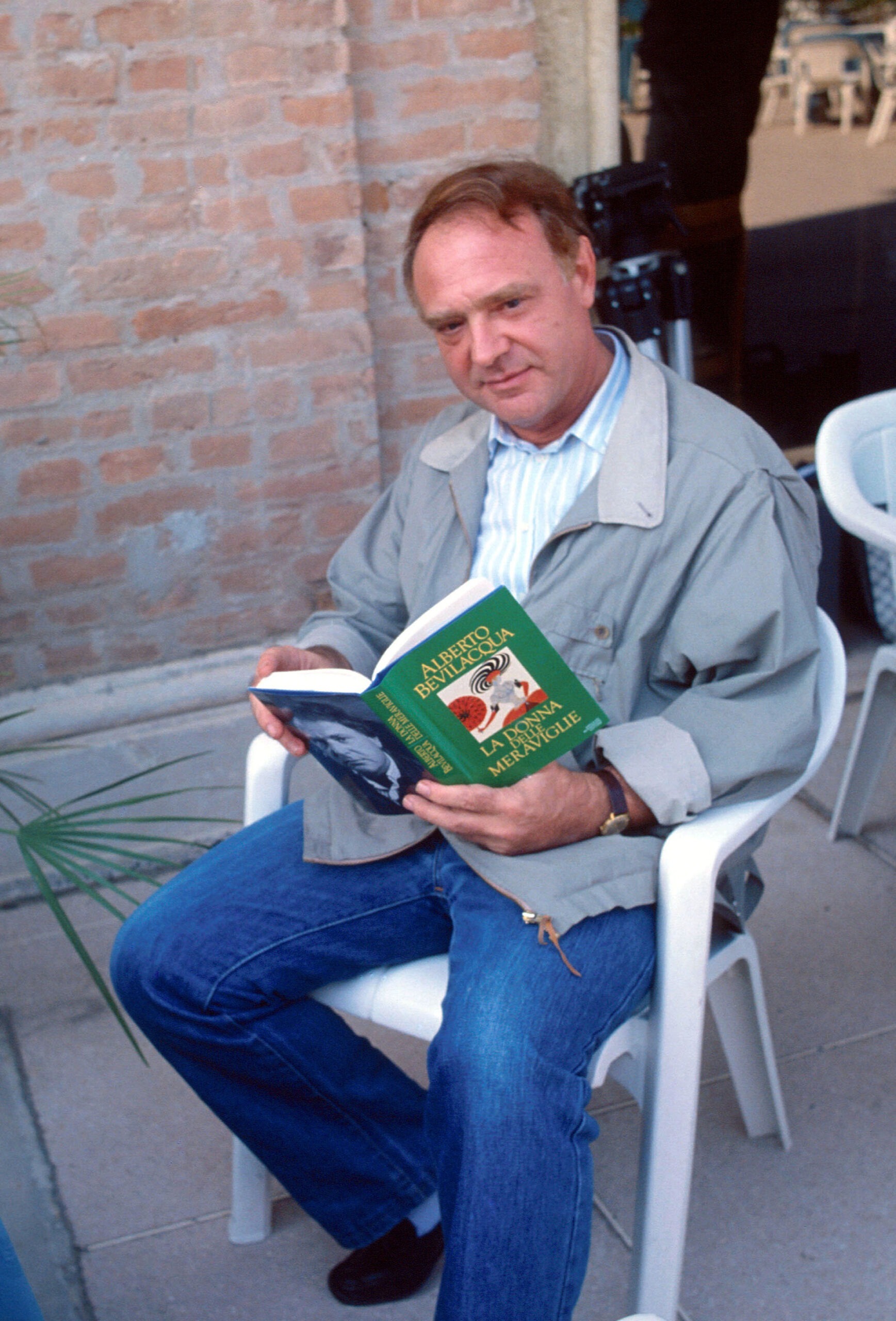
Alberto Bevilacqua, born on June 27, 1934, in Parma, Italy, was a renowned Italian writer, poet, and filmmaker. His multifaceted career spanned several decades, during which he gained fame and acclaim both in Italy and internationally. Bevilacqua’s work is characterized by its deep exploration of human emotions, societal contradictions, and a distinctive blend of realism and fantasy. This article delves into his life, career, and the significant milestones that marked his journey in the literary and cinematic worlds.
Early Life and Literary Beginnings
Bevilacqua’s early life in Parma profoundly influenced his literary work. Parma, a city rich in history and culture, provided a vibrant backdrop for his formative years. His initial foray into literature was marked by the publication of his first collection of short stories, “La polvere sull’erba” (1955), which caught the attention of the celebrated writer Leonardo Sciascia. This early recognition set the stage for Bevilacqua’s prolific career.
Poetic Debut and Early Success
In 1961, Bevilacqua made his debut as a poet with “L’amicizia perduta.” His unique poetic voice, characterized by a lyrical exploration of human relationships and existential themes, quickly garnered critical acclaim. However, it was his 1964 novel “La Califfa” that catapulted him to international fame. The novel, which he later adapted into a film starring Ugo Tognazzi and Romy Schneider, tells the story of Irene Corsini, a strong-willed woman navigating the complexities of love and power in post-war Italy. “La Califfa” remains one of Bevilacqua’s most celebrated works, introducing his recurring theme of powerful female protagonists.
Major Novels and Literary Themes
Bevilacqua’s subsequent novels continued to explore the tensions between personal desires and societal expectations. “Questa specie d’amore” (1966), which won the prestigious Campiello Prize, delves into the conflict between provincial life and the intellectual challenges of urban existence. The novel’s protagonist grapples with his attachment to his homeland and his aspirations in the broader cultural landscape of Italy. This theme of duality, between the familiar and the novel, is a constant in Bevilacqua’s work.
Another significant work, “Una città in amore” (1962), offers a rich portrayal of provincial life, capturing the grandeur and pettiness of its characters. Bevilacqua’s narrative style, noted for its lyrical and visionary qualities, is evident in these early works and remains a hallmark of his storytelling.
Recognition and Awards
Bevilacqua’s literary prowess earned him numerous accolades throughout his career. His novel “L’occhio del gatto” (1968) won the prestigious Premio Strega, Italy’s most coveted literary award. This work, along with “Un viaggio misterioso” (1972), which received the Premio Bancarella, and “I sensi incantati” (1991), also a Premio Bancarella winner, solidified his reputation as one of Italy’s foremost novelists.
Cinematic Endeavors
Parallel to his literary success, Bevilacqua also made significant contributions to Italian cinema. His directorial debut came with the film adaptation of “La Califfa” in 1970. The film’s success established him as a capable filmmaker who could translate his complex characters and intricate narratives from page to screen. Over the years, Bevilacqua directed several films, often adapting his novels, thereby expanding his artistic expression and reaching a broader audience.
Poetry and Later Works
Throughout his career, Bevilacqua remained dedicated to poetry. His poetic works, including “La crudeltà” (1975), “Immagine e somiglianza” (1982), “Vita mia” (1985), “Il corpo desiderato” (1988), “Messaggi segreti” (1992), and “Piccole questioni di eternità” (2002), reflect his introspective and philosophical approach to life’s fundamental questions. His poetry often explores themes of love, memory, and the intricate ties to his native land.
Maurizio Cucchi, a contemporary poet and critic, aptly described Bevilacqua’s poetry as an exploration of “love and eroticism, the awareness of indissoluble ties not only with his homeland but also with familial figures.” This deep connection to his roots and the recurring motif of memory are evident in his later collection “Legami di sangue.”
Personal Life and Legacy
Alberto Bevilacqua’s personal life was marked by his long-term relationship with actress and writer Michela Miti (Michela Macaluso). Despite facing health challenges in his later years, Bevilacqua continued to write and contribute to the cultural landscape of Italy until his death on September 9, 2013, at the age of 79.
Bevilacqua’s legacy is one of rich literary and cinematic contributions that continue to resonate with audiences. His works have been widely translated, reaching readers in Europe, the United States, Brazil, China, and Japan. Through his novels, poetry, and films, Bevilacqua offered profound insights into the human condition, making him a lasting figure in Italian and global literature.
Conclusion
Alberto Bevilacqua’s life and career exemplify the power of storytelling in its many forms. His ability to weave intricate narratives that capture the essence of human experience has left an indelible mark on both literature and cinema. From his early days in Parma to his international acclaim, Bevilacqua’s journey is a testament to his talent and dedication to his craft. His exploration of love, memory, and societal contradictions continues to inspire and challenge readers and viewers alike.
As we reflect on his contributions, it is clear that Alberto Bevilacqua’s work transcends time, offering timeless insights into the complexities of life. His stories, imbued with lyrical beauty and profound humanity, remain relevant and cherished by new generations of readers and audiences.


