
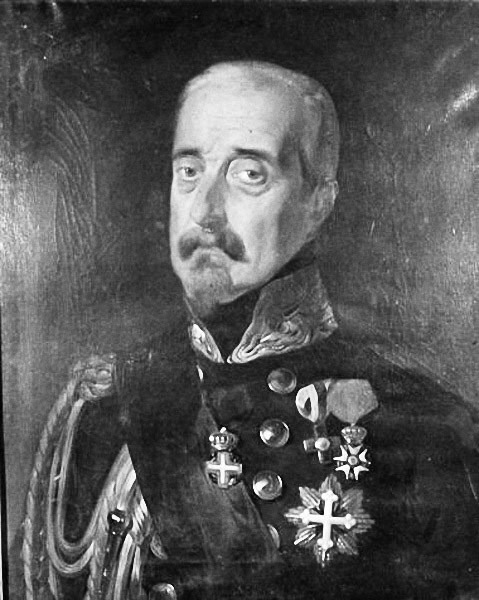
Alberto La Marmora, born on April 7, 1789, in Turin, Italy, is a significant figure in both military and scientific circles of the 19th century. His contributions to the Italian unification process, his extensive studies on the island of Sardinia, and his role as a military officer mark him as an influential character in Italian history. This article delves into the life, age, fame, and key highlights of Alberto La Marmora, providing a comprehensive overview of his achievements and legacy.
Early Life and Family Background
Alberto La Marmora was born into an illustrious family that boasted a rich history of military and intellectual achievements. His father, Captain Celestino Ferrero, the Marquis of La Marmora, and his mother, Raffaella Argentero di Rasezio, were both of noble descent. The couple had 16 children, of which only 13 survived to adulthood. Alberto was the third son and grew up alongside his brothers Carlo Emanuele, Alessandro, and Alfonso, who would all make notable contributions to Italy in various fields.
Growing up in such an environment, Alberto was instilled with the values of duty, honor, and intellectual curiosity from a young age. These early influences shaped his later career, both in the military and in his scientific endeavors.
Military Career: From Napoleon to the Kingdom of Sardinia
Alberto La Marmora’s military career began at the age of 17 when he joined the military academy at Fontainebleau in France. By 1807, he had achieved the rank of second lieutenant, marking the start of a distinguished career. He served in the latter campaigns of the Napoleonic Wars, demonstrating his military prowess and leadership capabilities.
After the fall of Napoleon and the subsequent Restoration period, La Marmora returned to serve in the Piedmontese army. His loyalty to the House of Savoy and his commitment to the Italian cause became evident during the revolutionary movements of 1821. These uprisings were part of the broader Risorgimento, a series of political and military events that eventually led to the unification of Italy.
During this period, La Marmora supported figures like Santorre di Santarosa and Carlo Alberto of Savoy. However, after the failed revolution, he was dismissed from active service and sent into a sort of exile in Sardinia. This move, rather than hindering his career, marked the beginning of his deep association with the island, which would become one of his great passions.
Sardinia: A Lifelong Passion and Scientific Pursuits
Alberto La Marmora’s relationship with Sardinia began in 1819 when he first visited the island to study its bird species. This initial visit sparked a lifelong fascination with Sardinia’s natural environment, archaeology, and geology. Over the years, La Marmora conducted extensive studies on the island, contributing significantly to the understanding of its geography and history.
His work culminated in several important publications, including “Voyage en Sardaigne” and “Itineraires de l’ile de Sardaigne,” which provided detailed descriptions of Sardinia’s landscapes, geological formations, and archaeological sites. These works not only established La Marmora as a leading figure in the scientific community but also played a crucial role in bringing Sardinia to the attention of the broader European intellectual community.
In recognition of his scientific achievements, La Marmora was elected to prestigious institutions such as the Academy of Sciences of Turin and the Geological Academy of Florence. His contributions to the study of Sardinia remain highly regarded, and his name is often associated with the island’s natural and historical exploration.
Contributions to the Italian Unification
While La Marmora’s scientific pursuits were significant, his contributions to the Italian unification process were equally important. During the First Italian War of Independence (1848-1849), La Marmora played a crucial role in organizing volunteer forces in the Veneto region. His leadership and strategic insight were instrumental in the early phases of the conflict.
In 1849, following the Armistice of Salasco, La Marmora was appointed as the Royal Commissioner and Commander General of the Military Division of Sardinia. This position allowed him to influence the military strategies and policies that would later contribute to the unification of Italy.
La Marmora’s loyalty to King Carlo Alberto and his dedication to the cause of Italian independence were unwavering. His efforts were recognized in 1848 when he was appointed a Senator by the King, further solidifying his influence within the political and military spheres of the newly forming Italian state.
Scientific and Cultural Impact
Alberto La Marmora’s impact extended beyond his military and political roles. He was a true Renaissance man, with deep interests in archaeology, geology, and natural history. His scientific contributions were not limited to Sardinia; he was also a respected member of various scientific societies across Italy.
In 1829, La Marmora was inducted into the Academy of Sciences of Turin, one of Italy’s most prestigious academic institutions. He later joined the Academy of Geology in Florence in 1832, further establishing his credentials as a leading scientist of his time.
His appointment as Inspector of Mines in Sardinia in 1836 and later as the Commander of the Naval School in Genoa in 1841, demonstrated his diverse interests and expertise. These positions allowed him to influence the development of scientific and educational institutions in Italy, contributing to the country’s intellectual and cultural growth during a pivotal period in its history.
Personal Life and Legacy
Alberto La Marmora’s personal life was marked by his deep commitment to his work and his country. Although much of his life was dedicated to his military and scientific pursuits, La Marmora was also known for his intellectual curiosity and his dedication to the betterment of society.
La Marmora passed away in Turin on May 18, 1863, at the age of 74. His death marked the end of a life filled with significant achievements, both in the military and scientific fields. However, his legacy lived on through his numerous publications, his contributions to the unification of Italy, and his influence on the study of Sardinia.
In his honor, the island of La Maddalena in Sardinia was named after him, a testament to his enduring connection with the island and his contributions to its exploration and study.
Historical Context: The Risorgimento and La Marmora’s Role
To fully appreciate Alberto La Marmora’s contributions, it is essential to understand the historical context of his time. The late 18th and early 19th centuries were periods of great upheaval in Europe, marked by the French Revolution, the Napoleonic Wars, and the subsequent restoration of monarchies.
In Italy, this period was characterized by a growing sense of nationalism and a desire for unification. The Risorgimento, or resurgence, was a series of political and military campaigns aimed at unifying the various states of the Italian peninsula into a single nation. La Marmora’s involvement in the Risorgimento, particularly his support for Carlo Alberto and his role in the First Italian War of Independence, was a reflection of his deep commitment to the Italian cause.
La Marmora’s scientific work was also influenced by the intellectual currents of his time. The 19th century saw significant advances in geology, archaeology, and natural history, fields in which La Marmora made important contributions. His work in Sardinia was part of a broader trend of exploration and scientific inquiry that characterized the period.
Conclusion: Alberto La Marmora’s Enduring Influence
Alberto La Marmora’s life is a testament to the power of dedication, intellectual curiosity, and a commitment to one’s country. His contributions to the Italian unification process, his extensive scientific studies, and his role in the exploration of Sardinia make him a figure of enduring significance in Italian history.
La Marmora’s legacy continues to be felt today, both in the fields of science and in the historical memory of the Italian unification. His work laid the groundwork for future explorations and studies of Sardinia, and his military and political efforts contributed to the creation of a unified Italy.
In understanding Alberto La Marmora, we gain a deeper appreciation for the complexities of the Risorgimento, the importance of scientific inquiry, and the enduring impact of one individual’s contributions to the betterment of society. His life serves as an inspiration for future generations, a reminder that true greatness is achieved through a combination of intellectual pursuit, dedication to one’s country, and a commitment to advancing knowledge.


