
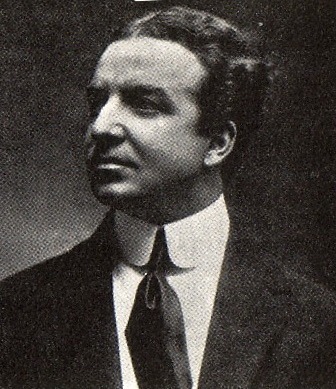
Aldo Palazzeschi, born Aldo Giurlani, was one of Italy’s most original and provocative literary figures in the early 20th century. Born in Florence on February 2, 1885, Palazzeschi emerged as a central figure in the Italian avant-garde, particularly through his association with the Futurist movement. His work as a poet, novelist, and critic challenged the conventions of his time, offering a unique perspective on the rapidly changing social and cultural landscape of Italy. His literary career, marked by a blend of innovation and tradition, reflects the broader currents of European modernism while maintaining a distinctively Italian flavor.
Early Life and Literary Beginnings
Aldo Palazzeschi was born into a middle-class family in Florence. His family was involved in the textile trade, a profession that provided Palazzeschi with a comfortable upbringing. However, his interests quickly diverged from the commercial world, as he was drawn to the arts, particularly theater and literature. This early passion for the arts led him to enroll in the “Tommaso Salvini” acting school in Florence, where he studied under Luigi Rasi, a prominent figure in the Italian theater scene.
It was during these formative years that Palazzeschi began to cultivate his identity as a writer. He adopted the surname “Palazzeschi” from his maternal grandmother, a decision that symbolized his desire to forge a new path separate from his family’s commercial background. His first forays into literature were marked by a rebellious spirit, as he sought to challenge the literary norms of his time.
In 1905, Palazzeschi published his first collection of poems, I cavalli bianchi (“The White Horses”). This early work was characterized by its lyrical beauty and an underlying sense of irony, traits that would become hallmarks of Palazzeschi’s style. While this collection did not immediately catapult him to fame, it established him as a poet with a distinct voice, unafraid to explore unconventional themes and forms.
Association with Futurism
The turning point in Palazzeschi’s career came with his association with the Futurist movement, led by Filippo Tommaso Marinetti. The Futurists sought to break away from the past and embrace the dynamism of modern life, celebrating technology, speed, and violence as expressions of a new cultural paradigm. Palazzeschi found a natural affinity with the Futurists, particularly in their opposition to traditional forms of expression and their embrace of “words in freedom,” a concept that rejected conventional syntax and punctuation.
Palazzeschi’s involvement with Futurism began in earnest with the publication of his poetry collection Poemi in 1909. This work brought him to the attention of Marinetti, who invited Palazzeschi to contribute to the Futurist movement. Palazzeschi embraced the Futurists’ call for a radical rethinking of art and literature, and in 1910, he published L’incendiario (“The Fire-Starter”), a collection of poems that fully embodied the Futurist aesthetic. The collection included the famous poem E lasciatemi divertire (“And Let Me Have Fun”), which exemplified Palazzeschi’s playful yet subversive approach to poetry.
In 1911, Palazzeschi published one of his most significant works, Il Codice di Perelà (“The Code of Perelà”). This novel, subtitled “A Futurist Novel,” was a fantastical allegory that challenged conventional narrative structures and explored themes of identity, freedom, and societal norms. The protagonist, Perelà, is a man made of smoke who becomes a symbol of non-conformity and the ephemeral nature of existence. The novel’s innovative structure and themes positioned Palazzeschi as a leading figure in the Italian avant-garde.
Breaking with Futurism and the Shift to Tradition
Despite his initial enthusiasm for Futurism, Palazzeschi’s relationship with the movement began to sour as World War I approached. The Futurists, including Marinetti, became increasingly nationalistic and militaristic, advocating for Italy’s involvement in the war. Palazzeschi, however, was a pacifist, and he found himself at odds with the movement’s growing alignment with aggressive nationalism.
In 1914, Palazzeschi publicly broke with the Futurists, distancing himself from their pro-war stance. This rupture marked a significant turning point in his career, as he began to move away from the radical experimentation of his earlier work and toward a more traditional literary style. However, even as he returned to more conventional forms, Palazzeschi retained his penchant for irony and satire, using these tools to critique both contemporary society and the literary establishment.
One of the most notable works from this period is the novel Le sorelle Materassi (“The Materassi Sisters”), published in 1934. The novel tells the story of two spinster sisters in a small Tuscan town who become infatuated with their young, handsome nephew. The story is a tragicomic exploration of provincial life, and it is often seen as a critique of the repressive social norms of the time. Le sorelle Materassi was a commercial success and remains one of Palazzeschi’s most widely read works.
World War I and Its Aftermath
During World War I, Palazzeschi managed to avoid frontline service by enlisting in the engineering corps, where he served in a non-combatant role. The war had a profound impact on Palazzeschi, deepening his disillusionment with the nationalist fervor that had gripped much of Europe. His post-war work reflects a more introspective and critical perspective, as he grappled with the trauma of the conflict and its aftermath.
In the years following the war, Palazzeschi maintained a relatively low profile, avoiding the political entanglements that characterized much of the Italian literary scene during the rise of Fascism. He continued to write, but his work became increasingly detached from the avant-garde movements that had once defined his career. Instead, he focused on exploring the human condition through a lens of irony and skepticism, often highlighting the absurdity of social conventions and the futility of rigid ideological thinking.
Later Life and Legacy
As the 20th century progressed, Palazzeschi’s literary output continued to evolve. In the 1960s, he experienced a resurgence of interest in his earlier experimental work, particularly as the neo-avant-garde movement began to look back at the early 20th century for inspiration. Palazzeschi, now in his later years, was somewhat amused by this renewed attention, but he accepted the recognition with his characteristic wit and humility.
During this period, Palazzeschi published several works that revisited the themes and styles of his youth. Notable among these is Il buffo integrale (“The Integral Buffoon”) published in 1966, a collection of writings that Italo Calvino, one of Italy’s most prominent post-war authors, praised for its inventive use of language and its playful exploration of the boundaries between reality and fantasy.
In 1971, Palazzeschi published Storia di un’amicizia (“Story of a Friendship”), a novel that further solidified his reputation as a master of irony and satire. The novel, which tells the story of a complicated friendship between two men, is a reflection on the complexities of human relationships and the ways in which societal expectations can shape and distort personal connections.
Aldo Palazzeschi passed away on August 17, 1974, in Rome. He left behind a rich and varied body of work that continues to be studied and celebrated for its innovative approach to both form and content. His legacy as a pioneer of Italian modernism and a precursor to later avant-garde movements is secure, and his influence can be seen in the works of many subsequent writers and artists.
Conclusion
Aldo Palazzeschi’s life and work encapsulate the spirit of innovation and rebellion that characterized the early 20th century. From his beginnings as a poet and actor in Florence to his central role in the Futurist movement and his later embrace of more traditional forms, Palazzeschi remained a figure of constant evolution. His willingness to challenge conventions, both in his writing and in his personal beliefs, made him a key figure in the Italian literary canon.
Palazzeschi’s work is notable not only for its stylistic experimentation but also for its deep engagement with the social and cultural issues of his time. His critique of bourgeois values, his exploration of identity and freedom, and his rejection of authoritarianism resonate with contemporary readers and scholars alike. As a result, Aldo Palazzeschi stands as a towering figure in Italian literature, whose contributions continue to inspire and provoke thought.


