
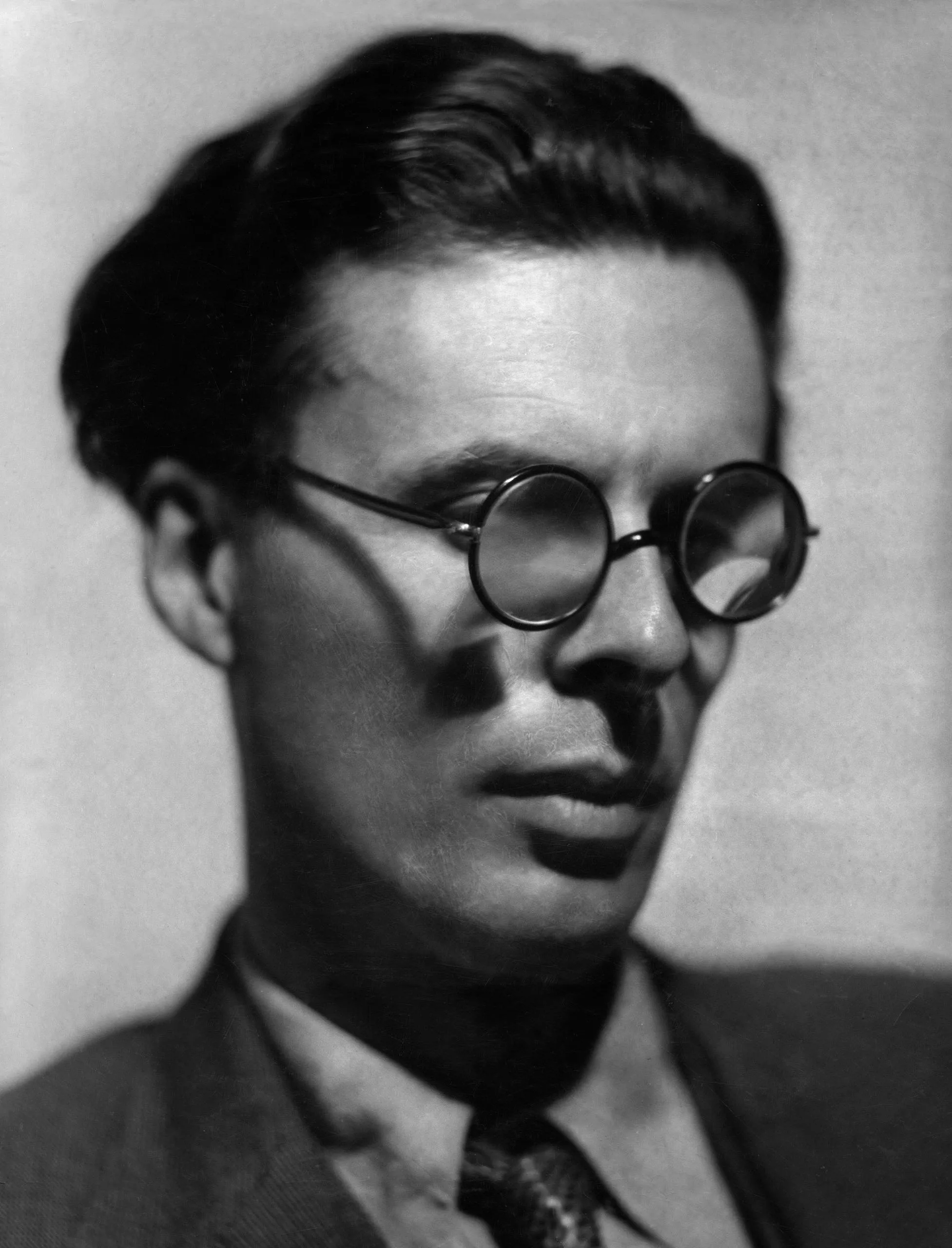
Aldous Huxley, born on July 26, 1894, in Godalming, England, is one of the most significant literary figures of the 20th century. Known for his sharp intellect, philosophical inquiries, and prophetic insights, Huxley’s works continue to captivate readers and scholars alike. His exploration of dystopian societies, human consciousness, and the intersection of science and society has made him a central figure in discussions about the future of humanity. In this comprehensive exploration, we will delve into the life, works, and legacy of Aldous Huxley, highlighting the key moments that defined his life and career.
Early Life and Intellectual Heritage
Aldous Leonard Huxley was born into an illustrious family with a deep intellectual tradition. His grandfather, Thomas Henry Huxley, was a renowned zoologist and an ardent advocate of Charles Darwin’s theory of evolution. This scientific lineage greatly influenced Aldous, instilling in him a rigorous approach to inquiry and a fascination with the natural world. His father, Leonard Huxley, was a respected editor and writer, and his mother, Julia Arnold, was the niece of the famous poet Matthew Arnold. This rich intellectual environment provided Aldous with a strong foundation in literature, science, and philosophy from an early age.
At the age of 16, Aldous Huxley enrolled at the prestigious Eton College, where he initially intended to pursue a career in medicine. However, his aspirations were abruptly curtailed when he developed a severe case of keratitis, a condition that left him nearly blind. Despite this setback, Huxley’s resilience shone through as he mastered Braille and continued his studies with the aid of magnifying lenses. This period of adversity marked a turning point in his life, steering him away from the sciences and towards a career in literature and philosophy.
Oxford Years and Literary Beginnings
In 1915, Huxley graduated from Balliol College, Oxford, with a degree in English literature and philology. During World War I, he began to make his mark as a writer, contributing reviews on theater, art, and literature to various publications. His early works were characterized by a blend of romanticism and satire, reflecting his acute observations of society. His first novel, Crome Yellow (1921), although not a commercial success, showcased Huxley’s sharp wit and his ability to craft vivid characters and dialogues.
The novel, often regarded as a satirical depiction of the intellectual and artistic circles of the time, lacked a conventional plot but compensated with its lively characterizations and insightful conversations. It was during this period that Huxley began to solidify his reputation as a writer capable of blending humor with serious philosophical and social commentary.
Travels and the Influence of Global Cultures
Huxley spent much of the 1920s traveling across Europe and beyond, experiences that profoundly influenced his writing. He lived in Italy, France, and later the United States, immersing himself in diverse cultures and philosophical traditions. His time in Italy, in particular, was instrumental in shaping his views on society and politics. It was also during this time that he wrote Point Counter Point (1928), a novel often hailed as his finest work. Inspired by James Joyce’s narrative techniques, the novel employed a complex structure akin to a musical symphony, juxtaposing different characters, moods, and scenes to depict the fragmented nature of modern life.
Huxley’s extensive travels also led him to India, where he encountered Eastern philosophies and religions that would later influence his spiritual outlook and writing. The contrast between the spiritual richness of Eastern traditions and the materialism of the West became a recurring theme in his work.
The Rise to Fame: Brave New World
In 1932, Aldous Huxley published Brave New World, the novel that would secure his place in literary history. Set in a futuristic dystopian society where technological advancements and state control have eradicated individuality and freedom, the novel was both a cautionary tale and a critique of contemporary society. Huxley’s vision of a world dominated by consumerism, genetic engineering, and mindless entertainment resonated deeply with readers and critics alike.
Brave New World was not just a work of fiction but a philosophical inquiry into the consequences of unchecked scientific progress and the loss of humanity in the face of technological determinism. Huxley’s dystopia, where people are conditioned to accept their roles in a rigid social hierarchy, served as a stark warning about the dangers of a society that prioritizes efficiency and stability over freedom and individuality.
The Move to America and Continued Success
In 1937, Huxley moved to the United States, where he continued to write and explore new intellectual and spiritual frontiers. His relocation to America coincided with a growing interest in mysticism and the exploration of human consciousness. In the early 1940s, he began working with the ophthalmologist Dr. William Bates, who helped him regain partial eyesight. This experience further deepened Huxley’s interest in the mind-body connection and the potential for human transformation.
Huxley’s intellectual pursuits during this period culminated in the publication of The Perennial Philosophy (1945), a collection of essays exploring the commonalities between the world’s major religious and philosophical traditions. The book reflected Huxley’s belief in the existence of a universal truth that transcends cultural and temporal boundaries. His exploration of mysticism continued with The Devils of Loudun (1952), a historical study of religious fanaticism and witchcraft in 17th-century France. This work is often regarded as one of Huxley’s most compelling explorations of the darker aspects of human nature.
Experimentation with Psychedelics: The Doors of Perception
In the 1950s, Huxley’s fascination with altered states of consciousness led him to experiment with mescaline, a psychedelic substance derived from the peyote cactus. His experiences with mescaline inspired him to write The Doors of Perception (1954) and its sequel, Heaven and Hell (1956). In these works, Huxley described his psychedelic experiences as a means of accessing a deeper, more profound reality. He argued that these substances could offer insights into the nature of human consciousness and the universe.
Huxley’s writings on psychedelics were pioneering for their time and influenced the burgeoning counterculture movement of the 1960s. His exploration of consciousness, spirituality, and the potential for human transformation through psychedelics positioned him as a leading figure in the study of human potential and alternative spirituality.
Brave New World Revisited: A Reflection on Society
In 1959, Huxley revisited the themes of Brave New World in a collection of essays titled Brave New World Revisited. In this work, he reflected on the accuracy of his earlier predictions and the developments in science, technology, and society that had occurred since the novel’s publication. Huxley expressed concern that many of the dystopian elements he had envisioned were already becoming a reality, particularly the rise of authoritarianism, the use of propaganda, and the erosion of individual freedoms.
Brave New World Revisited served as a sober reminder of the dangers inherent in the unchecked pursuit of technological and scientific progress without consideration for ethical and humanistic values. Huxley’s warnings remain relevant today, as debates about the role of technology, government surveillance, and the loss of privacy continue to dominate public discourse.
Later Years and The Island
In the early 1960s, Huxley returned to fiction with The Island (1962), his last novel. The Island depicted an idealized society on a remote tropical island, where the inhabitants lived in harmony with nature and embraced both science and spirituality. The novel was Huxley’s attempt to present a utopian vision in contrast to the dystopian future he had portrayed in Brave New World. However, the years Huxley had spent away from fiction had taken a toll on his narrative style, and The Island was met with mixed reviews, with some critics finding it less compelling than his earlier works.
Despite the novel’s lukewarm reception, The Island remains a significant part of Huxley’s body of work, as it encapsulates his evolving ideas about society, technology, and the human spirit. It also reflected his ongoing quest for a balanced, holistic approach to life that integrated the best of both Eastern and Western traditions.
Final Years and Legacy
Aldous Huxley’s final years were marked by declining health. In 1960, he was diagnosed with cancer of the tongue, and his vision began to deteriorate once again. Despite these challenges, Huxley remained intellectually active, continuing to write and engage with the issues that had defined his life and work.
On November 22, 1963, the same day as the assassination of President John F. Kennedy, Aldous Huxley passed away in Los Angeles. In his final hours, unable to speak, he requested an injection of 100 micrograms of LSD, seeking to experience the ultimate journey of consciousness as he faced death. His wife, Laura, administered the dose, and Huxley died peacefully, his mind immersed in the visionary realms he had spent much of his life exploring.
Huxley’s legacy is profound and enduring. His works, particularly Brave New World, continue to be studied and discussed in academic circles and popular culture. Huxley’s exploration of the human condition, his critique of technological and scientific hubris, and his visionary insights into the future of society have made him a towering figure in modern literature. His influence extends beyond the literary world, impacting fields as diverse as psychology, philosophy, and cultural studies.
Conclusion: The Enduring Relevance of Aldous Huxley
Aldous Huxley’s life and work offer a unique window into the complexities of the modern world. Through his novels, essays, and philosophical explorations, Huxley addressed some of the most pressing issues of his time—issues that remain relevant today. His warnings about the dangers of totalitarianism, the dehumanizing effects of technology, and the loss of individuality in a conformist society continue to resonate with readers around the world.
As we navigate the challenges of the 21st century, Huxley’s insights into the human condition and the potential pitfalls of our technological age serve as a powerful reminder of the need to balance progress with humanity, wisdom, and ethical consideration. In the end, Huxley’s work is not just a critique of society but a call to remain vigilant and thoughtful in our pursuit of a better world.


