
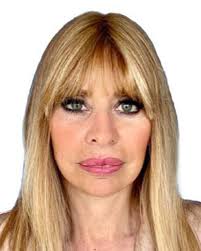
Alessandra Mussolini is a multifaceted figure in Italian public life, known for her complex legacy, vibrant political career, and brief foray into the entertainment industry. Born into a family with a storied and controversial history, she has spent her life navigating the intersections of politics, culture, and media. This article explores her life, examining her age, the highlights of her career, and the nuances of her fame.
Early Life and Family Heritage
Alessandra Mussolini was born on December 30, 1962, in Rome, Italy, into one of the most famous—and infamous—families in Italian history. Her grandfather was Benito Mussolini, the dictator who ruled Italy during the Fascist era and led the country into World War II. This lineage has cast a long shadow over her life, influencing both her personal identity and her public image.
Her father, Romano Mussolini, was the fourth son of Benito Mussolini and a well-known jazz musician. Her mother, Anna Maria Scicolone, is the younger sister of the legendary Italian actress Sophia Loren. Growing up in such a prominent family, Alessandra was exposed to both the glamour of the entertainment world and the complexities of her grandfather’s controversial legacy.
Early Career in Entertainment
Before embarking on her political career, Alessandra Mussolini initially sought to establish herself in the entertainment industry. In the early 1980s, she ventured into acting, modeling, and even singing. She co-hosted the popular Italian television show “Domenica In” alongside Pippo Baudo during the 1981-1982 season, a role that introduced her to the Italian public.
Mussolini also appeared in several Italian films, including some of the light-hearted and often risqué comedies typical of that era. However, her aspirations in the entertainment industry were cut short by the fallout from a provocative photo shoot she did for Playboy magazine in 1983. The controversial nature of the photos, coupled with her famous last name, made it difficult for her to sustain a successful career in entertainment.
After a few more acting roles, including a part in the 1990 film “Sabato, domenica e lunedì” directed by Lina Wertmuller and starring Sophia Loren and Luciano De Crescenzo, Alessandra Mussolini decided to leave the entertainment world behind. Despite her efforts, the stigma attached to her family name, as well as the challenges of carving out a unique identity in the shadow of her famous relatives, made her foray into show business a fleeting chapter in her life.
Transition to Politics
In 1992, Alessandra Mussolini made a significant shift in her career by entering politics. She earned a degree in Medicine and Surgery the same year, but her true passion was politics—a field that allowed her to engage with her heritage more directly and on her own terms. She was elected to the Italian Chamber of Deputies as a member of the Movimento Sociale Italiano (MSI), a neo-fascist party that was the ideological successor to Benito Mussolini’s Fascist Party.
Her entry into politics was not without controversy. The MSI, later rebranded as Alleanza Nazionale (National Alliance), was a right-wing party that sought to distance itself from the fascist past, a transition that was not always smooth. As the granddaughter of Benito Mussolini, Alessandra’s presence in the party often reignited debates about the legacy of fascism in Italy.
In 1993, Mussolini ran for the mayoralty of Naples, a bold move that underscored her ambition and desire to influence Italian politics at a high level. Although she ultimately lost to Antonio Bassolino in a runoff, the campaign solidified her position as a rising star within the right-wing political sphere.
Political Evolution and Leadership Roles
The 1990s and early 2000s were a period of political evolution for Alessandra Mussolini. She remained active in the Alleanza Nazionale as it sought to redefine itself in post-Cold War Italy. However, her relationship with party leader Gianfranco Fini was fraught with tension. Fini’s efforts to distance the party from its neo-fascist roots were at odds with Mussolini’s views, particularly when Fini visited Israel in 2003 and publicly condemned the fascist regime as “the absolute evil of the 20th century.”
In response to Fini’s remarks and the growing ideological rift within the party, Alessandra Mussolini left Alleanza Nazionale in November 2003. She quickly founded her own political movement, Libertà di Azione (Freedom of Action), a far-right party that later merged with other similar movements to form Alternativa Sociale (Social Alternative).
In the 2004 European Parliament elections, Mussolini’s new party won her a seat as a Member of the European Parliament (MEP). This victory marked a significant moment in her career, as it provided her with a platform to advocate for her political views on a broader stage. During her time as an MEP, Mussolini focused on issues related to national sovereignty, immigration, and social conservatism, themes that resonated with her far-right base.
Scandals and Controversies
Alessandra Mussolini’s political career has been punctuated by several scandals and controversies, many of which have kept her in the public eye for reasons beyond her policy positions. One of the most significant incidents occurred in 2006 when she became embroiled in a political scandal involving Francesco Storace, then Minister of Health and a member of Alleanza Nazionale. Storace was accused of orchestrating a campaign of espionage against Mussolini during the 2005 regional elections in Lazio, where Mussolini was a candidate. The scandal led to Storace’s resignation and further strained relations within the Italian right-wing political community.
In addition to political scandals, Mussolini has also been a frequent participant in televised debates and talk shows, where her fiery personality and combative style have often led to heated exchanges. Her clashes with other public figures, such as art critic Vittorio Sgarbi and transgender activist Vladimir Luxuria, have been widely publicized and have contributed to her reputation as a polarizing figure in Italian media.
Later Career and Return to the Spotlight
Despite the ups and downs of her political career, Alessandra Mussolini has remained a resilient figure in Italian public life. In 2006, she attempted to re-enter national politics through negotiations with Silvio Berlusconi’s Forza Italia party. However, the alliance did not produce the electoral success she had hoped for, and she was not re-elected to the Italian Parliament.
Nevertheless, Mussolini continued to be active in politics, particularly at the European level, where she maintained her role as an MEP until 2014. During these years, she continued to advocate for nationalist and conservative causes, including opposition to the European Union’s more liberal immigration policies.
In 2020, Alessandra Mussolini made a surprising return to the public eye, not through politics, but by participating as a contestant on the popular Italian television show Ballando con le stelle (the Italian version of Dancing with the Stars). Her participation in the show marked a return to the entertainment industry, albeit in a very different context from her earlier career. Her appearance on the show was well-received, and it allowed her to reconnect with the Italian public in a more lighthearted and personable manner.
Conclusion: A Complex Legacy
Alessandra Mussolini’s life and career are emblematic of the complexities and contradictions that often accompany public figures with a contentious family history. As the granddaughter of Benito Mussolini, she has navigated a difficult path between embracing her heritage and forging her own identity in the modern political landscape. Her career has been marked by significant achievements, including her election to both the Italian Parliament and the European Parliament, as well as by numerous controversies that have kept her in the public eye.
Mussolini’s legacy is one of resilience and adaptability. Despite the challenges posed by her family name and the often tumultuous nature of Italian politics, she has managed to remain a relevant figure for over three decades. Whether as a politician, media personality, or television contestant, Alessandra Mussolini has consistently demonstrated her ability to reinvent herself and maintain her place in the public consciousness.
Her life story is a testament to the enduring impact of family legacy on personal and professional identity, as well as to the ways in which individuals can navigate and shape that legacy to suit their own ambitions and goals. As she continues to engage with the public in new and unexpected ways, Alessandra Mussolini remains a fascinating and influential figure in contemporary Italian culture.


