
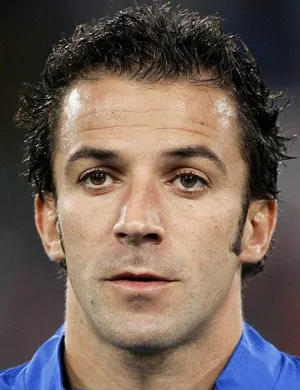
Alessandro Del Piero, born on November 9, 1974, in Conegliano Veneto, Italy, is one of the most celebrated football players of his generation. Known for his remarkable skill, finesse on the ball, and an uncanny ability to score from free kicks, Del Piero has left an indelible mark on the history of football, particularly during his long and illustrious career with Juventus. This article provides an in-depth look at Del Piero’s life, career, and the legacy he continues to build, exploring his journey from a promising young talent to a global football icon.
Early Life and Youth Career
Alessandro Del Piero was born into a middle-class family in the Veneto region of Italy. His mother, Bruna, was a homemaker, while his father, Gino, worked as an electrician. From a young age, Del Piero exhibited a natural talent for football, a passion that was evident in his early years playing in local youth teams. His first team was San Vendemiano, followed by a stint with Conegliano, where he began to develop the technical skills that would later define his career.
Interestingly, Del Piero’s mother initially wanted him to play as a goalkeeper, believing that the position was safer. However, it was his older brother, Stefano, who convinced her that Alessandro’s true potential lay in attacking roles, a decision that would shape the future of Italian football.
At the age of 16, Del Piero moved to Padova, a professional club where he quickly rose through the ranks. It was here that he first caught the attention of scouts from major clubs, thanks to his exceptional dribbling, vision, and goal-scoring ability. His performances with Padova in Serie B, Italy’s second division, were nothing short of spectacular, and it wasn’t long before Italy’s top clubs were vying for his signature.
Rise to Fame at Juventus
In 1993, after much deliberation, Del Piero signed with Juventus, one of Italy’s most prestigious football clubs. Juventus, known for its rich history and success in both domestic and European competitions, was the perfect stage for Del Piero to showcase his talents. His move to Turin was facilitated by Piero Aggradi, the sporting director of Padova, who saw in Del Piero the potential to replace Juventus’s star player at the time, Roberto Baggio.
Del Piero’s debut for Juventus came in September 1993, and it didn’t take long for him to make an impact. In his first full season, he played a crucial role in helping Juventus win the Serie A title. His ability to score stunning goals, particularly from free kicks, earned him the nickname “Pinturicchio,” after the Renaissance painter, a moniker given to him by the legendary Juventus owner, Gianni Agnelli. This nickname reflected Del Piero’s artistry on the pitch, where he was known for his precision, creativity, and flair.
Over the years, Del Piero’s role at Juventus grew, especially after Baggio’s departure in 1995. Del Piero became the team’s primary playmaker and goal scorer, leading Juventus to numerous victories. His contributions were vital in helping Juventus win the Champions League in 1996, along with several Serie A titles, Coppa Italia, and other domestic and international honors.
The 1998 Injury and Comeback
Del Piero’s career, however, was not without its challenges. On November 8, 1998, in a match against Udinese, Del Piero suffered a severe knee injury that sidelined him for nine months. The injury, which involved significant damage to the ligaments in his right knee, was a major setback. Many feared that Del Piero might never return to his previous form, but he proved his doubters wrong.
Del Piero’s road to recovery was long and arduous, but his determination and resilience saw him return to the pitch in 1999. While it took time for him to regain his top form, Del Piero’s comeback was marked by a renewed focus and maturity. He continued to be a key player for Juventus, adapting his style of play to compensate for any loss of speed or agility. His leadership and experience became invaluable to the team, especially as Juventus continued to compete at the highest levels in both domestic and European competitions.
International Success with Italy
In addition to his club success, Del Piero also enjoyed a distinguished international career with the Italian national team. He was a member of Italy’s Under-21 team that won the European Championship in 1994 and 1996. His performances at the youth level earned him a call-up to the senior squad, where he would go on to represent Italy in several major tournaments, including the UEFA European Championship and the FIFA World Cup.
One of the highlights of Del Piero’s international career came during the 2006 World Cup in Germany. Despite not being a guaranteed starter, Del Piero played a crucial role in Italy’s success. In the semifinal against Germany, he scored a memorable goal in extra time to secure Italy’s place in the final. In the final against France, Del Piero converted one of the penalties in the shootout, helping Italy win their fourth World Cup.
This victory was a crowning achievement in Del Piero’s career, cementing his status as one of the greatest players in Italian football history. His contributions to the national team were characterized by his technical ability, vision, and composure under pressure, qualities that made him a favorite among Italian fans.
Later Career and Legacy
As Del Piero entered the latter stages of his career, he continued to be a key figure for Juventus. In the 2005-2006 season, despite tensions with coach Fabio Capello, Del Piero was instrumental in Juventus’s campaign, finishing as the club’s top scorer and setting a new record for the most goals scored in the club’s history. This period also saw Del Piero surpass the legendary Giampiero Boniperti as Juventus’s all-time leading goal scorer, a record that still stands today.
However, Del Piero’s career at Juventus came to an end in 2012 after 19 years with the club. His departure marked the end of an era for both Juventus and Italian football. Del Piero decided to continue his playing career abroad, signing with Sydney FC in Australia’s A-League. His move to Australia was met with enthusiasm, as Del Piero’s arrival brought a new level of attention and credibility to the league. In his two seasons with Sydney FC, Del Piero continued to showcase his talent, even in the twilight of his career, and became a fan favorite in Australia.
Following his stint in Australia, Del Piero had a brief spell in the Indian Super League with Delhi Dynamos before finally retiring from professional football in 2015. His post-playing career has seen him remain involved in football, both as a pundit and ambassador for various causes. Del Piero’s contributions to the sport have been recognized with numerous awards and honors, including his induction into the Italian Football Hall of Fame.
Historical Context and Impact on Football
To fully appreciate Alessandro Del Piero’s impact on football, it is important to consider the historical context in which he played. Del Piero’s career spanned a period of significant change in the sport, both in Italy and globally. He began his career at a time when Italian football was characterized by strong defenses and tactical discipline, and his creativity and flair provided a counterpoint to this tradition.
Del Piero was part of a generation of Italian players who helped to modernize the game, bringing a more attacking and technical style to the forefront. His ability to score from set-pieces, dribble past defenders, and create chances for his teammates made him one of the most feared forwards in the world. He was also a pioneer in terms of brand and image, understanding the importance of his public persona in an era when football was becoming increasingly commercialized.
Moreover, Del Piero’s loyalty to Juventus, particularly during the difficult period following the Calciopoli scandal, further endeared him to fans. Despite the club’s relegation to Serie B, Del Piero chose to stay with Juventus, helping them return to Serie A and re-establishing themselves as one of Europe’s top clubs. This loyalty and dedication are rare in modern football, and it is a testament to Del Piero’s character and love for the game.
Conclusion
Alessandro Del Piero’s life and career are a testament to his exceptional talent, perseverance, and love for football. From his early days in Conegliano Veneto to his rise as one of the greatest players in Juventus’s history, Del Piero’s journey is one of triumph, resilience, and unrelenting passion for the sport. His legacy is not only defined by the numerous titles and records he achieved but also by the way he played the game—with grace, intelligence, and an unwavering commitment to his team.
Del Piero’s impact on football, both in Italy and around the world, will be felt for generations to come. As a player, he set new standards for excellence, and as a person, he exemplified the qualities of humility, loyalty, and professionalism. Even after his retirement, Del Piero continues to inspire young players and fans alike, reminding us of the timeless beauty of football and the enduring power of dedication and hard work.


