
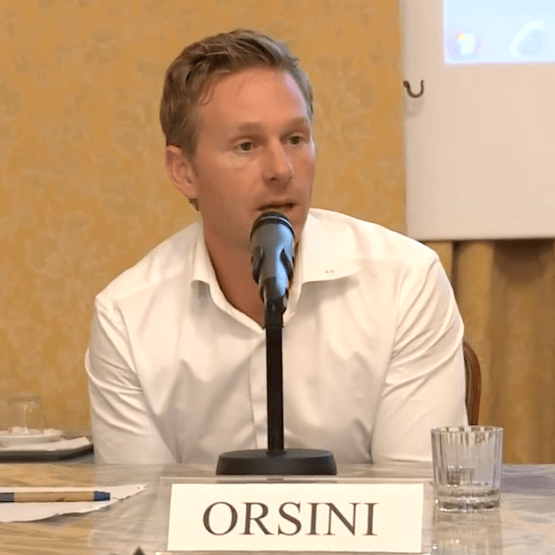
Alessandro Orsini is a prominent Italian sociologist and expert in terrorism, born on April 14, 1975, in Naples, Italy. His extensive work on radicalization, security, and international terrorism has made him a respected voice in academic circles and a familiar figure in the media. This article delves into Orsini’s life, academic achievements, and contributions to the study of terrorism, while also exploring his influence on public discourse in Italy and beyond.
Early Life and Academic Background
Alessandro Orsini was born in Naples, a city known for its rich history and vibrant culture. Growing up in this environment likely influenced his intellectual curiosity and passion for social sciences. Orsini pursued higher education at the prestigious University of Rome “La Sapienza,” where he earned a degree in Sociology. His academic journey did not stop there; he furthered his studies by obtaining a Ph.D. in Political Science from the University of Rome Tre, another esteemed institution.
Orsini’s academic background laid the foundation for his future career as a leading expert on terrorism and radicalization. His early focus on these subjects coincided with a period of significant global upheaval, marked by the rise of international terrorism and the increasing importance of understanding the social dynamics behind such movements.
Rise to Prominence: Expertise in Terrorism and Radicalization
Alessandro Orsini’s expertise in terrorism and radicalization became widely recognized during the 2010s, a period when Europe was grappling with a series of devastating terrorist attacks in cities like Paris and Brussels. These events catapulted him into the public eye, as media outlets sought his insights on the motivations behind these acts and the broader implications for European security.
Orsini’s work as a professor of Sociology of Terrorism at the University of Rome “Tor Vergata” further solidified his reputation. From 2013 to 2016, he served as the director of the Center for the Study of Terrorism at the same university. His role involved not only academic research but also the practical application of his findings to help understand and mitigate the threats posed by extremist groups.
His contributions to the field extended beyond Italy, as he became a Research Affiliate at the prestigious Massachusetts Institute of Technology (MIT) in Boston in 2011. This affiliation underscored his status as an international authority on terrorism studies, enabling him to collaborate with other leading experts and contribute to global conversations on security and radicalization.
Key Contributions and Publications
Alessandro Orsini’s work is widely recognized in both academic and public spheres. He has authored several influential books that explore the complexities of terrorism, radicalization, and political violence. Some of his notable publications include:
- “Anatomia delle Brigate Rosse” (2009): This book delves into the anatomy of the Red Brigades, a notorious Italian terrorist group. The work was awarded the Acqui Prize in 2010 and was selected by the journal “Foreign Affairs” as one of the most important books published in the United States in 2011.
- “Gramsci e Turati: Le due sinistre” (2012): In this book, Orsini explores the ideological and strategic differences between two key figures of the Italian left, Antonio Gramsci and Filippo Turati.
- “ISIS: I terroristi più fortunati del mondo e tutto ciò che è stato fatto per favorirli” (2016): This award-winning book examines the rise of ISIS and the geopolitical factors that have inadvertently aided the group’s growth.
- “L’ISIS non è morto, ha solo cambiato pelle” (2018): In this work, Orsini argues that while ISIS may have been weakened, the underlying forces that gave rise to it remain potent and dangerous.
- “Viva gli immigrati: Gestire l’immigrazione per tornare protagonisti in Europa” (2019): This book discusses the complex issue of immigration in Europe, advocating for policies that balance security concerns with humanitarian obligations.
- “Teoria sociologica classica e contemporanea” (2021): Orsini provides an in-depth analysis of classical and contemporary sociological theories, offering insights into their relevance in understanding modern social phenomena.
Orsini’s publications have been translated into multiple languages and have appeared in some of the most respected academic journals specializing in terrorism studies. His work is characterized by a rigorous analytical approach, combining empirical research with theoretical insights to offer a comprehensive understanding of the issues at hand.
Media Presence and Public Engagement
Alessandro Orsini’s expertise has not been confined to the academic world. He has become a well-known figure in Italian media, frequently appearing as a guest on television and radio programs. His ability to explain complex issues in a clear and accessible manner has made him a sought-after commentator on matters of national and international security.
Orsini’s media presence became particularly prominent following the Russian invasion of Ukraine in February 2022. As the conflict unfolded, Orsini provided expert analysis on the geopolitical implications of the war, drawing on his deep understanding of international relations and security dynamics. His insights were featured on major Italian networks, where he was called upon to discuss the broader consequences of the conflict for Europe and the world.
In addition to his television appearances, Orsini is an accomplished columnist and editorialist. He writes a weekly column for “Il Messaggero,” one of Italy’s leading newspapers, where he shares his thoughts on current events and global security issues. His column, “Atlante,” has become a popular feature, offering readers a nuanced perspective on the challenges facing the modern world.
Orsini also contributes to other prominent publications, including “Huffington Post,” “L’Espresso,” “La Stampa,” “Il Foglio,” and “Il Resto del Carlino.” His articles cover a wide range of topics, from the rise of populism to the impact of immigration on European politics, reflecting his broad expertise and interest in contemporary social issues.
Alessandro Orsini’s Influence on Public Policy and Security
Beyond his academic and media roles, Alessandro Orsini has played a significant part in shaping public policy and security strategies. He served as a member of the commission for the study of jihadist radicalization established by the Italian government. In this capacity, he contributed to the development of policies aimed at preventing radicalization and combating terrorism within Italy and across Europe.
Orsini’s involvement with the Radicalization Awareness Network (RAN), established by the European Commission, further highlights his commitment to addressing the root causes of terrorism. As a member of RAN, Orsini has worked with other experts and policymakers to develop strategies for preventing radicalization and promoting social cohesion in European communities.
His expertise is also recognized by the Italian military, as he serves on the strategic analysis committee of the General Staff of Defense under the “Scenari Futuri” program. This role involves analyzing potential future security threats and advising on appropriate responses, underscoring Orsini’s importance as a strategic thinker in the field of national security.
Personal Life and Legacy
While Alessandro Orsini is primarily known for his professional achievements, his personal life also contributes to his public persona. As a native of Naples, a city with a complex social fabric and a history of organized crime, Orsini’s background has likely informed his understanding of social dynamics and security issues. However, Orsini has kept much of his personal life private, focusing public attention on his work and contributions to the study of terrorism and security.
Orsini’s legacy is already well-established, with his work influencing both academic thought and public policy. His books and articles continue to be essential reading for those interested in understanding the causes and consequences of terrorism, radicalization, and political violence. His role as an educator and public intellectual ensures that his ideas will continue to shape discussions on security and social cohesion for years to come.
Conclusion: Alessandro Orsini’s Enduring Impact
Alessandro Orsini is a distinguished figure whose work has significantly influenced the study of terrorism and radicalization. His ability to bridge the gap between academic research and public discourse has made him a key player in shaping how these critical issues are understood and addressed. As a professor, author, media commentator, and policy advisor, Orsini has made substantial contributions to the fields of sociology and security studies.
In an era marked by increasing global insecurity and political polarization, Orsini’s insights offer valuable guidance for policymakers, academics, and the general public. His commitment to understanding and preventing terrorism has not only enhanced our knowledge of these complex phenomena but has also contributed to the development of more effective strategies for promoting peace and security.
Alessandro Orsini’s life and work exemplify the power of intellectual rigor and public engagement in addressing some of the most pressing challenges of our time. As we continue to confront the evolving threats of terrorism and radicalization, Orsini’s contributions will remain a vital resource for those seeking to create a safer and more just world.


