
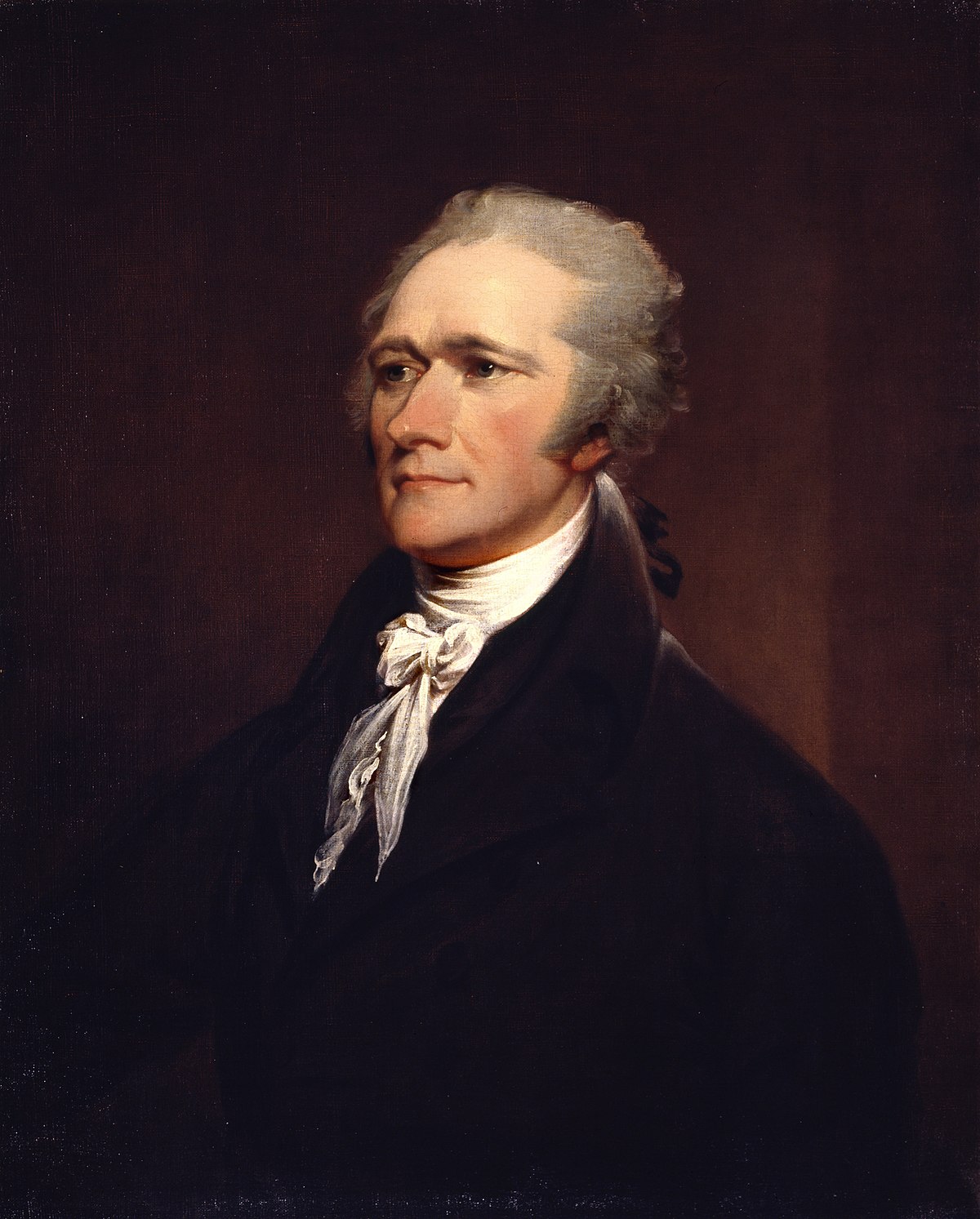
Alexander Hamilton is one of the most influential figures in American history, celebrated as a Founding Father of the United States. His life, marked by brilliance, ambition, and controversy, played a pivotal role in shaping the financial and political landscape of the newly formed nation. Born on January 11, 1755 (though some sources suggest 1757) in Charlestown, Nevis, in the Caribbean, Hamilton’s journey from humble beginnings to becoming a key architect of the American Republic is a story of resilience, intellect, and vision.
Early Life and Education
Hamilton’s early life was fraught with challenges. Born out of wedlock to Rachel Faucette, of French Huguenot descent, and James Hamilton, a Scottish trader, Alexander’s childhood was marked by hardship. His father abandoned the family when Alexander was young, and his mother passed away when he was just 13. These early experiences of abandonment and poverty profoundly shaped Hamilton’s worldview, instilling in him a relentless drive to succeed.
Despite these obstacles, Hamilton’s intelligence and determination did not go unnoticed. He was taken in by a local merchant, who recognized his potential and funded his education. Hamilton’s academic prowess led him to King’s College (now Columbia University) in New York, where he quickly became involved in the political discourse of the time. His writings, advocating for American independence, gained him attention and established him as a fervent supporter of the revolutionary cause.
Rise to Prominence: The Revolutionary War
Hamilton’s rise to prominence began during the American Revolutionary War. In 1777, at the age of 22, he became an aide-de-camp to General George Washington, one of the most powerful positions a young man could hold. Serving as Washington’s right-hand man, Hamilton was entrusted with critical military and diplomatic responsibilities, including drafting letters and strategic plans. His service during the war earned him a reputation for being exceptionally brilliant, reliable, and committed to the cause of independence.
Hamilton’s military career was marked by his participation in key battles, including the Siege of Yorktown in 1781, which effectively ended the war with a decisive victory for the American forces. His contributions on the battlefield and in the planning rooms made him an indispensable figure in the fight for independence and laid the groundwork for his future political career.
The Federalist Papers and Advocacy for the Constitution
After the war, Hamilton turned his attention to building the newly independent nation. The post-war period was a time of uncertainty, with the fledgling United States struggling under the weak Articles of Confederation. Recognizing the need for a stronger central government, Hamilton became a leading advocate for the ratification of the U.S. Constitution.
In 1787, Hamilton, along with James Madison and John Jay, penned a series of essays known as The Federalist Papers. These 85 essays were written to persuade the public and state legislators to support the new Constitution, which proposed a stronger federal government with checks and balances. Hamilton authored the majority of these essays, which remain a critical source of constitutional interpretation and have had a lasting impact on American political thought.
Hamilton’s vision for a robust central government was rooted in his belief that a strong national economy, supported by federal authority, was essential for the United States to thrive. His arguments in The Federalist Papers laid the intellectual foundation for the modern American political system and helped secure the Constitution’s ratification.
First Secretary of the Treasury and Economic Vision
In 1789, President George Washington appointed Hamilton as the first Secretary of the Treasury. In this role, Hamilton’s influence was unparalleled. He was tasked with creating a financial system that could stabilize the fledgling nation’s economy and lay the groundwork for future prosperity.
One of Hamilton’s most significant contributions was his proposal to assume the state debts incurred during the Revolutionary War and consolidate them into a national debt, to be managed by the federal government. This plan, outlined in his Report on Public Credit, was designed to establish the creditworthiness of the United States and unify the states under a strong central government. Despite facing opposition from figures like Thomas Jefferson and James Madison, who feared that Hamilton’s policies would create an overly powerful federal government, the plan was eventually implemented.
Hamilton also established the First Bank of the United States, modeled after the Bank of England, to provide a stable national currency and facilitate government transactions. His vision for the American economy included the promotion of manufacturing and industry, which he believed were essential for the nation’s economic independence and growth. This approach contrasted sharply with Jefferson’s vision of an agrarian-based economy, leading to the formation of the first political parties in the United States: Hamilton’s Federalists and Jefferson’s Democratic-Republicans.
Hamilton’s tenure as Secretary of the Treasury set the foundation for the American financial system, and many of his policies and institutions, such as the central banking system, continue to influence the economy today.
Personal Life, Scandals, and Political Rivalries
Hamilton’s personal life was as complex and dramatic as his public career. In 1780, he married Elizabeth Schuyler, the daughter of a wealthy and influential New York family. Their marriage produced eight children, and Eliza, as she was known, was a steadfast supporter of Hamilton throughout his life and long after his death.
However, Hamilton’s personal life was not without controversy. In 1797, he became embroiled in America’s first major political sex scandal when it was revealed that he had an affair with Maria Reynolds. Hamilton publicly admitted to the affair in what became known as the Reynolds Pamphlet, a move that shocked the nation but ultimately protected his political career from accusations of financial corruption.
Hamilton’s political career was also marked by intense rivalries, particularly with Thomas Jefferson and Aaron Burr. His disagreements with Jefferson over the direction of the country’s economy and government structure were foundational in the development of America’s two-party system. The rivalry with Burr, however, would prove to be fatal.
The Duel with Aaron Burr and Death
The most infamous episode of Hamilton’s life occurred in 1804 when his long-standing feud with Aaron Burr, who was then Vice President of the United States, culminated in a duel. The duel, a common but illegal practice at the time, was the result of years of political and personal animosity. Burr, who felt that Hamilton had ruined his political career by opposing his candidacy for governor of New York and spreading damaging rumors, challenged Hamilton to a duel.
On July 11, 1804, the two men met in Weehawken, New Jersey, where Hamilton was mortally wounded. He died the following day, on July 12, 1804, at the age of 49. Hamilton’s death sent shockwaves through the young nation, and he was mourned as a national hero. However, the circumstances of his death also cast a long shadow over his legacy.
Legacy and Influence
Alexander Hamilton’s legacy is profound and multifaceted. He was a visionary who laid the groundwork for the modern American economy and a key architect of the federal government. His ideas on governance, finance, and national unity have had a lasting impact on the United States, shaping the country’s trajectory long after his death.
Hamilton’s life and contributions have been the subject of renewed interest in recent years, particularly with the success of the Broadway musical Hamilton, created by Lin-Manuel Miranda. The musical, based on Ron Chernow’s biography of Hamilton, has brought his story to a new generation, highlighting both his achievements and his flaws.
Hamilton’s face appears on the U.S. $10 bill, a testament to his enduring influence on American financial policy. His contributions to the Federalist Papers continue to be studied and cited in discussions of constitutional law and governance.
Conclusion: A Founding Father’s Enduring Impact
Alexander Hamilton’s life is a quintessential American story of ambition, innovation, and resilience. From his early struggles in the Caribbean to his role as a Founding Father of the United States, Hamilton’s contributions have left an indelible mark on the nation. His vision for a strong federal government and a dynamic economy continues to resonate in the policies and institutions that define the United States today.
Hamilton’s legacy is not without controversy, but it is precisely this complexity that makes him one of the most fascinating figures in American history. His ability to rise above personal adversity and his unwavering commitment to the principles he believed in have ensured that Alexander Hamilton remains a towering figure in the story of America’s founding.


