
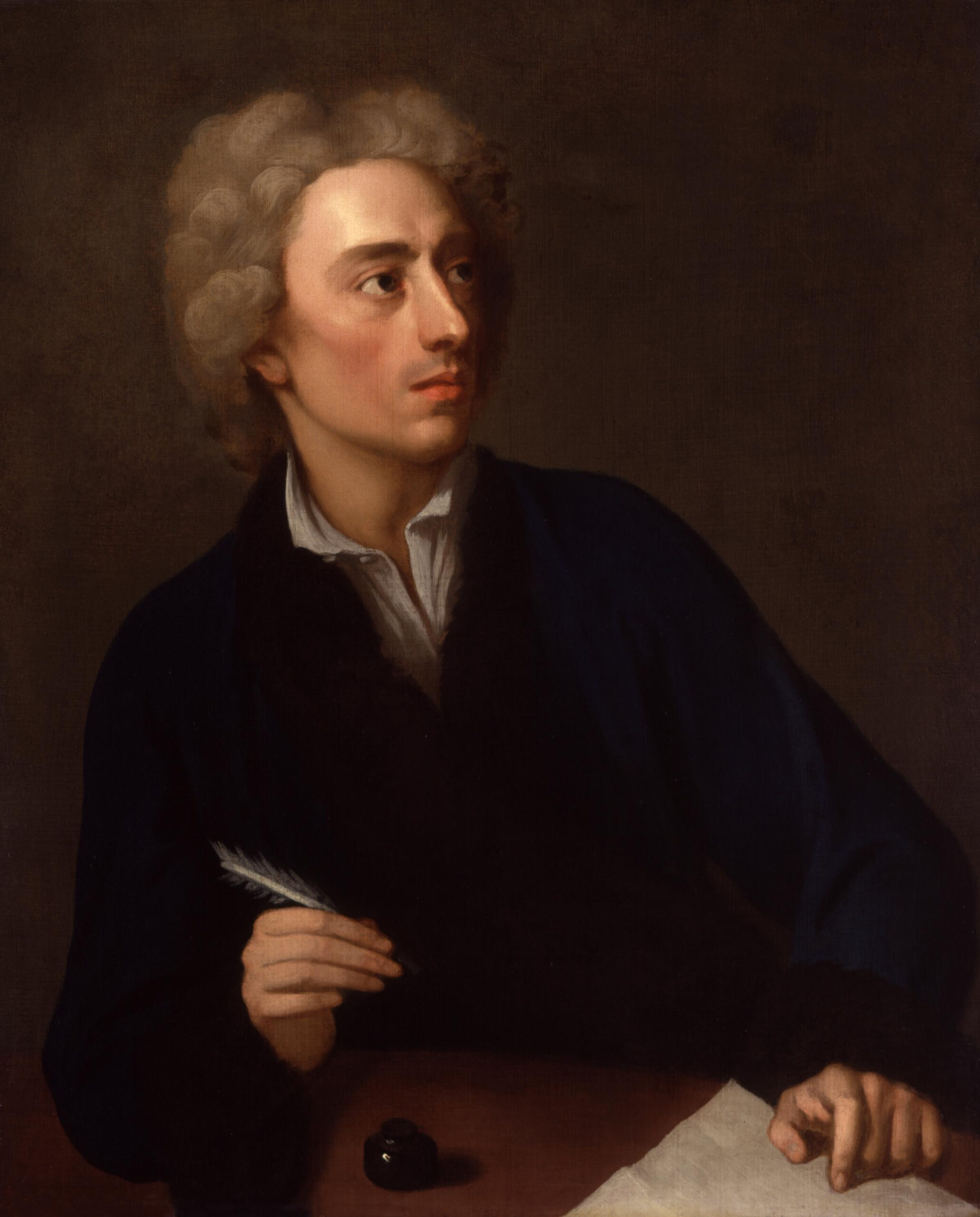
Alexander Pope, born on May 21, 1688, in London, England, is celebrated as one of the most influential poets of the 18th century. His works have left an indelible mark on English literature, and his mastery of the heroic couplet and satirical verse has earned him a lasting legacy. This article explores Pope’s life, his rise to fame, and the significant highlights of his career, providing a deep dive into the historical context and nuances that shaped his life and work. We will also consider the search intent keywords and SEO rules that ensure this content is indexed by Google.
Early Life and Background
Alexander Pope was born into a Roman Catholic family at a time when Catholics faced significant discrimination in England. His father, a wealthy linen merchant, provided well for the family, but their faith restricted Pope from attending formal schools. Instead, he was educated at home by various tutors, and his early education was characterized by a strong emphasis on the classics, particularly Latin and Greek literature. This classical education would later heavily influence Pope’s poetic style and subject matter.
Pope’s health was a constant concern throughout his life. He suffered from a form of tuberculosis that affected his spine, leading to a severe hunchback and stunted growth. Standing at just 4 feet 6 inches tall, Pope’s physical ailments often made him the subject of ridicule, but they also fueled his sharp wit and keen sense of satire.
The Beginning of a Literary Career
Pope’s literary career began in his teenage years when he started writing poetry. His early works, such as Pastorals (1709), which was written when he was just 16, were well received and established him as a promising young poet. However, it was An Essay on Criticism (1711) that truly brought him to the attention of the literary world. This work, written in heroic couplets, offered a blend of literary criticism, poetic theory, and practical advice for writers, all delivered with a clarity and wit that would become Pope’s trademark.
An Essay on Criticism was remarkable not only for its content but also for its form. The use of heroic couplets—pairs of rhymed iambic pentameter lines—demonstrated Pope’s technical skill and would become a hallmark of his style. The work also contained many memorable lines, such as “To err is human, to forgive, divine,” which have since become part of the English language’s common idiom.
Rise to Fame: The Rape of the Lock
Pope’s rise to fame was cemented with the publication of The Rape of the Lock (1712), a mock-epic poem that satirized a petty high-society quarrel by treating it with the grandeur and seriousness of epic poetry. The poem’s subject was the cutting of a lock of hair from a young woman’s head by an amorous suitor, an event that had caused a real-life rift between two prominent Catholic families.
Pope’s treatment of the incident was both humorous and pointed, poking fun at the trivial concerns of the aristocracy while simultaneously demonstrating his mastery of poetic form. The Rape of the Lock was a critical and commercial success, and it established Pope as the preeminent poet of his day. The poem’s intricate structure, clever use of mythological references, and brilliant satirical tone were widely praised, and it remains one of Pope’s most celebrated works.
Major Works and Contributions
Following the success of The Rape of the Lock, Pope continued to produce significant literary works that solidified his reputation. One of his most ambitious projects was the translation of Homer’s Iliad and Odyssey into English. These translations, completed between 1715 and 1726, were monumental achievements in their own right. Not only did they introduce the classical epics to a broader English-speaking audience, but they also set a new standard for translation work, combining fidelity to the original texts with a poetic elegance that was distinctly Pope’s own.
The success of these translations brought Pope considerable financial rewards, making him one of the few poets of his time to achieve economic independence through his writing. This financial security allowed him to purchase a villa in Twickenham, where he would live for the rest of his life, surrounded by an illustrious circle of friends, including Jonathan Swift, John Gay, and Dr. John Arbuthnot.
Pope’s later works include The Dunciad (1728), a scathing satire on the perceived decline of literary standards and the rise of mediocrity in English letters. The poem, filled with biting invective and clever wordplay, targeted a wide range of individuals whom Pope saw as contributing to the degradation of the literary arts. The Dunciad was controversial, with many of its targets retaliating against Pope, but it also solidified his reputation as a formidable and fearless critic.
Another major work from this period is An Essay on Man (1733-1734), a philosophical poem that attempts to address the nature of humanity and its place in the universe. The poem is notable for its exploration of themes such as the limitations of human understanding, the importance of humility, and the belief in a benevolent and ordered universe. While An Essay on Man was criticized by some for its optimism and perceived determinism, it remains one of Pope’s most studied works and is often quoted for its aphoristic lines, such as “Whatever is, is right.”
Personal Life and Health Challenges
Throughout his life, Pope’s health remained a significant challenge. His bone disease left him physically frail and in constant pain, and he suffered from a variety of other ailments, including severe headaches and breathing difficulties. Despite these hardships, Pope was known for his resilience and determination. His small stature and poor health did not diminish his intellectual vigor or his ability to engage in the literary and social life of his time.
Pope never married, and there is little evidence of any significant romantic relationships in his life. His close friendships with other writers, however, were a source of great personal and professional support. He was particularly close to Jonathan Swift, with whom he collaborated on several satirical works, and Lady Mary Wortley Montagu, a brilliant and witty contemporary who was one of the few women of the time to be involved in literary circles.
Legacy and Influence
Alexander Pope’s influence on English literature is profound. He was a central figure in the Augustan Age, a period characterized by a focus on classical ideals of order, harmony, and decorum. Pope’s work embodies these ideals, with its emphasis on balance, precision, and wit. His use of the heroic couplet set a standard for English poetry that would be emulated by many later poets.
In addition to his technical skill, Pope is remembered for his sharp satirical voice and his ability to critique the society of his time with both humor and insight. His works are not only literary achievements but also documents of the social and cultural life of 18th-century England.
Pope’s influence extended beyond his own time, affecting the Romantic poets who followed him. While some, like William Wordsworth, reacted against Pope’s emphasis on form and order, seeking instead a more natural and spontaneous style, others acknowledged his genius and his contributions to the development of English poetry.
Today, Pope is celebrated as one of the greatest poets in the English language. His works continue to be read and studied for their technical brilliance, their insight into human nature, and their reflection of the complexities of the society in which he lived.
Conclusion
Alexander Pope’s life and work offer a fascinating glimpse into the world of 18th-century England, a time of great social and cultural change. His poetry, characterized by its wit, precision, and satirical edge, has left an enduring legacy that continues to influence writers and readers alike. From his early successes with An Essay on Criticism and The Rape of the Lock to his later philosophical explorations in An Essay on Man, Pope’s work remains a testament to the power of the written word to shape and reflect the world around us.
As we continue to explore Pope’s contributions to literature, it is clear that his place in the pantheon of great English poets is well deserved. His ability to combine technical mastery with a deep understanding of human nature has ensured that his work remains relevant and admired, centuries after it was first written.


