
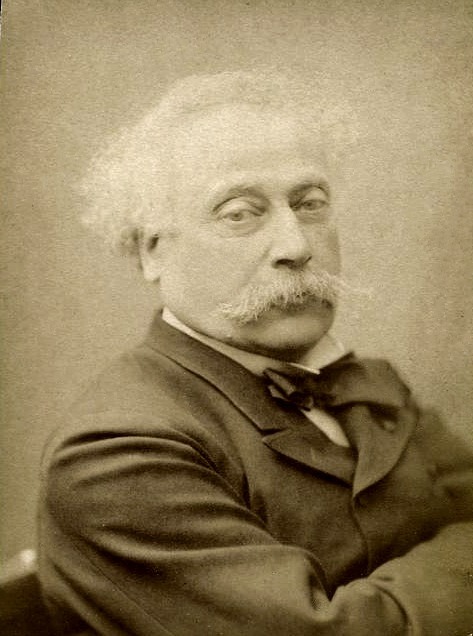
Alexandre Dumas fils, born on July 27, 1824, in Paris, France, was one of the most prominent literary figures of the 19th century. He was the son of Alexandre Dumas père, the celebrated author of classics such as “The Three Musketeers” and “The Count of Monte Cristo.” While often overshadowed by his father’s fame, Dumas fils carved out his own distinguished career as a novelist and playwright, becoming a key figure in the development of French literature, particularly in the genre of drama.
Early Life: A Legacy of Literary Genius
Born out of wedlock to Alexandre Dumas père and Catherine Laure Labay, Alexandre Dumas fils had a complicated and tumultuous childhood. His parents only legally recognized him when he was seven years old, after a contentious legal battle for custody, during which his father eventually gained control. This turbulent early life, marked by his father’s intermittent involvement and the social stigma of being an illegitimate child, deeply influenced Dumas fils’ later works, which often explored themes of family discord and societal morality.
Despite his privileged upbringing, which provided him access to the best schools and intellectual circles, Dumas fils harbored a profound sense of resentment towards his father. This bitterness stemmed not only from his father’s neglect but also from the pressure to live up to the towering literary legacy of Alexandre Dumas père. These complex emotions found expression in his writings, which frequently grappled with issues of moral responsibility and the consequences of familial estrangement.
Rise to Fame: The Creation of La Dame aux Camélias
Dumas fils’ early life was marked by a struggle to find his own identity, separate from his father’s shadow. He initially indulged in the hedonistic lifestyle of the Parisian elite, a lifestyle his father was well-known for. However, this phase did not last long, as he soon found himself drawn to literature, perhaps as a way to assert his independence and address the personal turmoil he experienced.
In 1844, Dumas fils met Marie Duplessis, a courtesan who became the inspiration for his most famous work, “La Dame aux Camélias.” The novel, published in 1848, was a semi-autobiographical account of his brief and intense relationship with Duplessis. The story revolves around the tragic love affair between Marguerite Gautier, a courtesan, and Armand Duval, a young man from a respectable family. Marguerite sacrifices her love to protect Armand’s social standing, leading to a heart-wrenching conclusion.
“La Dame aux Camélias” was an immediate success, resonating with readers for its emotional depth and its exploration of themes such as love, sacrifice, and societal judgment. The novel’s success established Dumas fils as a significant literary figure in his own right, independent of his father’s influence. It was later adapted into a play by Dumas fils himself, further cementing its place in the canon of French literature. The play, in turn, inspired Giuseppe Verdi’s opera “La Traviata,” which remains one of the most performed operas worldwide.
Literary Style and Thematic Concerns: A Voice for Social Issues
Unlike his father, who was known for his adventurous and swashbuckling tales, Alexandre Dumas fils focused on the moral and social issues of his time. His works often delved into the complexities of human relationships, particularly those involving women, marriage, and family. Dumas fils was a keen observer of the social mores of his era, and he used his plays and novels as a platform to critique the hypocrisy and injustices he saw in French society.
One of the hallmarks of Dumas fils’ writing was his ability to combine realism with moralism. His characters were often placed in situations where they had to navigate the rigid moral codes of their society, leading to dramatic tensions that were both emotionally engaging and intellectually provocative. Dumas fils was not afraid to address controversial topics such as divorce, adultery, and the social position of women—issues that were often taboo in the conservative society of 19th-century France.
In his plays, such as “Le Fils naturel” (1858) and “Un Père prodigue” (1859), Dumas fils explored the consequences of moral transgressions, particularly within the family unit. These works contributed to the development of the realist and naturalist movements in French theater, influencing later playwrights such as Émile Zola and Henrik Ibsen.
Scandals and Criticism: The Price of Speaking Out
Dumas fils’ willingness to tackle sensitive and controversial subjects made him a polarizing figure in French literary circles. While he gained a considerable following for his progressive views, he was also criticized and labeled as a scandalous author by more conservative elements of society. His works often sparked heated debates about morality, particularly concerning his portrayals of women and his critiques of the institution of marriage.
Despite the controversies, Dumas fils remained steadfast in his convictions. He believed that literature should not merely entertain but also educate and provoke thought. His commitment to addressing social issues earned him a reputation as a moralist, though one who was deeply sympathetic to the plight of those marginalized by society.
In 1867, his play “L’Étrangère” caused a significant stir due to its depiction of an independent woman who challenges the traditional roles assigned to her by society. This play, like many of his other works, was seen as a critique of the rigid social structures that constrained individuals, particularly women. Dumas fils’ portrayal of strong, complex female characters was ahead of its time, and it helped pave the way for more nuanced depictions of women in literature and theater.
Recognition and Legacy: Cementing His Place in History
As his career progressed, Alexandre Dumas fils gained increasing recognition for his contributions to French literature. In 1874, he was elected to the Académie française, one of the highest honors for a French writer. This recognition was a testament to his influence and the respect he commanded within the literary community, despite the controversies that often surrounded his work.
Dumas fils also received the Legion of Honor, further solidifying his status as a significant cultural figure in France. His works continued to be widely read and performed, and his influence extended beyond the world of literature to other forms of art, including opera and film.
One of the most enduring aspects of Dumas fils’ legacy is his impact on the development of the realist and naturalist movements in literature and theater. His focus on the moral and social issues of his time, combined with his skillful character development and narrative structure, made his works a precursor to the more socially conscious literature that would emerge in the late 19th and early 20th centuries.
Personal Life and Final Years
Despite his success, Dumas fils’ personal life was marked by a series of tumultuous relationships and health struggles. His early experiences with his father and his relationship with Marie Duplessis left deep emotional scars, which were often reflected in his writings. He married twice, first to Nadezhda Naryshkina, with whom he had a daughter, and later to Henriette Régnier de La Brière.
In his later years, Dumas fils became increasingly reclusive, retreating to his estate in Marly-le-Roi, where he focused on his writing and corresponded with fellow literary figures. His health began to decline in the 1890s, and he passed away on November 27, 1895, in Marly-le-Roi. He was buried in the Montmartre Cemetery in Paris, where his grave remains a site of literary pilgrimage.
Conclusion: A Lasting Legacy
Alexandre Dumas fils may have started his life in the shadow of his father, but he emerged as a significant literary figure in his own right. His works, particularly “La Dame aux Camélias,” continue to resonate with audiences today, offering timeless insights into the complexities of human relationships and the moral dilemmas that define them.
Dumas fils’ commitment to addressing social issues and his willingness to challenge the conventions of his time have left a lasting impact on literature and theater. His exploration of themes such as love, sacrifice, and social justice remain relevant, making his works as compelling today as they were over a century ago.
As we look back on the life and career of Alexandre Dumas fils, it is clear that his contributions to French literature were not only significant in his time but continue to influence writers and artists across the globe. His legacy is one of courage, creativity, and a relentless pursuit of truth through the lens of art.


