
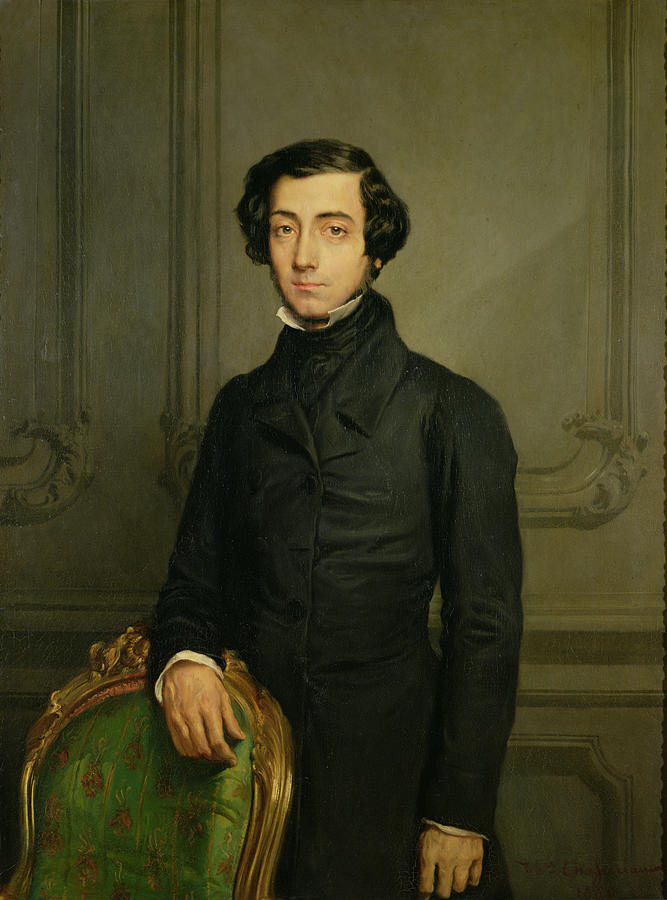
Alexis de Tocqueville stands as one of the most influential thinkers of the 19th century, whose work laid the groundwork for modern political science and sociology. Born on July 29, 1805, in Verneuil-sur-Seine, France, Tocqueville’s exploration of democratic systems, particularly in the United States, has left an indelible mark on our understanding of democracy, liberty, and societal structures. This article delves into his life, exploring his intellectual journey, key works, and the lasting impact of his ideas.
Early Life and Background
Alexis Henri Charles de Clérel de Tocqueville was born into an aristocratic family during a turbulent period in French history. The Tocqueville family were staunch supporters of the Bourbon monarchy, adhering to a political philosophy known as legitimism, which advocated for the rights of the Bourbon family to rule France. This royalist background would shape Tocqueville’s early views and provide a stark contrast to the democratic ideals he would later explore.
The fall of Robespierre and the end of the Reign of Terror in 1794 saved Tocqueville’s parents from the guillotine, a fate that many of their peers could not escape. Growing up in a post-Revolutionary France, Alexis de Tocqueville was acutely aware of the fragility of political systems and the dangers of radicalism. This awareness would later drive his deep analysis of democratic institutions and their vulnerabilities.
Education and Early Career
Tocqueville pursued law as his academic focus, studying at the Lycée Fabert in Metz and later at the University of Paris. His legal training would serve as a foundation for his later work as a magistrate and legal scholar. In the 1820s, Tocqueville began his career in the French judiciary, holding various legal positions that gave him insight into the workings of the French legal system. However, it was his dissatisfaction with the state of the French penal system that spurred him to seek out new ideas and solutions.
The American Journey: A Study in Democracy
In 1831, Tocqueville embarked on a journey to the United States with his friend and colleague, Gustave de Beaumont. Officially, their mission was to study the American penal system, with the goal of reforming the French system. However, Tocqueville’s interests extended far beyond prisons. During his nine-month stay in the United States, Tocqueville observed and analyzed the young nation’s political and social structures, paying particular attention to the concept of democracy and the role of religion in American life.
Tocqueville was struck by the absence of hereditary privileges in America and the relatively equal starting point afforded to individuals, regardless of their social class. He noted how this equality of condition was central to the American democratic experiment. His observations culminated in his seminal work, “Democracy in America,” published in two volumes in 1835 and 1840. This book remains one of the most important texts for understanding the American political system and the development of democracy in the 19th century.
“Democracy in America”: Key Insights and Influence
“Democracy in America” is more than just a study of the American political system; it is a profound exploration of the nature of democracy itself. Tocqueville analyzed the strengths and weaknesses of democracy, particularly how it functioned in the American context. He argued that while democracy promoted equality and the idea of popular sovereignty, it also posed risks, such as the tyranny of the majority and the potential for individuals to prioritize personal freedom over communal responsibilities.
One of Tocqueville’s most significant observations was the role of religion in American society. Unlike in France, where religion was often seen as an enemy of liberty, in America, religion played a crucial role in promoting moral values and social cohesion. Tocqueville saw this as a stabilizing force that helped prevent the excesses of individualism in a democratic society.
Another key aspect of “Democracy in America” is Tocqueville’s discussion of civil society and the importance of associations. He noted that Americans were highly active in forming voluntary associations, which served as a counterbalance to the power of the state and provided a means for citizens to participate in public life. This observation has had a lasting impact on the study of civil society and its role in supporting democratic governance.
Return to Europe: Political Involvement and Further Writings
Upon his return to France, Tocqueville continued his political and intellectual pursuits. He made two trips to England between 1833 and 1835, where he furthered his understanding of constitutional monarchy and the British political system. In 1835, Tocqueville married Mary Mottley, an Englishwoman he had met in Versailles before the Revolution of 1830. The marriage marked a personal milestone but also reflected Tocqueville’s deepening connection to the English-speaking world.
Tocqueville’s political career began in earnest in 1837 when he ran for a seat in the French legislature. Although his first attempt was unsuccessful, he was elected two years later as a deputy for the Arrondissement of Valognes in the Manche department. As a legislator, Tocqueville focused on several key issues, including the abolition of slavery in French colonies, prison reform, and French involvement in Algeria.
His work on these issues earned him significant recognition, and in 1838, Tocqueville was elected to the Academy of Moral and Political Sciences, followed by his induction into the prestigious Académie Française in 1841. These honors reflected his growing reputation as a leading intellectual and political thinker.
The Revolution of 1848 and the Rise of Napoleon III
The Revolution of 1848 was a turning point in Tocqueville’s life. The abdication of King Louis-Philippe and the proclamation of the Second Republic threw France into a period of political turmoil. Tocqueville, who had always been wary of radicalism, was deeply concerned about the rise of socialist and radical democratic movements during this period. He feared a return to the violence and chaos of the earlier Revolution, as well as the emergence of a “strongman” figure who could threaten the republic.
Tocqueville’s fears were realized with the rise of Louis-Napoleon Bonaparte, who would later become Napoleon III. Tocqueville initially supported the general Cavaignac in the presidential elections of December 1848, but it was Louis-Napoleon who ultimately won. Tocqueville was elected as a deputy from the village of Tocqueville and briefly served as Foreign Minister in the government of Odilon Barrot from June to October 1849.
During his time as Foreign Minister, Tocqueville opposed French intervention against the Roman Republic and tried to dissuade Louis-Napoleon from taking military action to restore the Papal States. However, his efforts were unsuccessful, and he soon found himself at odds with the increasingly authoritarian tendencies of Louis-Napoleon. Tocqueville resigned from his ministerial post and retreated from public life as the Second Republic was dismantled and replaced by the Second Empire under Napoleon III.
Final Years and Legacy
Disillusioned with the political direction of France, Tocqueville withdrew from active politics and focused on his writing and studies. He moved to Cannes in 1858, seeking relief from the tuberculosis that had plagued him for years. Despite his declining health, Tocqueville continued to write, producing works such as “The Old Regime and the Revolution” (1856), in which he analyzed the causes of the French Revolution and its impact on French society.
Tocqueville’s health continued to deteriorate, and on April 16, 1859, he passed away at the age of 53. He was buried in the village of Tocqueville, leaving behind a legacy that has had a profound influence on political thought, particularly in the fields of democracy, liberalism, and sociology.
Contributions to Sociology and Political Science
Tocqueville’s work is often cited as foundational in the fields of sociology and political science. His insights into the functioning of democracy, the role of civil society, and the relationship between religion and politics have shaped the study of these disciplines. French sociologist Raymond Aron, among others, has credited Tocqueville with laying the groundwork for the modern study of society and politics, recognizing him as one of the founding figures of sociology.
Tocqueville’s analysis of American democracy remains a critical text for understanding the development of democratic institutions and their challenges. His observations on the potential for democracy to devolve into tyranny, as well as his emphasis on the importance of civil society and individual participation in public life, continue to resonate in contemporary discussions about the health and future of democratic systems.
Enduring Relevance
Alexis de Tocqueville’s ideas continue to be relevant in today’s world, where questions about the nature of democracy, the balance between individual freedoms and societal responsibilities, and the role of government are more pertinent than ever. His work serves as a reminder of the complexities and potential pitfalls of democratic governance, as well as the need for constant vigilance to protect and preserve democratic values.
As the world grapples with issues such as populism, authoritarianism, and the erosion of civil liberties, Tocqueville’s writings offer valuable insights into how these challenges can be addressed. His belief in the importance of civic engagement, the rule of law, and the protection of individual rights remains a guiding principle for those who seek to uphold the ideals of democracy in the 21st century.
In conclusion, Alexis de Tocqueville’s life and work represent a profound contribution to our understanding of political and social systems. His legacy as a thinker and a statesman continues to inspire and inform debates about the nature of democracy and the future of society. Tocqueville’s insights into the strengths and weaknesses of democratic systems, his analysis of the role of religion and civil society, and his warnings about the dangers of unchecked power remain as relevant today as they were in the 19th century.


