
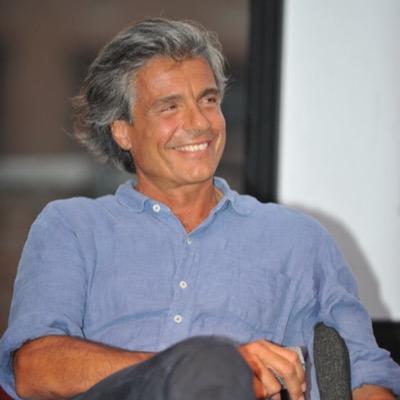
Alfio Marchini is an influential Italian businessman, entrepreneur, and political figure, whose career has spanned several decades and involved significant roles in both the private and public sectors. Born on April 1, 1965, in Rome, Italy, Marchini’s life and career have been marked by his involvement in the construction industry, his ventures into media, and his prominent role in Italian politics. This article delves into the life of Alfio Marchini, providing detailed insights into his background, achievements, and the historical context that has shaped his journey.
Early Life and Family Background
Alfio Marchini was born into a prominent Roman family with deep ties to the construction industry and a strong connection to Italian political history. His grandfather, also named Alfio, was a notable figure during the Italian Resistance, contributing to the liberation of Sandro Pertini, who would later become the President of Italy. This heritage of resistance and political engagement would play a significant role in shaping Marchini’s worldview and career choices.
Marchini grew up in a privileged environment, attending some of the most prestigious schools in Rome, including the Istituto Massimiliano Massimo and the Collegio San Giuseppe – Istituto de Merode. He excelled academically, graduating with top honors in his scientific high school diploma. Even during his high school years, Marchini began working alongside his grandfather and great-uncle, Alvaro, gaining early exposure to the family business and the world of construction.
Taking Over the Family Business
In 1989, at the young age of 23, Alfio Marchini faced the significant challenge of taking over the family business following the death of his grandfather. At the time, Marchini was still studying civil engineering at the University of Rome La Sapienza, balancing his academic pursuits with the demands of leading a major construction firm. This early assumption of responsibility demonstrated Marchini’s determination and capability, setting the stage for his future successes.
Under Marchini’s leadership, the family business continued to thrive, with significant projects that contributed to Rome’s infrastructure and urban development. His work in the construction industry also intersected with his growing interest in sports, particularly polo, where he played at a competitive level for the Loro Piana Blue Team and even captained the Italian national team. Marchini’s passion for sports extended to soccer, where he played futsal for AS Roma, further establishing his multifaceted persona.
Entry into Media and Early Political Engagements
Alfio Marchini’s career took a notable turn in the 1990s when he entered the media industry. In June 1994, he was appointed to the board of directors of Rai, Italy’s national public broadcasting company. Just a month later, he became the chairman of Sipra, the advertising subsidiary of Rai. However, Marchini’s tenure at Rai was short-lived, as he resigned in December 1994, citing disagreements with the appointments made by the then-government led by Silvio Berlusconi and the overall corporate strategy.
Marchini’s foray into the media world was emblematic of his broader ambitions beyond the construction industry. His involvement with Rai and later roles in various boards highlighted his interest in influencing public discourse and shaping the cultural landscape of Italy. This period also marked the beginning of his more active engagement in public life, which would later culminate in his political career.
The 1990s and Early 2000s: Expanding Influence
Throughout the 1990s, Alfio Marchini continued to expand his influence in both the business and public sectors. He was appointed as the CEO of Roma Duemila Spa, a company owned by the Ferrovie dello Stato group, tasked with coordinating infrastructure projects in Rome in preparation for the Jubilee of 2000. This role placed Marchini at the center of efforts to modernize the city’s infrastructure, particularly through the promotion of the “cura del ferro” initiative, which aimed to improve urban mobility in Rome.
In addition to his work with Roma Duemila, Marchini became increasingly involved in international and non-governmental organizations. In 1996, he was appointed president of the Italian board and a member of the international board of the Shimon Peres Center for Peace, an organization dedicated to promoting peace and cooperation in the Middle East. His involvement with the center underscored his commitment to global issues and his ability to navigate complex international landscapes.
Marchini also co-founded the Associazione Italia Decide, an organization focused on enhancing the quality of public policies in Italy. With Carlo Azeglio Ciampi, the former President of Italy, as its honorary president, Italia Decide became a significant platform for discussing and influencing Italian public policy. Furthermore, Marchini joined the board of the Non-Governmental Peace Strategies Project, alongside global figures such as Mikhail Gorbachev, Javier Solana, Kofi Annan, and George H.W. Bush, further cementing his status as a figure of international significance.
Transition to Finance and Business Expansion
The early 2000s saw Marchini further diversify his business interests. He left his role as CEO of Roma Duemila and joined the board of directors of several prominent organizations, including the Mariani Foundation for Pediatric Neurological Disorders, Banca di Roma, and Capitalia. His involvement with Capitalia, a major Italian bank, was particularly noteworthy as he served on the Remuneration Committee and the Executive Committee, playing a key role in the bank’s strategic decisions.
After Capitalia merged with UniCredit in 2007, Marchini joined the board of the newly formed financial giant, serving until 2008. During this period, he also expanded his business portfolio by acquiring E-Care, a telecommunications service company, and later purchasing a call center company, B2Win, from Caltagirone Editore. These acquisitions were part of his broader strategy to diversify his business interests and strengthen his financial empire.
In the late 2000s, Marchini was nominated by Caltagirone for the presidency of Acea, Rome’s municipal utility company, but the position ultimately went to Giancarlo Cremonesi, a choice made by then-Mayor Gianni Alemanno. Despite this setback, Marchini continued to expand his business ventures, acquiring a significant stake in Cementir Holding and investing in a merchant bank in Rome, Methorios, further solidifying his position as a major player in the Italian business world.
Political Aspirations and the 2013 Mayoral Race
Alfio Marchini’s increasing involvement in public life eventually led him to pursue a career in politics. In December 2012, during an interview with journalist Lucia Annunziata on her program “In mezz’ora,” Marchini officially announced his candidacy for Mayor of Rome in the upcoming 2013 municipal elections. Initially, he considered running in the Democratic Party’s primary elections, but he ultimately decided to run as an independent candidate.
Marchini’s campaign was characterized by his slogan “Roma ti amo” (“Rome, I love you”), accompanied by a large red heart logo. His campaign aimed to present himself as an outsider to the traditional political establishment, focusing on his love for the city and his commitment to its improvement. Despite his independent status, Marchini garnered significant support, finishing fourth in the election with over 114,000 votes, which represented just under 10% of the total vote. Although he did not win the mayoralty, Marchini’s campaign solidified his presence in Roman politics, earning him a seat on the City Council along with two other members of his list, “Alfio Marchini Sindaco.”
The 2016 Mayoral Election and Political Evolution
The political landscape in Rome changed dramatically following the resignation of Mayor Ignazio Marino in 2015, leading to new elections in 2016. Alfio Marchini once again entered the mayoral race, this time with the backing of Forza Italia, Area Popolare, and a list promoted by Francesco Storace. Marchini’s candidacy was initially surrounded by speculation, particularly after Guido Bertolaso, the original candidate for Forza Italia, withdrew from the race.
Marchini’s 2016 campaign echoed themes from his previous run, emphasizing his commitment to truth and transparency in governing Rome. Despite gaining more votes than in 2013, with 141,250 votes representing 10.97% of the total, Marchini finished fourth behind Virginia Raggi of the Five Star Movement, Roberto Giachetti, and Giorgia Meloni. His campaign, while unsuccessful in securing the mayoralty, demonstrated his resilience and continued influence in Roman politics.
Legacy and Impact on Italian Politics
Alfio Marchini’s life and career reflect the complexities of navigating the intersection of business, media, and politics in Italy. His contributions to the construction industry, his ventures into media, and his political campaigns have left a lasting impact on Rome and Italian society. Marchini’s ability to move between the worlds of business and politics, coupled with his commitment to public service, has made him a significant figure in modern Italian history.
His campaigns for mayor of Rome, though ultimately unsuccessful, highlighted important issues facing the city and brought attention to the need for effective and transparent governance. Marchini’s approach to politics, characterized by his independent stance and focus on practical solutions, has influenced the way future candidates approach municipal elections in Rome and beyond.
Conclusion
Alfio Marchini is a multifaceted figure whose career spans multiple sectors, from construction and finance to media and politics. His journey from leading a family business at a young age to running for the mayoralty of Rome illustrates a life dedicated to both private enterprise and public service. While his political aspirations have not yet been fully realized, Marchini’s impact on Rome and Italian society continues to be felt through his contributions to urban development, his role in shaping public discourse, and his efforts to improve governance in the Eternal City.
As we look back on Alfio Marchini’s life and career, it is clear that his influence extends beyond any single field. His story is one of ambition, resilience, and a deep commitment to his city and country. In an era of increasing complexity in both business and politics, Marchini’s life offers valuable lessons on the importance of integrity, innovation, and the pursuit of excellence.


