
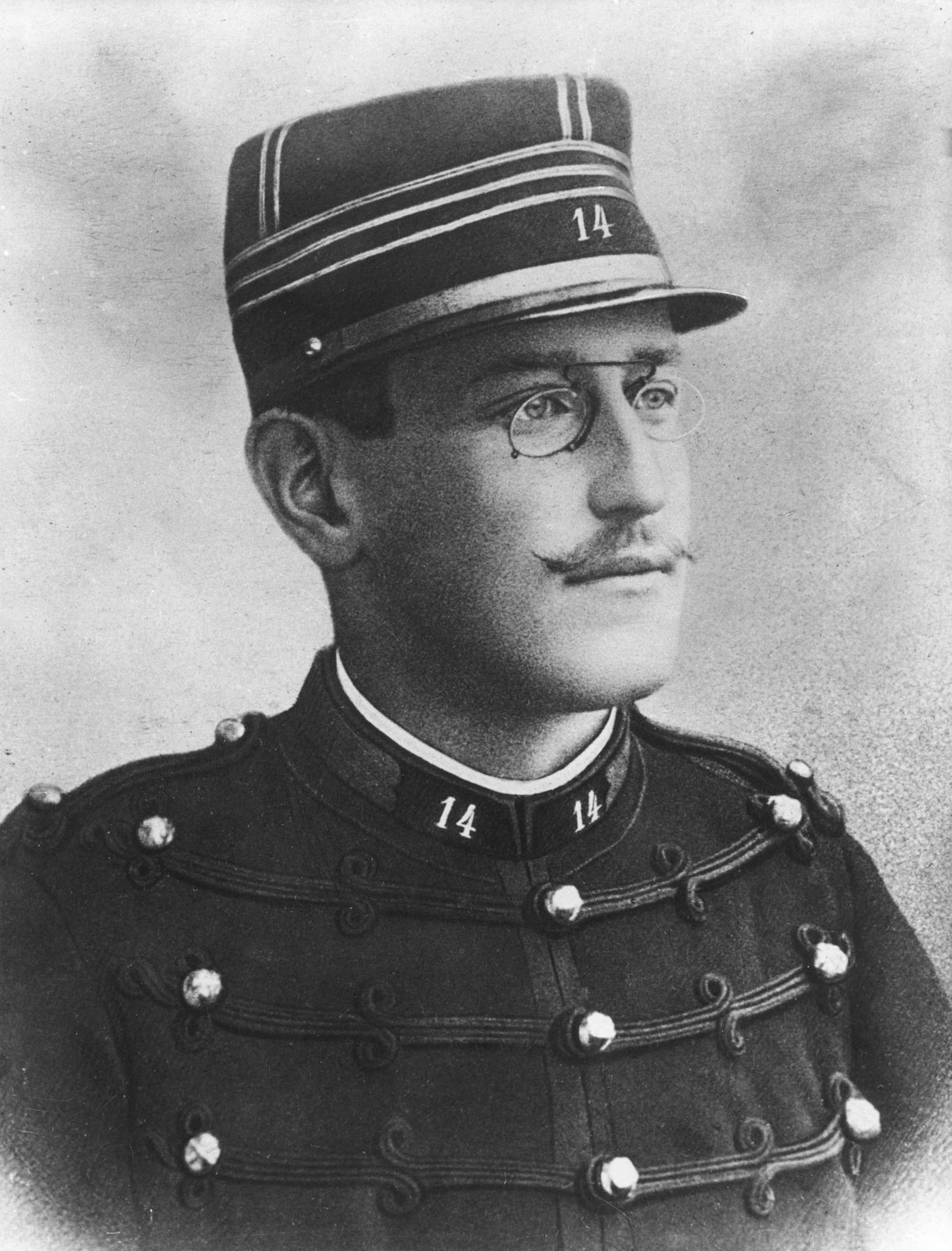
Alfred Dreyfus, a name that reverberates through the annals of history, is synonymous with one of the most infamous miscarriages of justice in the late 19th and early 20th centuries. Born on October 9, 1859, in Mulhouse, Alsace (then part of France, now in modern-day Germany), Dreyfus was an artillery officer in the French army. However, his fame—or rather infamy—comes not from his military exploits but from the harrowing saga known as the Dreyfus Affair.
The Historical Context of Alfred Dreyfus’s Life
To understand the full scope of Alfred Dreyfus’s life and legacy, it is crucial to consider the socio-political environment of France during his time. The late 19th century was a period of intense political and social upheaval in France. After the devastating defeat in the Franco-Prussian War (1870-1871), France found itself grappling with the loss of Alsace-Lorraine to Germany and the establishment of the Third Republic amidst deep divisions between monarchists and republicans.
This was a time of heightened nationalism, where anti-Semitic sentiments were pervasive. The army, in particular, was a bastion of conservative and nationalist thought, often harboring deep suspicions and biases against those deemed ‘outsiders’—Jews, in particular, were viewed with distrust.
The Dreyfus Affair: A Case of Injustice
The Dreyfus Affair, which erupted in 1894, began with the arrest of Captain Alfred Dreyfus on charges of treason. He was accused of passing military secrets to the German Empire, a claim that was largely based on dubious evidence and fueled by rampant anti-Semitism within the French military and society at large. Dreyfus, who was of Jewish descent, became an easy target in a climate that was already predisposed to view Jews as disloyal.
The evidence against Dreyfus was flimsy at best. The primary piece of evidence was a memorandum (known as the “bordereau”) allegedly written by Dreyfus, which was later proven to be a forgery. Despite the lack of solid evidence, Dreyfus was convicted in a closed court-martial and sentenced to life imprisonment on Devil’s Island, a penal colony off the coast of French Guiana. His degradation ceremony, where his military insignia were publicly torn from his uniform, remains one of the most symbolic moments of his public humiliation.
The Turning Point: Advocacy for Dreyfus
The case might have ended there, leaving Dreyfus to rot in obscurity, had it not been for the persistent efforts of his family, a handful of advocates, and a few brave members of the military who refused to let the truth be buried. One such individual was Colonel Georges Picquart, who, upon becoming the head of the intelligence unit, discovered that the real traitor was Major Ferdinand Walsin-Esterházy, not Dreyfus. Picquart’s insistence on Dreyfus’s innocence led to his own imprisonment and marginalization, further highlighting the lengths to which the military would go to preserve its narrative.
Public opinion began to shift significantly when the famous writer Émile Zola published his open letter “J’accuse!” in 1898, addressing the President of France. Zola’s letter was a scathing indictment of the government’s handling of the Dreyfus case and the corruption within the military. This letter, published in the newspaper L’Aurore, brought international attention to the case and marked a significant turning point in the affair. Zola was subsequently tried and convicted of libel, but his letter had already ignited a fierce public debate that would not be silenced.
The Resolution: Dreyfus’s Vindication
The Dreyfus Affair dragged on for years, with multiple trials and appeals. It wasn’t until 1899, after intense public pressure and international scrutiny, that Dreyfus was offered a retrial. However, in a bizarre twist, he was once again found guilty, albeit with extenuating circumstances, and sentenced to ten years in prison. Recognizing the untenability of the situation, the French government offered Dreyfus a pardon, which he accepted, though this was not an admission of guilt. It wasn’t until 1906 that Dreyfus was fully exonerated by the French Supreme Court and reinstated in the army, where he was eventually promoted to the rank of lieutenant colonel.
The Legacy of Alfred Dreyfus
Alfred Dreyfus’s story is more than just a tale of personal suffering; it is a reflection of the broader societal issues of the time, including the deep-seated anti-Semitism and the flaws within the judicial and military systems. The Dreyfus Affair exposed the divisions within French society and became a symbol of the struggle between the forces of republicanism and reactionary nationalism. It also had a profound impact on the Jewish community in Europe, influencing figures like Theodor Herzl, the father of modern political Zionism.
After his reinstatement, Dreyfus served with distinction in the French army, including during World War I, where he reached the rank of colonel. Despite his ordeal, he remained a loyal servant to France, which adds a layer of complexity to his character—Dreyfus was a man who, despite being wronged by his country, never ceased to serve it.
The Dreyfus Affair’s Impact on French Society
The Dreyfus Affair had long-lasting effects on French society. It polarized the nation, dividing it into Dreyfusards (those who supported Dreyfus) and anti-Dreyfusards (those who believed in his guilt). The affair also played a significant role in the development of the French political landscape, contributing to the rise of the Radical Party and the secularization of French society. The affair underscored the dangers of unchecked nationalism and the importance of a fair and impartial judicial system.
Moreover, the Dreyfus Affair is often cited as an early example of a media-driven public trial, where public opinion played a crucial role in the outcome. The extensive press coverage, the pamphlets, the open letters, and the involvement of prominent intellectuals turned what could have been a forgotten case of military injustice into a cause célèbre that resonated far beyond the borders of France.
The Final Years of Alfred Dreyfus
Alfred Dreyfus’s later years were marked by relative obscurity. After his reinstatement, he lived a quiet life, largely staying out of the public eye. He was, however, present at several key moments, such as the transfer of Émile Zola’s remains to the Panthéon in 1908, during which he survived an assassination attempt by a right-wing extremist. This incident was a stark reminder that, even after his vindication, Dreyfus remained a contentious figure in French society.
Dreyfus passed away on July 12, 1935, in Paris. He did not live to see the rise of Nazi Germany, but his life story serves as a poignant precursor to the horrors that would befall the Jewish people in Europe just a few years after his death.
Conclusion: The Enduring Relevance of Alfred Dreyfus
The story of Alfred Dreyfus is more than just a historical footnote; it is a powerful reminder of the dangers of prejudice and the importance of justice. The Dreyfus Affair remains relevant today as it highlights issues of wrongful conviction, the role of the media in shaping public opinion, and the impact of systemic discrimination. In many ways, Dreyfus’s struggle for justice continues to resonate in contemporary discussions about human rights, civil liberties, and the role of the state in protecting—or persecuting—its citizens.
Alfred Dreyfus’s life is a testament to the endurance of the human spirit in the face of adversity. His unwavering commitment to his country, despite the injustices he suffered, serves as a reminder that the fight for justice is never in vain. The Dreyfus Affair, with its complex interplay of politics, military secrecy, and social prejudices, offers valuable lessons for future generations about the importance of vigilance, transparency, and the relentless pursuit of truth.


