
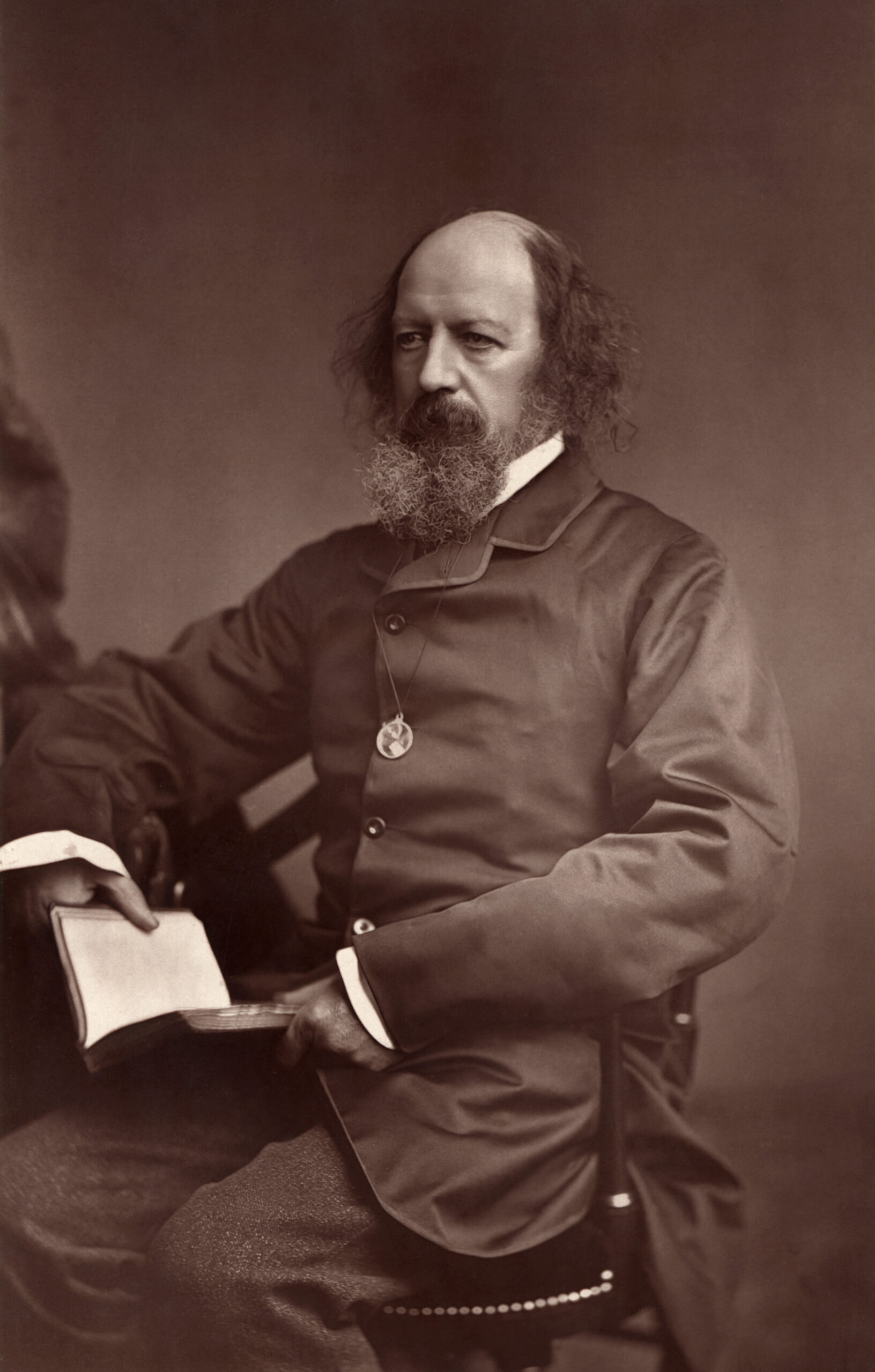
Alfred Tennyson, born on August 6, 1809, in the quaint village of Somersby, Lincolnshire, United Kingdom, stands as one of the most prominent figures in the literary world, particularly in the realm of Victorian poetry. Known for his deep, evocative verses and his mastery of the English language, Tennyson’s life and work have left an indelible mark on literature. This article delves into the life of Alfred Tennyson, exploring his age, rise to fame, and the significant highlights of his life, while offering insights into the historical context that shaped his work.
Early Life and Family Background
Alfred Tennyson was born into a large family, being one of twelve children. His father, George Clayton Tennyson, was a clergyman who struggled with financial difficulties and eventually became an alcoholic and mentally unstable. Despite these challenges, the Tennyson household was intellectually rich. Alfred, along with his brothers, began writing poetry from a young age, showing early signs of the literary talent that would later define his career.
The Tennyson family had noble roots, tracing their lineage back to King Edward III of England. However, the family’s financial situation was far from regal. George Tennyson had been disinherited by his father in favor of his younger brother, Charles, which contributed to the financial strain on the family. This turbulent family background played a significant role in shaping Alfred’s worldview and, consequently, his poetry.
Education and Early Literary Career
Alfred Tennyson’s education began at the King Edward IV Grammar School in Louth. In 1828, he entered Trinity College, Cambridge, where his literary talents flourished. At Cambridge, Tennyson became a member of a secret society known as the “Cambridge Apostles,” a group of intellectuals who engaged in discussions on philosophy, literature, and politics. It was here that Tennyson met Arthur Henry Hallam, who would become his closest friend and the greatest influence on his early work.
Tennyson’s first significant literary recognition came in 1829 when he won the Chancellor’s Gold Medal for his poem on Timbuctoo. The following year, he published his first collection, Poems, Chiefly Lyrical, which included notable works such as “Claribel” and “Mariana.” While the collection received mixed reviews, it brought Tennyson to the attention of literary critics and set the stage for his future success.
Tragedy and its Influence: The Death of Arthur Hallam
In 1831, Tennyson’s life was marked by a profound personal tragedy with the death of his father. This event forced him to leave Cambridge before completing his degree and return home to care for his mother and siblings. The following year, Tennyson faced an even greater loss when his dear friend Arthur Hallam died suddenly from a cerebral hemorrhage while traveling in Vienna. Hallam’s death had a devastating impact on Tennyson, profoundly influencing his work for years to come.
The grief Tennyson experienced due to Hallam’s death became the driving force behind some of his most celebrated works, including the masterpiece In Memoriam A.H.H., a long elegy that explores themes of loss, faith, and the human condition. This poem, published in 1850, not only cemented Tennyson’s fame but also provided solace to a grieving nation, resonating deeply with readers who had experienced similar losses.
The Road to Fame: Major Works and Recognition
Tennyson’s early works, though initially met with criticism, gradually gained popularity. His 1842 collection, simply titled Poems, marked a turning point in his career. This publication included revised versions of earlier poems as well as new works, which showcased his evolving style and thematic depth. The collection was well-received and established Tennyson as a leading poet of his time.
One of the standout poems from this period is “The Lady of Shalott,” a narrative poem that tells the tragic story of a woman cursed to live in isolation, only able to view the world through a mirror. The poem’s rich symbolism and haunting beauty captivated readers and remains one of Tennyson’s most enduring works.
In 1850, Tennyson reached the pinnacle of his career when he was appointed as the Poet Laureate of the United Kingdom, succeeding William Wordsworth. This prestigious position recognized Tennyson’s significant contribution to English literature and placed him at the forefront of national cultural life. As Poet Laureate, Tennyson composed numerous poems to mark important national events, though some of these, such as his poem welcoming Alexandra of Denmark to England, were considered by some critics to be more formal and less inspired.
Iconic Works and Cultural Impact
One of Tennyson’s most famous works as Poet Laureate is “The Charge of the Light Brigade,” written in 1854. This poem commemorates the bravery of British soldiers during the ill-fated charge at the Battle of Balaclava in the Crimean War. Tennyson’s vivid portrayal of the event, with its refrain “Theirs not to reason why, / Theirs but to do and die,” captured the public’s imagination and became a symbol of military valor and sacrifice.
Another significant work from Tennyson’s later years is Idylls of the King, a series of narrative poems published between 1859 and 1885 that retell the legends of King Arthur and the Knights of the Round Table. These poems reflect Tennyson’s fascination with chivalry, honor, and the timeless struggle between good and evil. Idylls of the King was dedicated to Prince Albert, Queen Victoria’s consort, and its themes resonated with the Victorian ideals of the time.
Tennyson’s works were not only popular in his own time but also had a lasting impact on English literature and culture. His ability to capture the spirit of the age, combined with his mastery of language and form, ensured that his poems would be studied and admired for generations to come.
Personal Life and Later Years
In 1850, the same year he became Poet Laureate, Tennyson married Emily Sellwood, whom he had known since childhood. The couple had two sons, Hallam and Lionel, both of whom played significant roles in Tennyson’s later life. Despite his public success, Tennyson was known to be a private person, often retreating to his home in the countryside to write and reflect.
Tennyson’s later years were marked by both personal and professional achievements. In 1884, Queen Victoria elevated him to the peerage, making him Baron Tennyson of Aldworth in the County of Sussex and of Freshwater in the Isle of Wight. This honor made Tennyson the first English writer to be raised to the House of Lords, further solidifying his status as a national treasure.
Even in his later years, Tennyson continued to write prolifically. His final works, while perhaps less groundbreaking than his earlier ones, still reflected his enduring passion for poetry and his deep engagement with the world around him. Tennyson remained a powerful voice in English literature until his death on October 6, 1892, at the age of 83.
Legacy and Historical Context
Alfred Tennyson’s legacy is inseparable from the Victorian era, a period marked by rapid industrialization, social change, and the expansion of the British Empire. Tennyson’s poetry, with its focus on tradition, honor, and the human experience, resonated deeply with the values and concerns of his time. His ability to articulate the anxieties and hopes of the Victorian public helped to establish poetry as a vital cultural force during this period.
Tennyson’s influence extended beyond literature. His works inspired artists, musicians, and thinkers, contributing to a broader cultural movement that sought to explore and preserve the ideals of the past while grappling with the challenges of modernity. The themes of his poetry—love, loss, faith, and duty—continue to resonate with readers today, offering timeless insights into the human condition.
Conclusion
Alfred Tennyson’s life and work are a testament to the enduring power of poetry. From his early struggles and personal tragedies to his rise as one of England’s greatest poets, Tennyson’s journey is a story of resilience, creativity, and profound insight. His ability to capture the complexities of the human experience in verse has ensured his place in the pantheon of literary greats.
As we reflect on Tennyson’s contributions to literature and culture, it is clear that his work remains as relevant today as it was in the 19th century. His poems continue to inspire, challenge, and comfort readers around the world, offering a window into the soul of one of history’s most remarkable poets.


