
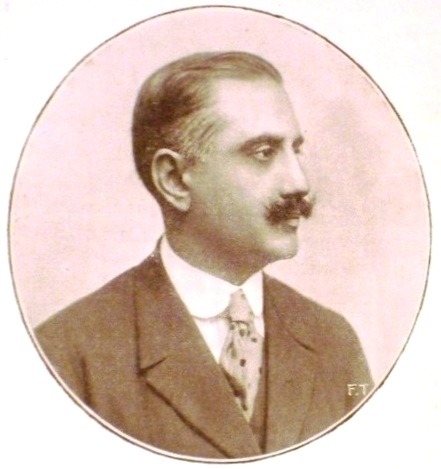
Alfredo Frassati, born on September 28, 1868, in Pollone, Italy, is a towering figure in the history of Italian journalism and politics. Best known as the founder and director of the influential newspaper “La Stampa,” Frassati’s life is a testament to the power of media and its role in shaping public opinion and political discourse in early 20th century Italy. His career, spanning several decades, was marked by his steadfast commitment to liberal values and his opposition to fascism. This article explores the life, achievements, and enduring legacy of Alfredo Frassati, providing detailed insights into the man behind one of Italy’s most respected newspapers.
Early Life and Education
Alfredo Frassati was born into a prominent family in the small town of Pollone, located in the province of Biella, Italy. His father, Pietro Frassati, was a respected medical doctor, and his mother, Giuseppina Coda Canati, came from a distinguished family. Despite the expectation that he might follow in his father’s footsteps, Alfredo chose a different path, driven by a passion for law and politics.
Frassati pursued his legal studies at the University of Turin, where he earned a law degree in 1890. His academic success led him to further his education in Germany, where he specialized in legal studies. This international experience broadened his worldview and provided him with a deep understanding of European politics and culture, which would later influence his career as a journalist and politician.
The Birth of “La Stampa” and the Rise to Prominence
In the early 1890s, Alfredo Frassati began his career in journalism, initially working as a contributor to various Italian newspapers. His breakthrough came in 1894 when he started collaborating with “La Gazzetta Piemontese,” a local newspaper in Turin. Recognizing the potential of the publication, Frassati, along with Luigi Roux, acquired a stake in the newspaper.
By 1900, Frassati had become the sole owner and director of the newspaper, which he renamed “La Stampa” in 1905. Under his leadership, “La Stampa” transformed from a regional publication into a national powerhouse, known for its rigorous journalism and editorial independence. Frassati’s vision for “La Stampa” was clear: to create a platform that would inform, educate, and engage the Italian public on critical issues of the day.
Frassati’s editorial direction was characterized by a commitment to liberalism and democracy. He used the newspaper as a vehicle to promote these values, often taking stands that were unpopular or controversial. His willingness to challenge the status quo earned him both admiration and enmity, but it also solidified “La Stampa’s” reputation as one of Italy’s most respected newspapers.
Political Career and Influence
Alfredo Frassati’s influence extended beyond journalism into the realm of politics. In 1913, he was appointed as a senator in the Kingdom of Italy, a position that reflected his growing stature in Italian public life. As a senator, Frassati was a strong advocate for Italian neutrality during the early stages of World War I, aligning himself with the views of Giovanni Giolitti, one of Italy’s most prominent statesmen.
Frassati’s political views often placed him at odds with the more nationalist and interventionist factions in Italy. He was a vocal critic of Italy’s involvement in World War I, believing that the country was unprepared for the conflict both militarily and economically. “La Stampa” became the mouthpiece for this non-interventionist stance, directly opposing the more hawkish views promoted by other leading newspapers like “Corriere della Sera,” which supported Italy’s entry into the war.
Frassati’s opposition to the war, however, did not diminish his influence. After the war, he continued to play a significant role in Italian politics, advocating for liberal reforms and opposing the rise of fascism. In 1920, he was appointed as Italy’s ambassador to Germany, a role he held briefly before resigning to focus on his anti-fascist activities.
Opposition to Fascism and Sale of “La Stampa”
As Benito Mussolini’s fascist regime began to consolidate power in Italy during the early 1920s, Alfredo Frassati emerged as one of its most vocal critics. He used “La Stampa” to denounce the fascists’ authoritarian tactics and their erosion of democratic institutions. This stance placed Frassati in direct conflict with Mussolini’s government, which increasingly viewed independent media as a threat to its control.
The pressure on Frassati mounted as the fascists sought to silence opposition voices. In 1926, faced with escalating threats and reprisals, Frassati made the difficult decision to sell “La Stampa” to the Agnelli family, the founders of Fiat and one of the most powerful industrial families in Italy. The sale marked the end of an era for “La Stampa,” which under Frassati’s leadership had become synonymous with journalistic integrity and political independence.
Despite selling the newspaper, Frassati did not retreat from public life. He continued to be an outspoken critic of fascism, although his ability to influence public discourse was diminished without the platform of “La Stampa.” His resistance to the fascist regime was not without personal cost; the years of political struggle and public opposition took a toll on his health and personal life.
Later Life and Legacy
After leaving “La Stampa,” Alfredo Frassati remained active in various public roles. In 1930, during the economic crisis that engulfed Italy, he was appointed president of “Italiana Gas,” later known as “Italgas,” one of Italy’s largest energy companies. His leadership helped steer the company through the difficult economic times, and he continued to play a significant role in Italy’s industrial sector until the end of World War II.
Following the war, Italy underwent a dramatic transformation, transitioning from a monarchy to a republic. In recognition of his contributions to Italian society and his steadfast opposition to fascism, Frassati was appointed as a senator in the newly formed Italian Republic’s first parliament, a role he held from 1948 to 1953.
Frassati’s later years were marked by a return to his roots in journalism. He resumed his work with “La Nuova Stampa,” the post-war iteration of the newspaper he had once led. Although no longer at the helm, Frassati’s influence on the newspaper and Italian journalism as a whole remained profound.
Alfredo Frassati passed away in Turin on May 21, 1961, at the age of 93. His death marked the end of a remarkable life that had spanned some of the most turbulent periods in Italian history. Frassati’s legacy, however, endures. He is remembered not only as a pioneering journalist and newspaper publisher but also as a principled advocate for democracy and freedom in an era when both were under threat.
The Frassati Family Legacy
Alfredo Frassati’s legacy is also intertwined with that of his family, particularly his son Pier Giorgio Frassati, who was born in 1901. Pier Giorgio, like his father, was deeply committed to social justice and humanitarian causes. However, while Alfredo’s influence was felt in the political and journalistic arenas, Pier Giorgio’s legacy is more spiritual in nature.
Pier Giorgio Frassati devoted his short life to helping the poor and marginalized, often working anonymously and without seeking recognition. His deep Catholic faith guided his actions, and he became known for his humility, charity, and dedication to social justice. Tragically, Pier Giorgio died in 1925 at the age of 24 from poliomyelitis, a sudden and unexpected loss that deeply affected his family.
In 1990, Pope John Paul II beatified Pier Giorgio Frassati, recognizing his life of virtue and his commitment to the poor. Today, Blessed Pier Giorgio Frassati is revered as a model for young Catholics worldwide, and his life continues to inspire those who seek to live out their faith through service to others.
The Frassati family’s legacy, therefore, is one of both social and spiritual significance. Alfredo Frassati’s contributions to journalism and democracy, combined with Pier Giorgio’s example of Christian charity, have left an indelible mark on both Italian society and the broader Catholic community.
Conclusion
Alfredo Frassati’s life was one of remarkable achievement and enduring influence. As the founder of “La Stampa,” he played a crucial role in shaping modern Italian journalism, using the power of the press to advocate for liberal values and democratic principles. His steadfast opposition to fascism, even at great personal cost, is a testament to his commitment to these ideals.
Frassati’s legacy is not limited to his professional accomplishments. His life story is also a reflection of the broader struggles and transformations that Italy underwent in the late 19th and early 20th centuries. From the unification of Italy to the rise and fall of fascism, Frassati was both a witness to and a participant in some of the most significant events in Italian history.
As we remember Alfredo Frassati, we honor not only his contributions to journalism and politics but also his unwavering dedication to the principles of freedom, democracy, and justice. His life serves as an inspiration to those who seek to use their talents and influence for the greater good, and his legacy continues to resonate in Italy and beyond.


