
Introduction
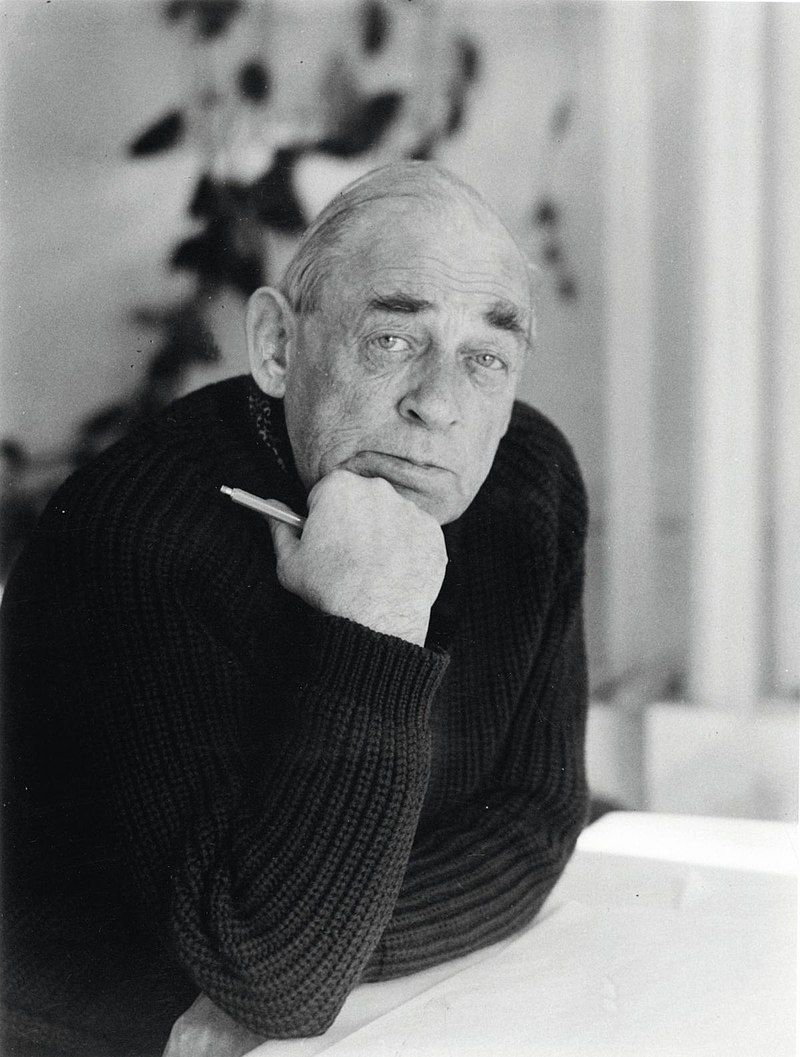
Alvar Aalto, born Hugo Alvar Henrik Aalto, was a Finnish architect, designer, and academician whose contributions to modern architecture have left an indelible mark on the field. Born on February 3, 1898, in Kuortane, Finland, and passing away on May 11, 1976, in Helsinki, Aalto is celebrated as one of the most significant figures in 20th-century architecture. His work, alongside that of contemporaries like Ludwig Mies van der Rohe, Walter Gropius, Frank Lloyd Wright, and Le Corbusier, defines the essence of the Modern Movement in architecture.
Early Life and Education
Alvar Aalto was the son of Henrik Aalto, a Finnish engineer specializing in geodesy and cartography, and Selly (Selma) Matilda Aalto, a Swedish postal worker. He spent his childhood in Alajarvi and Jyvaskyla, where he attended high school. In 1916, Aalto moved to Helsinki to study at the Helsinki University of Technology (Teknillinen Korkeakoulu). Here, he was significantly influenced by his teacher, the architect Armas Lindgren.
Early Career and Marriage
After completing his studies in 1921, Aalto registered with the Finnish Association of Architects. In 1922, he published his first essay in the magazine “Arkkitehti.” By 1923, he had returned to Jyvaskyla to open his architectural studio. A pivotal moment in Aalto’s life came in 1924 when he traveled to Italy and married Aino Marsio, a fellow architect he met at the university. Their professional collaboration lasted until Aino’s death in 1949, with many projects jointly signed by both.
Rise to Prominence
In 1927, Aalto relocated his practice to Turku, and by 1929, he was participating in the second CIAM (Congresso Internazionale di Architettura Moderna) in Frankfurt. Here, he met Sigfried Giedion and other European artists who would shape his future work. Collaborating with Erik Bryggman, Aalto organized the 700th-anniversary exhibition of the city of Turku, marking one of his early significant contributions to Finnish architecture.
Move to Helsinki and International Acclaim
Aalto moved his practice to Helsinki in 1931. His participation in the fourth CIAM and the drafting of the Athens Charter in 1933 further cemented his status in the architectural community. During this period, he designed a series of iconic glassware, including the famous Savoy vase in 1936. His furniture gained international attention, leading to the founding of the company “Artek” in 1935 to mass-produce his designs.
Global Exhibitions and Recognitions
The mid-1930s marked Aalto’s emergence on the global stage. His works were exhibited in Italy, Switzerland, Denmark, and the United States. The Museum of Modern Art (MoMA) in New York held a dedicated exhibition of his works in 1938, which toured internationally. In 1939, Aalto showcased his works at the New York World’s Fair and lectured at Yale University.
Innovations and American Influence
The 1940s were a period of innovation for Aalto. He invented the “Y” leg for furniture, which evolved into the fan-leg design in 1954, utilizing thin layers of plywood. Aalto’s work extended across the Atlantic, with notable projects such as the dormitories at the Massachusetts Institute of Technology (MIT) in Cambridge, completed in 1947. That same year, he received an honorary doctorate from Princeton University.
Personal Loss and Continued Success
The death of Aino in 1949 marked a turning point in Aalto’s personal and professional life. Despite the loss, he continued to achieve significant success. He remarried Elissa Makiniemi and completed several notable projects, including the Saynatsalo Town Hall (1949-1951) and the Wolfsburg Cultural Center in Germany (1958-1963).
Late Career and Legacy
From the 1950s onward, Aalto received numerous prestigious awards, such as the Royal Institute of British Architects’ Gold Medal in 1957 and an honorary degree from the Polytechnic University of Milan. His work continued to be recognized and celebrated worldwide. In the 1960s, he designed the Siena Cultural Center and the Riola Church near Bologna, Italy.
In 1967, the Alvar Aalto Museum in Jyvaskyla was inaugurated, dedicated to preserving and exhibiting his works. His final project, the University of Reykjavik in Iceland, was completed in 1975. Aalto passed away in Helsinki in 1976 at the age of 78.
Conclusion
Alvar Aalto’s impact on modern architecture is profound and enduring. His innovative designs, commitment to functionalism, and ability to blend architecture with nature have left a lasting legacy. From his early days in Finland to his international acclaim, Aalto’s life and work exemplify the transformative power of architecture. His contributions continue to inspire architects and designers worldwide, cementing his place as a true master of modern architecture.


