
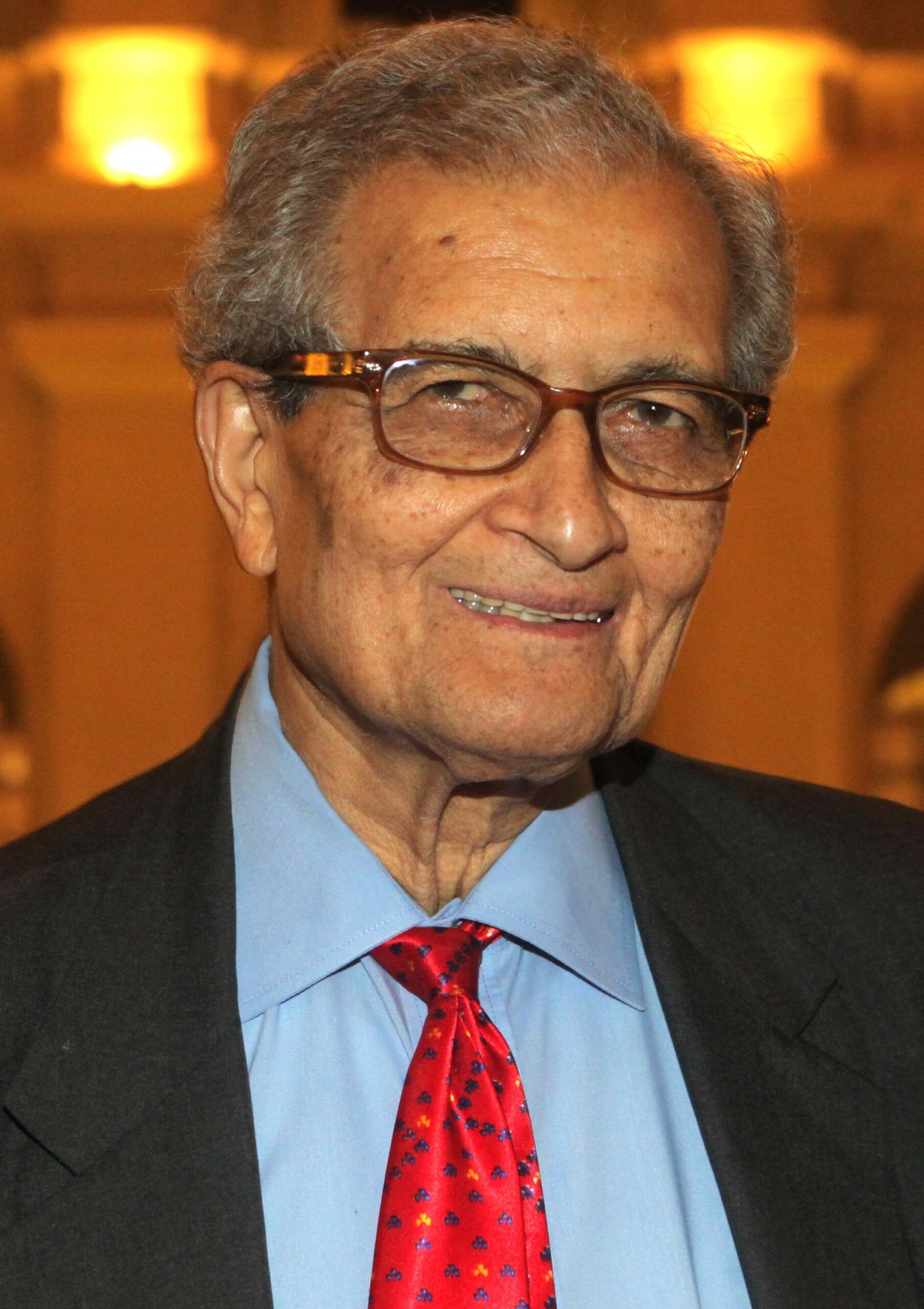
Amartya Sen, a towering figure in the fields of economics and philosophy, is renowned for his groundbreaking work in welfare economics, social choice theory, and the philosophy of human rights and development. Born on November 3, 1933, in Santiniketan, India, Sen’s intellectual journey has profoundly impacted the way the world understands poverty, inequality, and human development. His contributions have earned him global recognition, including the prestigious Nobel Prize in Economics. This article explores his age, career, life highlights, and the historical significance of his work.
Early Life and Education
Amartya Kumar Sen was born in Santiniketan, a small town in the Bengal region of India, known for its cultural and intellectual heritage, particularly due to the influence of Rabindranath Tagore, who founded the Visva-Bharati University there. Growing up in an environment that encouraged intellectual curiosity and humanistic values, Sen was deeply influenced by Tagore’s ideals, which later permeated his work in economics and philosophy.
Sen completed his early education in India before pursuing higher studies at the University of Cambridge, where he earned a Ph.D. in Economics in 1959. His time at Cambridge was instrumental in shaping his academic career, exposing him to diverse intellectual traditions and rigorous analytical thinking. It was here that Sen began to explore the intersections between economics, ethics, and social justice, laying the groundwork for his future contributions.
Academic Career and Contributions
Amartya Sen’s academic career is as distinguished as it is diverse. He began his teaching career at the University of Calcutta (1956-1963) and subsequently held positions at the University of Delhi (1964-1971), the London School of Economics (1971-1977), All Souls College, Oxford (1977-1988), and Harvard University (1987-1997). In 1998, Sen returned to Cambridge as the Master of Trinity College, one of the most prestigious academic positions in the United Kingdom.
Sen’s academic work spans a wide range of topics, but he is perhaps best known for his contributions to welfare economics, social choice theory, and development economics. His seminal work, Poverty and Famines: An Essay on Entitlement and Deprivation (1981), challenged the prevailing view that famines are caused solely by a lack of food supply. Instead, Sen argued that famines occur due to a breakdown in the ability of certain groups to access food, a concept he termed “entitlements.” This work not only redefined the understanding of famines but also had a profound impact on public policy and humanitarian interventions.
Nobel Prize in Economics
In 1998, Amartya Sen was awarded the Nobel Prize in Economics for his contributions to welfare economics. The Nobel Committee recognized Sen for his work in restoring an ethical dimension to the field of economics and for his deep insights into the causes of poverty and inequality. His research demonstrated that economic policies must consider the well-being of individuals, not just aggregate economic growth, a perspective that has since influenced global development agendas.
Sen’s Nobel Prize marked a significant moment in the field of economics, highlighting the importance of ethical considerations in economic theory and practice. His work underscored the idea that economic development should be measured not just by income or wealth, but by the expansion of human capabilities and freedoms.
Key Theories and Ideas
1. The Capability Approach:
One of Sen’s most influential contributions is the Capability Approach, a framework that evaluates human well-being based on the capabilities or opportunities people have to achieve the kind of lives they value. Unlike traditional economic measures such as GDP or income, the Capability Approach focuses on what individuals can actually do and be—whether they have the freedom to live a healthy life, to be educated, or to participate in the community.
This approach has had a profound impact on the field of development economics and has been instrumental in shaping the Human Development Index (HDI), a composite measure used by the United Nations to assess the social and economic development of countries. The HDI incorporates factors such as life expectancy, education, and per capita income, reflecting the multidimensional nature of human well-being as emphasized by Sen.
2. Social Choice Theory:
Sen also made significant contributions to social choice theory, a field that examines how collective decisions are made. His work in this area, particularly his book Collective Choice and Social Welfare (1970), explores the complexities of aggregating individual preferences into collective choices, a problem famously encapsulated by Arrow’s Impossibility Theorem.
Sen’s research in social choice theory addressed the limitations of traditional economic models that often assume individuals are solely motivated by self-interest. He introduced the concept of “committed preferences,” where individuals’ choices are influenced by ethical considerations and the well-being of others. This work has important implications for understanding democratic decision-making processes and the role of social welfare policies.
3. Understanding Poverty and Inequality:
Throughout his career, Sen has been deeply concerned with issues of poverty and inequality. His research has highlighted the inadequacies of using income alone as a measure of poverty. Instead, he has argued for a more nuanced understanding that considers factors such as access to education, healthcare, and social services.
Sen’s book Development as Freedom (1999) encapsulates his views on poverty and development. He argues that development should be seen as the expansion of human freedoms, and that poverty is not merely a lack of income, but a deprivation of basic capabilities. This perspective has influenced international development policies and has helped shift the focus from economic growth to human-centered development.
Influence and Legacy
Amartya Sen’s work has had a lasting impact on both academic disciplines and public policy. His ideas have been instrumental in shaping the global discourse on development, social justice, and human rights. His influence extends beyond economics, touching fields such as philosophy, political science, and public health.
1. Human Development Reports:
Sen’s work on human capabilities directly influenced the creation of the Human Development Reports published by the United Nations Development Programme (UNDP). These reports, which have been produced annually since 1990, use the Human Development Index to assess the progress of countries in terms of human well-being rather than just economic growth.
2. Ethical Dimensions of Economics:
Sen’s emphasis on the ethical dimensions of economics has encouraged economists and policymakers to consider the moral implications of economic decisions. His work has led to a greater focus on equity, justice, and the distributional effects of economic policies. This shift has been particularly important in debates over globalization, trade, and social welfare policies.
3. Global Health and Education:
Sen’s ideas have also influenced global health and education policies. His focus on capabilities and human rights has informed international efforts to improve access to healthcare, education, and social services, particularly in developing countries. His work has inspired a generation of scholars and practitioners to pursue more inclusive and equitable approaches to development.
4. Feminist Economics:
Sen’s work has also intersected with feminist economics, particularly through his analysis of gender inequalities in access to resources and opportunities. His research has highlighted the ways in which traditional economic measures often overlook the contributions of women and the impact of gender discrimination on development outcomes. This has led to a greater emphasis on gender equity in development policies and programs.
Personal Life and Views
Amartya Sen’s personal life is as intellectually rich as his academic career. He has been married three times and has four children. His partners have also been distinguished academics, contributing to an intellectually stimulating environment that has influenced his work.
Sen is known for his humility and his commitment to social justice. Despite his global fame, he remains deeply connected to his roots in India and continues to engage with issues affecting the developing world. His views on democracy, freedom, and justice have been shaped by his personal experiences and his deep understanding of the challenges faced by marginalized communities.
Challenges and Criticisms
While Sen’s work has been widely celebrated, it has also faced criticism. Some economists argue that his focus on capabilities and human development, while valuable, is difficult to quantify and apply in policy-making. Others have questioned the practicality of his ideas in addressing the immediate economic needs of developing countries.
Despite these criticisms, Sen’s work remains influential, and his ideas continue to inspire debates on how to achieve a more just and equitable world. His willingness to engage with these criticisms and to refine his ideas in response to new challenges is a testament to his intellectual rigor and his commitment to advancing human knowledge.
Conclusion
Amartya Sen’s life and work represent a unique blend of intellectual rigor, ethical commitment, and practical engagement with the world’s most pressing problems. From his early years in Santiniketan to his Nobel Prize-winning research, Sen has consistently challenged conventional wisdom and pushed the boundaries of economic thought.
His contributions to welfare economics, social choice theory, and development economics have redefined the field and have had a lasting impact on public policy and international development. As we continue to grapple with issues of poverty, inequality, and human rights, Sen’s ideas provide a valuable framework for understanding and addressing these challenges.
Sen’s legacy is not just in the theories he developed, but in the lives he has influenced and the global policies he has shaped. His work reminds us that economics is not just about numbers and models, but about people and the real-world impact of economic decisions. As we look to the future, Amartya Sen’s insights will continue to guide us in our pursuit of a more just and equitable world.


