
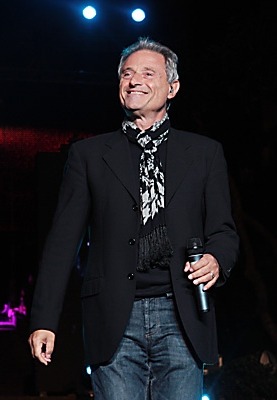
Amedeo Minghi, born on August 12, 1947, in Rome, Italy, is a name synonymous with Italian music and songwriting. His journey from a young boy in the Prati neighborhood of Rome to becoming one of Italy’s most beloved musical icons is a testament to his talent, persistence, and passion for music. This article delves deep into the life of Amedeo Minghi, exploring his age, his rise to fame, and the highlights of his illustrious career.
Early Life and Musical Beginnings
Amedeo Minghi was the youngest of six children, and his love for music was evident from a young age. Growing up in the Prati district of Rome, he was surrounded by the cultural vibrancy of the city, which significantly influenced his musical inclinations. He first entered the world of music as the lead vocalist of a beat group called “I Noemi,” formed with friends. Despite the rejection of his first song, “Una cosa stupida,” by RCA Italiana, Minghi was undeterred. This early setback did not stop him; instead, it fueled his desire to pursue a solo career in music.
His first big break came when he auditioned in front of Gianni Sanjust, the artistic director of Ricordi’s Rome branch, and two prominent maestros, Alberto Durante and Stelvio Cipriani. This audition led to a contract with Dischi Ricordi, marking the beginning of his professional music career. In 1966, he released a 45 RPM record containing two tracks written by the renowned lyricist Mogol, “Ma per fortuna” and “Alla fine.” These songs were also featured on the popular TV show “Scala Reale.”
The 1970s: A Period of Growth
The 1970s were a crucial decade for Amedeo Minghi, marking his transition from a budding artist to a recognized name in the Italian music industry. In 1973, he released his first album, simply titled “Amedeo Minghi,” with lyrics penned by notable figures such as Carla Vistarini, Francesco De Gregori, and Edoardo De Angelis. This period also saw significant personal milestones; in the same year, Minghi married Elena Paladino, whom he met at Apollo Records. The couple would go on to have two daughters, Annesa and Alma.
Minghi’s career took a significant turn in 1975 when he joined the group Pandemonium. However, it was his 1976 single “L’immenso” that catapulted him to international fame, selling over two million copies worldwide. This success established Minghi as a formidable singer-songwriter, capable of balancing a successful solo career with his work for other artists.
During the latter half of the 1970s, Minghi’s songwriting prowess shone as he contributed to several albums for various artists. His compositions included “La fantasia” for Schola Cantorum, “Il mio mondo, il mio giardino” for Marisa Sannia, and “Camminando e cantando” for Marcella Bella. In 1978, he left Pandemonium and signed a deal with CBS, releasing his second album, “Minghi,” two years later.
The 1980s: Establishing a Legacy
The 1980s marked a period of experimentation and broader recognition for Amedeo Minghi. He started producing music for other artists, such as Mario Castelnuovo, and made his debut at the prestigious Sanremo Music Festival in 1983 with the song “1950.” Although the song did not make it to the finals, it became one of Minghi’s most beloved tracks, cherished for its nostalgic and poetic lyrics.
Minghi continued to experiment with his music, releasing several albums throughout the decade. Notably, he collaborated with Katia Ricciarelli, an acclaimed soprano, on the song “Il profumo del tempo,” performed at the 1985 Sanremo Festival. His 1986 album “Cuori di pace” and the subsequent album “Serenata” further cemented his place in the Italian music scene.
Towards the end of the decade, Minghi began collaborating with lyricist Pasquale Panella, leading to the creation of “Le nuvole e la rosa” in 1988 and “La vita mia” in 1989. The latter sold over 500,000 copies, marking a significant commercial success for Minghi.
The 1990s: Peak of Fame
The 1990s were undoubtedly the pinnacle of Amedeo Minghi’s career. His 1990 performance at Sanremo with Mietta, singing “Vattene amore,” was a monumental success. The song not only secured third place in the competition but also won a Telegatto award and achieved ten platinum records. This period also saw the release of the live album “Amedeo Minghi in Concerto” and another successful Sanremo entry in 1991 with the song “Nenè.”
In addition to his success on stage, Minghi ventured into composing soundtracks for television series, most notably the music for the popular series “Fantaghirò.” His work on the soundtrack included the song “Mio nemico amatissimo,” performed by Rossana Casale, which became an iconic piece associated with the series.
Minghi’s contributions to television continued with soundtracks for other series, including “Desideria e l’anello del drago” and “Sorellina e il principe del sogno.” His involvement in the soap opera “Edera” led to the creation of the song “I ricordi del cuore,” which became the title track of an album that sold over 600,000 copies.
The 2000s: A Time of Reflection
As the new millennium began, Amedeo Minghi continued to be a prominent figure in the Italian music scene. In 2000, he participated in Sanremo once again, this time alongside Mariella Nava, with the song “Futuro come te.” Although the song did not achieve the same success as his earlier entries, it demonstrated Minghi’s enduring presence in the music industry.
In the early 2000s, Minghi released the album “Anita” and later “L’altra faccia della luna” in 2002, collaborating with lyricist Paolo Audino. These albums reflected Minghi’s evolution as an artist, showcasing his ability to adapt to changing musical landscapes while staying true to his signature style.
However, the 2000s were also marked by personal loss for Minghi. In 2014, after 40 years of marriage, his wife Elena Paladino passed away, leaving him a widower. Despite this tragedy, Minghi continued to create music, celebrating his 50th career anniversary in 2016 with the release of the album “La bussola e il cuore.” This compilation featured three discs: “La bussola,” with ten new songs, “Il cuore,” revisiting five of his classic tracks, and “Mappe,” a collection of 20 unreleased songs recorded during the 1970s and 1980s.
The 2010s and Beyond: Continuing the Legacy
The 2010s saw Amedeo Minghi maintaining his relevance in the Italian music industry. In 2010, he collaborated with Lando Fiorini on the song “Fijo mio” for the album “Ti presento Roma mia.” He also composed the soundtrack for the television drama “Anita Garibaldi,” aired on Raiuno. In 2012, Minghi hosted the TV show “Cantare è d’amore,” although it did not achieve high ratings.
A significant milestone in Minghi’s later career came in 2018 when he participated as a contestant in the 13th season of “Ballando con le stelle,” the Italian version of “Dancing with the Stars.” Although primarily known for his singing and songwriting, Minghi’s participation in the show demonstrated his versatility and willingness to explore new avenues in entertainment.
As Amedeo Minghi continues to create music and perform, his legacy as one of Italy’s most cherished artists remains unchallenged. His career, spanning over five decades, is a testament to his enduring talent, adaptability, and passion for music. From his early days as a beat singer in Rome to his status as a celebrated singer-songwriter, Minghi’s contributions to Italian music are both profound and lasting.
In conclusion, Amedeo Minghi’s life and career reflect a journey marked by both triumph and tragedy, success and perseverance. His ability to connect with audiences through his heartfelt lyrics and melodious compositions has solidified his place in the annals of Italian music history. As he continues to inspire new generations of musicians and fans, Amedeo Minghi’s story is a reminder of the timeless power of music and the enduring legacy of a true artist.


