
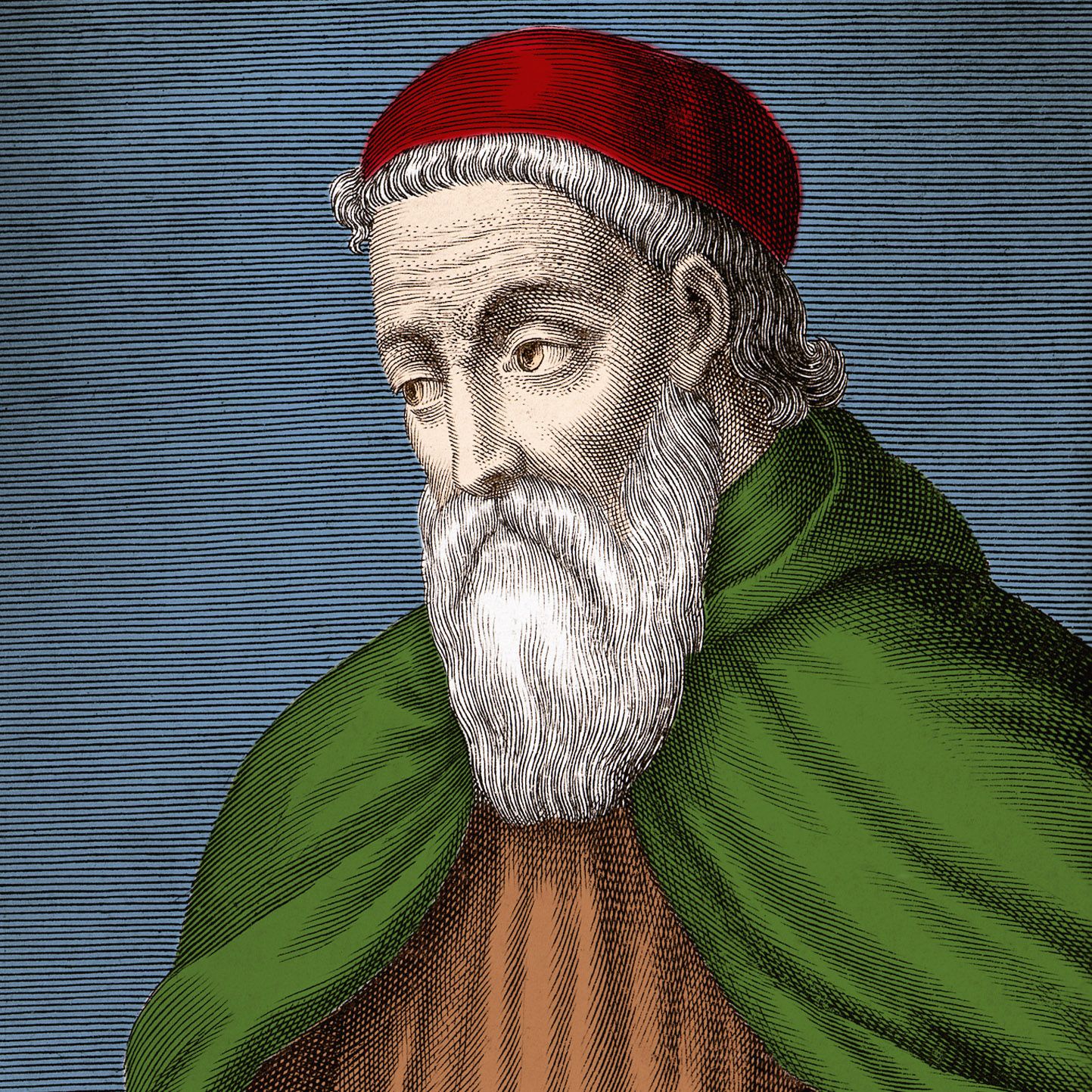
Amerigo Vespucci, born on March 9, 1454, in Florence, Italy, is a name that resonates throughout history as one of the most significant explorers of the New World. His voyages and the subsequent naming of the American continents in his honor mark him as a key figure in the Age of Exploration. Vespucci’s life was marked by a blend of discovery, intrigue, and intellectual contributions that have left an indelible mark on the world. This article delves into the life, achievements, and lasting legacy of Amerigo Vespucci, providing detailed insights into the nuances of his explorations and the historical context in which he lived.
Early Life and Education
Amerigo Vespucci was born into a well-connected family in Florence. His father, Nastagio Vespucci, was a notary, and his mother, Lisabetta Mini, came from a noble family in Montevarchi. Growing up in Florence, a city that was a hub of intellectual and cultural activity during the Renaissance, Vespucci was exposed to a world of learning and exploration from a young age. He was educated by his uncle, Giorgio Antonio Vespucci, a Dominican friar and a noted scholar, who provided Amerigo with a strong foundation in the classics, mathematics, and navigation.
Vespucci’s early education played a crucial role in shaping his future. His fascination with geography and the sciences was nurtured in Florence, and he later pursued a career in commerce, which would eventually lead him to the world of exploration. In 1489, Vespucci moved to Seville, Spain, on the recommendation of Lorenzo di Pierfrancesco de’ Medici, a prominent banker and member of the influential Medici family. It was in Seville that Vespucci’s life took a decisive turn towards exploration.
Entry into the Age of Exploration
While in Seville, Vespucci worked for the Medici family’s commercial interests, managing the affairs of their banking operations in Spain. It was here that he came into contact with the world of maritime exploration, which was booming at the time due to Spain and Portugal’s efforts to expand their empires. Vespucci’s work brought him into contact with notable explorers, including Christopher Columbus, and he soon became involved in the logistics of organizing expeditions.
Vespucci’s first significant voyage occurred between 1497 and 1498, when he joined a Spanish expedition led by Juan Díaz de Solís and the famous cartographer Juan de la Cosa. This journey, commissioned by King Ferdinand II of Aragon, aimed to explore the southern coasts of the newly discovered American continent. The expedition sailed along the coast of present-day Colombia, where Vespucci made detailed observations of the indigenous people, their customs, and the geography of the region. It was during this voyage that Vespucci first began to develop the idea that the lands they were exploring were not part of Asia, as initially believed, but a “New World.”
The Discoveries and Letters of Amerigo Vespucci
Vespucci’s second voyage, between 1499 and 1500, was even more significant. He joined Alonso de Hojeda, with Juan de la Cosa again on board, in an expedition that sailed along the coast of what is now Guyana. During this voyage, Vespucci split from the main expedition and ventured further south, eventually reaching the mouth of the Amazon River. His detailed accounts of this journey, which included descriptions of the rich biodiversity and the indigenous cultures he encountered, were among the first European observations of this region.
One of the most remarkable aspects of this voyage was Vespucci’s discovery of the constellation we now know as the “Southern Cross” (Crux). This constellation was crucial for navigation in the southern hemisphere and was a significant contribution to the field of astronomy and navigation. Vespucci’s letters from this period, particularly those addressed to Lorenzo di Pierfrancesco de’ Medici, provide vivid descriptions of his experiences and observations, offering invaluable insights into the early exploration of South America.
The Portuguese Expeditions and Further Discoveries
In 1501, Vespucci embarked on another voyage, this time under the flag of Portugal. He joined a Portuguese expedition led by Gonzalo Coelho, which aimed to explore the eastern coast of South America. During this journey, Vespucci made one of his most famous discoveries: on January 1, 1502, the expedition reached a stunning bay, which they named Rio de Janeiro. The voyage continued southward, exploring the coast down to the Rio de la Plata, and possibly as far as Patagonia.
This expedition further solidified Vespucci’s belief that the lands he was exploring were part of a new continent, separate from Asia. His detailed observations of the flora, fauna, and native peoples, combined with his growing understanding of the geography of the region, led him to propose that this was indeed a “New World.” Vespucci’s ability to recognize the significance of these discoveries set him apart from his contemporaries and positioned him as a leading figure in the Age of Exploration.
Naming of the Americas and the Legacy of Vespucci
The significance of Vespucci’s contributions was recognized by the cartographer Martin Waldseemüller, who, in 1507, published a world map in which he named the newly discovered continent “America,” in honor of Amerigo Vespucci. Waldseemüller was influenced by Vespucci’s published letters, particularly the Mundus Novus (New World), which had circulated widely in Europe and had a profound impact on the understanding of the newly discovered lands. The decision to name the continent after Vespucci was a testament to his role in recognizing the true nature of the New World, separate from Asia.
However, Vespucci’s legacy is not without controversy. Some historians have questioned the authenticity of certain letters attributed to him, suggesting that they may have been embellished or even fabricated. Critics argue that Vespucci may have exaggerated his role in the discovery of the New World, claiming credit for achievements that were the result of collective efforts by many explorers. Despite these controversies, Vespucci’s contributions to the exploration and understanding of the Americas remain significant.
In 1508, Vespucci was appointed Piloto Mayor de Castilla (Chief Navigator of Castile) by King Ferdinand II of Aragon. In this role, he was responsible for training navigators and overseeing the planning of expeditions to the New World. Vespucci’s work in this capacity helped to advance the art of navigation, as he introduced new techniques for determining longitude at sea, which were critical for accurate maritime exploration.
Later Years and Death
Amerigo Vespucci spent his later years in Seville, where he continued to work on navigation and exploration projects. His contributions to the field of navigation, particularly his work on the determination of longitude, had a lasting impact on the science of cartography and exploration. Vespucci’s health began to decline in the early 1510s, and he passed away on February 22, 1512, in Seville. He left behind a legacy of exploration and discovery that would shape the course of history.
Vespucci was married to Maria Cerezo, but the couple had no children. Upon his death, he left his estate to his wife. Vespucci’s death marked the end of an era of exploration, but his name would live on, forever associated with the continents of North and South America.
Conclusion
Amerigo Vespucci’s life and work represent a pivotal moment in the history of exploration. His voyages to the New World, his detailed observations of the lands and peoples he encountered, and his recognition of the Americas as a separate continent were crucial in shaping the European understanding of the world. While his legacy is not without its controversies, there is no denying the impact of his contributions to the Age of Exploration.
Vespucci’s ability to see beyond the immediate discoveries and understand the broader implications of his voyages set him apart from his contemporaries. His name, immortalized in the Americas, serves as a reminder of the spirit of discovery and the drive to explore the unknown. Amerigo Vespucci remains a figure of immense historical significance, and his life’s work continues to inspire explorers and scholars alike.


