
Introduction
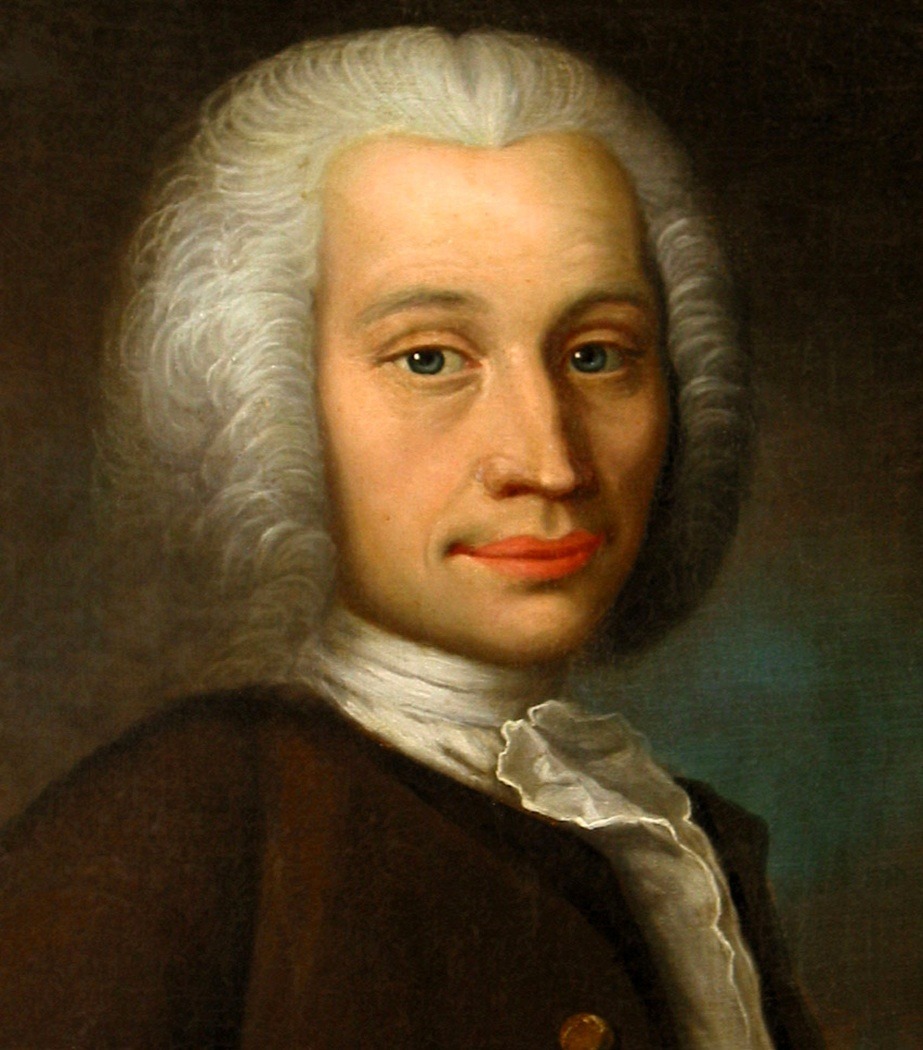
Anders Celsius, a name synonymous with temperature measurement, is one of the most influential figures in the history of science. Born on November 27, 1701, in Uppsala, Sweden, Celsius made groundbreaking contributions to the fields of astronomy, physics, and mathematics. Best known for inventing the Celsius temperature scale, his work has had a lasting impact on both scientific research and everyday life. This article delves into the life and legacy of Anders Celsius, exploring his contributions, the historical context in which he worked, and the lasting significance of his achievements.
Early Life and Education
Anders Celsius was born into a family with a strong academic background. His father, Nils Celsius, was a professor of astronomy at Uppsala University, a position that no doubt influenced Anders’ early interest in the sciences. Growing up in an intellectually stimulating environment, Celsius was exposed to the wonders of mathematics, astronomy, and physics from a young age. He pursued his education at Uppsala University, where he studied a wide range of scientific disciplines.
It was at Uppsala University that Celsius began to develop his passion for astronomy, following in his father’s footsteps. His early academic career was marked by a deep curiosity and a drive to understand the natural world. By the time he completed his studies, Celsius had already begun to make a name for himself as a promising young scientist.
Career and Contributions to Science
Astronomy and the Arctic Expedition
Celsius’s early career was primarily focused on astronomy. In the 1730s, he embarked on a series of travels across Europe, visiting major astronomical observatories in cities like Berlin and Nuremberg. These journeys were more than just educational; they were a means for Celsius to establish connections with other leading scientists of his time and to observe different methods of astronomical research.
One of Celsius’s most significant contributions to astronomy came during his involvement in an expedition to measure the shape of the Earth. In 1736, Celsius joined an expedition led by Pierre Louis Maupertuis to the Arctic Circle in Lapland. The purpose of this mission was to measure the length of a degree of latitude near the North Pole, a key component in determining the shape of the Earth. This expedition was crucial in confirming Isaac Newton’s theory that the Earth was an oblate spheroid—flattened at the poles and bulging at the equator—rather than a perfect sphere. Celsius’s role in this expedition earned him considerable recognition in the scientific community.
The Celsius Temperature Scale
Despite his achievements in astronomy, Anders Celsius is most famous for his work in thermometry, particularly for developing the temperature scale that bears his name. Before Celsius’s invention, temperature measurement was inconsistent, with various scales in use, including those by Fahrenheit and Réaumur. These scales were not only incompatible with each other but also lacked precision in everyday applications.
In 1742, Celsius proposed a new temperature scale based on two fixed points: the freezing point and boiling point of water. Unlike the scales of his contemporaries, Celsius chose to define 0 degrees as the boiling point of water and 100 degrees as the freezing point. This inverted scale was initially met with some resistance, but after his death, it was reversed to the scale we use today, where 0 degrees represents the freezing point and 100 degrees represents the boiling point of water. This adjustment made the Celsius scale more intuitive and easier to use, leading to its widespread adoption.
The Celsius scale quickly became the standard in scientific research due to its simplicity and precision. Its adoption was further facilitated by the increasing need for standardized measurements in the burgeoning fields of chemistry and physics. Today, the Celsius scale is used worldwide, except in a few countries that still use Fahrenheit, making it one of Celsius’s most enduring legacies.
Historical Context and Nuances
To fully appreciate Anders Celsius’s contributions, it’s essential to understand the historical and scientific context in which he worked. The early 18th century was a period of rapid development in the natural sciences, driven by the Enlightenment’s emphasis on reason and empirical evidence. Scientists across Europe were engaged in heated debates about the nature of the physical world, from the shape of the Earth to the properties of heat and light.
Celsius was very much a product of this era. His work was deeply influenced by the scientific revolution that had begun in the previous century with figures like Galileo, Kepler, and Newton. The idea that the natural world could be understood through precise measurement and mathematical principles was central to Celsius’s approach to science.
In this context, Celsius’s invention of the temperature scale was more than just a technical achievement; it was a reflection of the broader intellectual currents of his time. By creating a scale that was based on empirical observation and that could be universally applied, Celsius contributed to the growing trend towards standardization in science. This trend was crucial in the development of modern scientific practices, where reproducibility and precision are paramount.
Fame and Legacy
Anders Celsius’s fame during his lifetime was primarily confined to the scientific community. He was well-respected among his peers for his work in astronomy and for his contributions to the measurement of temperature. However, it was only after his death in 1744 that his temperature scale began to gain widespread recognition and use.
The Celsius scale, or centigrade as it is sometimes known, became the standard in scientific research by the late 18th century. Its adoption was further solidified by the rise of industrialization in the 19th century, which created a demand for precise temperature measurements in various manufacturing processes. The widespread use of the Celsius scale in both scientific and everyday contexts has ensured that Anders Celsius’s name remains well-known to this day.
Celsius’s legacy extends beyond the temperature scale. As an astronomer, he cataloged over 300 stars and, along with his assistant Olof Hiorter, discovered the magnetic basis of the aurora borealis, a phenomenon that had puzzled scientists for centuries. His work in astronomy laid the groundwork for future generations of scientists and contributed to our understanding of the Earth’s magnetic field.
Personal Life and Character
While Anders Celsius is primarily remembered for his scientific achievements, his personal life and character also played a significant role in shaping his work. Known for his meticulous nature and his relentless pursuit of knowledge, Celsius was a man driven by curiosity and a desire to understand the natural world. His travels across Europe were not just professional endeavors but also personal quests to expand his understanding and to engage with the leading thinkers of his time.
Celsius never married and dedicated his life to his work. This single-minded dedication is evident in the breadth of his contributions to science, from astronomy to physics. Despite his significant achievements, Celsius remained humble and focused on his work until his death on April 25, 1744, in his hometown of Uppsala.
The Lasting Impact of Celsius’s Work
The impact of Anders Celsius’s work can still be felt today, nearly three centuries after his death. The Celsius temperature scale is used in almost every country around the world, providing a common language for scientists, engineers, and everyday people alike. The scale’s importance in scientific research cannot be overstated; it is essential in fields ranging from meteorology to medicine, chemistry to environmental science.
Moreover, Celsius’s contributions to astronomy have left a lasting legacy. His involvement in the Arctic expedition not only confirmed the shape of the Earth but also demonstrated the importance of international scientific collaboration—a principle that remains a cornerstone of scientific progress today. His cataloging of stars and studies of the aurora borealis have continued to influence research in these areas, contributing to our understanding of the universe.
Conclusion
Anders Celsius was a pioneer whose work transcended the boundaries of his time. His contributions to science, particularly in the development of the Celsius temperature scale, have had a profound and lasting impact on both scientific research and everyday life. Celsius’s life was one of dedication to the pursuit of knowledge, driven by a deep curiosity about the natural world and a desire to understand the principles that govern it.
His legacy is not only the temperature scale that bears his name but also the example he set as a scientist who combined meticulous observation with a passion for discovery. Anders Celsius’s work continues to influence and inspire, reminding us of the power of human ingenuity and the importance of scientific inquiry in advancing our understanding of the world.
Through his innovations and discoveries, Anders Celsius has earned his place in the pantheon of great scientists, and his contributions will be remembered and used for centuries to come.


