
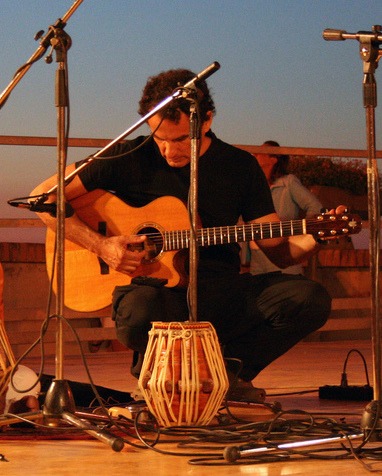
Andrea De Carlo is a renowned Italian author, musician, and filmmaker whose work has captivated readers and audiences for decades. Born on December 11, 1952, in Milan, De Carlo has become a prominent figure in contemporary Italian literature, known for his evocative storytelling, rich character development, and unique narrative style. His journey through the worlds of literature and art reflects a deep commitment to exploring the human experience in all its complexity. This article delves into the life and career of Andrea De Carlo, exploring his age, rise to fame, and the key highlights that define his life.
Early Life and Cultural Influences
Andrea De Carlo was born into a family with a rich cultural heritage. His mother, a Piedmontese, worked as a translator, while his father, a Genoese architect with Sicilian-Chilean roots, influenced his early appreciation for art and literature. Growing up in Milan, De Carlo was exposed to a blend of intellectual and artistic influences that would shape his future career. However, his memories of childhood are not particularly fond of Milan itself; instead, he recalls with affection the summers spent in Bocca di Magra, a small fishing village at the border between Liguria and Tuscany. These experiences in nature would later resonate in his works, reflecting a deep connection to the landscapes of Italy.
From a young age, De Carlo displayed a passion for reading and storytelling. He attended the Berchet Classical High School in Milan, where he developed his literary skills. After high school, he enrolled in the Faculty of Modern Letters at the University of Milan, where he pursued a degree in contemporary history. During his university years, De Carlo worked as a photographer to support himself and played guitar in an acoustic blues trio, showcasing his early interest in both visual arts and music.
The Wanderer’s Journey: From Italy to the World
Andrea De Carlo’s journey as a writer was marked by his restless spirit and desire to explore the world. After completing his studies in Milan, he embarked on a journey that took him across the globe. His first major trip was to the United States, where he initially settled in Boston and later moved to New York. It was during one of the coldest winters in recent history that De Carlo decided to drive across the continent to Los Angeles. The experience of crossing the vast American landscape left a profound impact on him, deepening his understanding of different cultures and ways of life.
In Los Angeles, De Carlo worked as an Italian teacher and drove a truck delivering frozen chickens, all while continuing to play guitar. However, his creative ambitions remained strong. He began writing his first novel, which would eventually become “Treno di panna” (Cream Train), though it would take several more years and multiple revisions before it was published.
De Carlo’s travels did not end in the United States. He returned to Italy, where he completed his degree in contemporary history with a thesis on anarchist communities during the Spanish Civil War. However, his wanderlust soon took him to Australia, where he explored cities like Sydney and Melbourne and ventured into the rural landscapes of Queensland. His time in Australia was marked by a series of odd jobs and a deepening passion for photography and writing. He documented his experiences through travel notes and letters, which became increasingly detailed and reflective of his growing literary voice.
De Carlo’s journey continued through the Hawaiian Islands and back to Los Angeles, where he began working on his third novel, “Cream Train,” written in English. This novel would later be translated into Italian and become his debut work. After returning to Italy, he settled in the countryside near Urbino, where he completed the Italian version of “Treno di panna.” Despite sending the manuscript to several publishers, De Carlo faced rejection after rejection until a friend suggested he send it to Italo Calvino.
Breakthrough and Collaboration with Italo Calvino
The decision to send his manuscript to Italo Calvino proved to be a turning point in Andrea De Carlo’s career. Calvino, one of Italy’s most esteemed writers, recognized De Carlo’s talent and agreed to write an introduction to the novel. In 1981, “Treno di panna” was published by Einaudi, a prestigious Italian publishing house. The novel received critical acclaim, and De Carlo’s literary career was launched.
“Treno di panna” is a semi-autobiographical novel that reflects De Carlo’s experiences in the United States and his reflections on cultural differences and personal identity. The novel’s success marked the beginning of a prolific writing career, during which De Carlo would publish numerous novels that explore themes of love, friendship, freedom, and the search for meaning in a rapidly changing world.
Following the success of “Treno di panna,” De Carlo began work on his second novel, “Uccelli da gabbia e da voliera” (Birds in a Cage and Birds in a Aviary), which was published in 1982. This novel continued to explore the themes of confinement and freedom, both physical and psychological, and further established De Carlo as a significant voice in Italian literature.
Collaboration with Federico Fellini and Michelangelo Antonioni
Andrea De Carlo’s talents were not limited to writing novels. His work caught the attention of Federico Fellini, one of Italy’s most famous filmmakers. After expressing his admiration for De Carlo’s writing, Fellini invited him to work as an assistant director on the film “E la nave va” (And the Ship Sails On). This collaboration gave De Carlo invaluable experience in the world of cinema and allowed him to explore the visual and narrative possibilities of filmmaking.
During the production of “E la nave va,” De Carlo directed a short documentary titled “Le facce di Fellini” (The Faces of Fellini), which captured the behind-the-scenes moments of Fellini’s work and the interactions with the cast and crew. This experience deepened De Carlo’s understanding of the relationship between visual storytelling and literature, influencing his subsequent works.
De Carlo’s collaboration with renowned filmmakers did not end with Fellini. He also worked with Michelangelo Antonioni, another giant of Italian cinema, on a screenplay that, unfortunately, never came to fruition. Despite this setback, the experience of working with two of Italy’s most influential directors had a lasting impact on De Carlo’s artistic development.
Literary Achievements and Style
Throughout the 1980s and 1990s, Andrea De Carlo continued to publish a series of successful novels that cemented his reputation as one of Italy’s leading contemporary authors. His third novel, “Macno,” published in 1984, is a dystopian tale that explores themes of power, control, and the manipulation of reality. The novel’s protagonist, a charismatic leader named Macno, reflects De Carlo’s interest in the complexities of human nature and the ways in which individuals navigate a world dominated by political and social forces.
De Carlo’s literary style is characterized by its fluid narrative, rich character development, and keen observations of the human condition. His works often explore the tensions between individual desires and societal expectations, and his characters are frequently caught in the struggle to find authentic meaning in their lives. This exploration of personal and collective identity is a recurring theme in his novels, making his work resonate with readers across different cultures and backgrounds.
One of De Carlo’s most celebrated novels is “Due di due” (Two Out of Two), published in 1989. The novel tells the story of two friends, Mario and Guido, whose lives take divergent paths as they navigate the challenges of adulthood. “Due di due” is a poignant exploration of friendship, loyalty, and the search for purpose, and it has become one of De Carlo’s most beloved works. The novel’s success further solidified De Carlo’s status as a major figure in Italian literature.
Multifaceted Creativity: Music and Cinema
Andrea De Carlo’s creative pursuits extend beyond literature. He has a deep passion for music, and over the years, he has composed and performed music that complements his literary work. In 2002, he released a CD titled “Alcuni nomi” (Some Names), which was included with his novel “I veri nomi” (The Real Names). The music was intended to be listened to while reading the novel, creating a multisensory experience that enhances the emotional impact of the story.
De Carlo’s interest in the intersection of literature and other art forms is also evident in his collaborations with musicians. He worked with composer Ludovico Einaudi on several projects, including the ballet “Time Out,” which was performed by the American dance group ISO. This collaboration showcased De Carlo’s ability to blend narrative and music, creating performances that are both visually and emotionally engaging.
In addition to his work in music, De Carlo has continued to explore the world of cinema. In 1997, he directed a film adaptation of his novel “Treno di panna,” starring Sergio Rubini. The film, though not as widely known as his literary works, reflects De Carlo’s commitment to bringing his stories to life through different mediums.
Later Works and Continuing Influence
In the 21st century, Andrea De Carlo has continued to produce a steady stream of novels that explore contemporary themes and issues. His works, such as “Villa Metaphora” (2012), “Cuore primitivo” (2014), and “Leielui” (2010), demonstrate his ongoing engagement with the complexities of modern life. These novels reflect De Carlo’s keen observation of social and cultural dynamics, as well as his ability to create compelling narratives that resonate with a wide audience.
De Carlo’s influence extends beyond the literary world. He is an active participant in the cultural conversation in Italy, often engaging with contemporary issues through essays, interviews, and public appearances. His work continues to inspire new generations of writers, musicians, and filmmakers, and his contributions to Italian culture are widely recognized.
Conclusion
Andrea De Carlo’s life and career are a testament to the power of creativity and the importance of exploring different forms of artistic expression. From his early days as a wanderer exploring the world to his rise as one of Italy’s most celebrated authors, De Carlo has remained committed to telling stories that capture the essence of the human experience. His work, whether in literature, music, or cinema, reflects a deep understanding of the complexities of life and the ways in which art can help us make sense of the world around us.
As he continues to write, compose, and create, Andrea De Carlo’s influence on contemporary culture shows no signs of waning. His ability to connect with readers and audiences on a profound level ensures that his work will continue to be appreciated for generations to come.


