
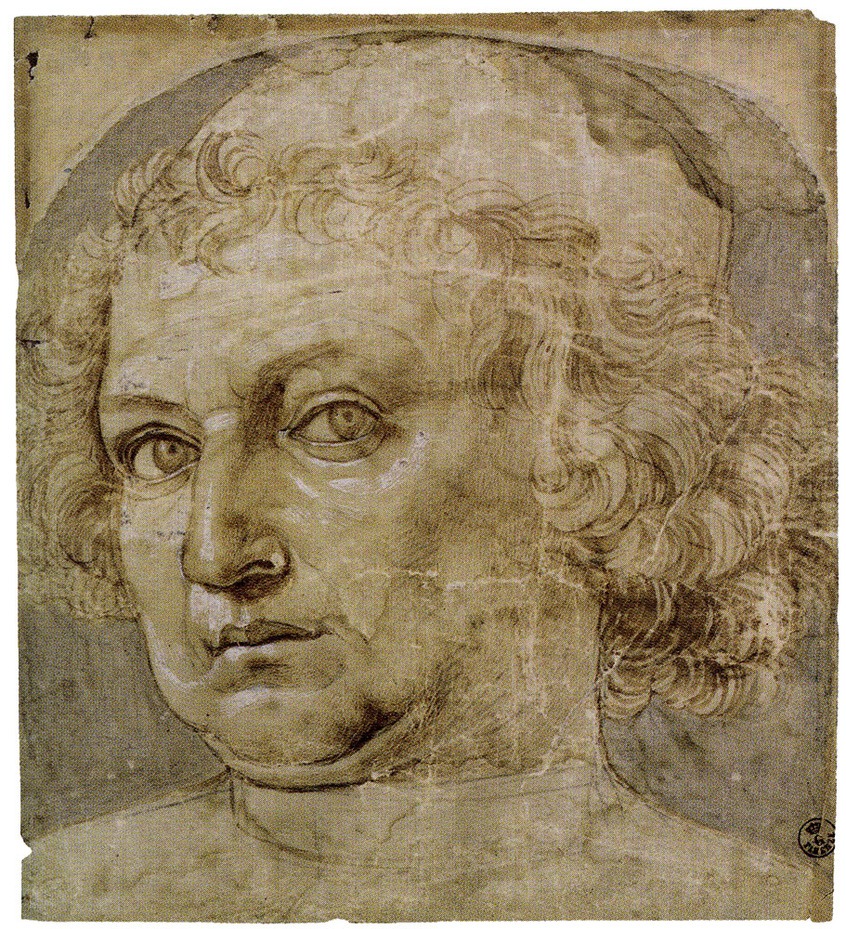
Andrea del Verrocchio is a name that resonates deeply within the annals of Renaissance art. Born as Andrea di Michele Cioni in Florence around 1435, Verrocchio became one of the most celebrated sculptors, painters, and goldsmiths of his time. His work and influence extended far beyond his own creations, as he was also a master teacher to some of the most iconic figures in art history, including Leonardo da Vinci, Sandro Botticelli, and Pietro Perugino.
Early Life and Education
Andrea del Verrocchio was born in Florence, a city that was at the epicenter of the Renaissance—a cultural movement that sought to revive the art, literature, and science of classical antiquity. The exact date of his birth is debated, with various sources suggesting it could have been as early as 1432 or as late as 1437, but 1435 is the most commonly accepted year.
Verrocchio’s artistic journey began in the workshop of the goldsmith Giuliano Verrocchi, from whom he took his professional name. Goldsmithing was a highly respected craft in Florence, and Verrocchio’s early experiences in this field greatly influenced his later work as a sculptor. The precision, attention to detail, and mastery of materials that he developed as a goldsmith became hallmarks of his artistic output.
The Influence of Donatello and the Early Works
Verrocchio’s transition from goldsmithing to sculpture was heavily influenced by the great Florentine sculptor Donatello. Donatello’s innovative approach to form, expression, and the use of perspective had a profound impact on the young Verrocchio. It is believed that Verrocchio apprenticed under Donatello, though definitive records are sparse. What is clear, however, is that Verrocchio’s work exhibits a deep understanding of Donatello’s techniques, particularly in the use of light and shadow to create a sense of movement and naturalism.
One of Verrocchio’s earliest major works was the marble lavabo for the sacristy of the Basilica di San Lorenzo in Florence, completed between 1464 and 1467. This was followed by the terracotta relief of the Resurrection for the Medici villa at Careggi, showcasing his ability to work in different materials and on different scales.
The Rise to Fame: Major Commissions
The 1470s marked the beginning of Verrocchio’s most productive period. During this time, he received numerous commissions from the powerful Medici family, who were the leading patrons of the arts in Florence. One of his most significant works from this period is the bronze statue of David, created for the Medici palace. This sculpture was not only a technical achievement but also a statement of Medici power and influence.
Verrocchio’s David is notable for its youthful, almost delicate depiction of the biblical hero, a stark contrast to the more mature and muscular figures often associated with this subject. The statue’s detailed rendering of the human form and the lifelike quality of its expression are testaments to Verrocchio’s skill and his deep understanding of human anatomy.
Another important work from this period is the tomb of Giovanni and Piero de’ Medici in the Church of San Lorenzo, completed in 1472. The tomb’s elegant design and the subtle interplay of light and shadow reflect Verrocchio’s mastery of sculptural form and his ability to convey a sense of reverence and grandeur.
The Workshop and Teaching: Nurturing the Next Generation
While Verrocchio is celebrated for his own works, his greatest legacy may lie in his role as a teacher. His workshop in Florence became a training ground for some of the most influential artists of the Renaissance. Leonardo da Vinci, arguably the most famous of Verrocchio’s students, trained in his workshop from around 1466. It was here that Leonardo learned the techniques of painting, sculpture, and engineering that would later define his career.
One of the most famous anecdotes about Verrocchio and Leonardo involves the painting The Baptism of Christ, completed around 1475. It is widely believed that Leonardo painted the angel on the left side of the composition, and that his work was so exquisite that Verrocchio vowed never to paint again. While this story may be apocryphal, it highlights the impact that Leonardo’s burgeoning talent had on his master.
Verrocchio’s workshop also produced other notable artists, including Sandro Botticelli, known for his iconic works The Birth of Venus and Primavera, and Pietro Perugino, who would later become the teacher of Raphael. The influence of Verrocchio’s teaching can be seen in the works of these artists, particularly in their attention to detail, composition, and the expressive potential of light and shadow.
The Masterpieces: Sculptures and Paintings
Verrocchio’s reputation as a master sculptor was solidified with the creation of the bronze group Incredulity of Saint Thomas for the Orsanmichele in Florence, completed in 1483. This work is a remarkable study of human emotion and interaction, depicting the moment when the apostle Thomas doubts the resurrection of Christ and is invited to touch his wounds. The sculpture’s intricate detailing and the dynamic positioning of the figures demonstrate Verrocchio’s ability to convey complex narratives through his art.
Another of Verrocchio’s masterpieces is the Equestrian Statue of Bartolomeo Colleoni in Venice, which he began in 1479 and completed posthumously by his pupil Alessandro Leopardi in 1488. This statue, which stands in the Campo Santi Giovanni e Paolo, is considered one of the greatest equestrian sculptures of the Renaissance, rivaling Donatello’s Gattamelata in Padua. The statue captures the power and authority of the condottiero Colleoni, with the horse and rider both exuding a sense of strength and determination.
Painting: A Versatile Artist
Although Verrocchio is best known for his sculpture, he was also a skilled painter. His most famous painting is The Baptism of Christ, mentioned earlier, which he executed with the help of his workshop. Verrocchio’s paintings are characterized by their meticulous attention to detail and the delicate rendering of figures and landscapes.
Another notable painting attributed to Verrocchio is the Madonna with Child series, with versions held in Berlin, London, and New York. These works are celebrated for their tenderness and the soft, almost ethereal quality of the figures. The Madonna and Child are depicted with a deep sense of intimacy and grace, reflecting the influence of both Verrocchio’s sculptural work and the humanistic ideals of the Renaissance.
The Legacy of Verrocchio
Andrea del Verrocchio’s influence on the Renaissance cannot be overstated. His work bridged the gap between the early Renaissance masters like Donatello and the High Renaissance artists such as Michelangelo and Raphael. Verrocchio’s ability to work across multiple mediums—sculpture, painting, and goldsmithing—set him apart as one of the most versatile and skilled artists of his time.
His contributions to art extended beyond his own creations to the legacy of his students, who carried forward his teachings and techniques into the next generation. The works of Leonardo da Vinci, in particular, bear the indelible mark of Verrocchio’s influence, from the meticulous approach to anatomy to the innovative use of light and shadow.
Verrocchio’s death in 1488 in Venice marked the end of an era, but his legacy lives on through the masterpieces he created and the artists he mentored. Today, his works are celebrated as some of the finest examples of Renaissance art, and his influence can be seen in the continued admiration for the artists who emerged from his workshop.
Conclusion
Andrea del Verrocchio was a pivotal figure in the Renaissance, whose contributions to art, both as a creator and a teacher, left an indelible mark on the history of Western art. His mastery of sculpture and painting, combined with his role as a mentor to some of the greatest artists of all time, ensures that his legacy will endure for generations to come. Verrocchio’s work is a testament to the innovation, skill, and creative spirit that defined the Renaissance, and his influence continues to be felt in the art world today.


