
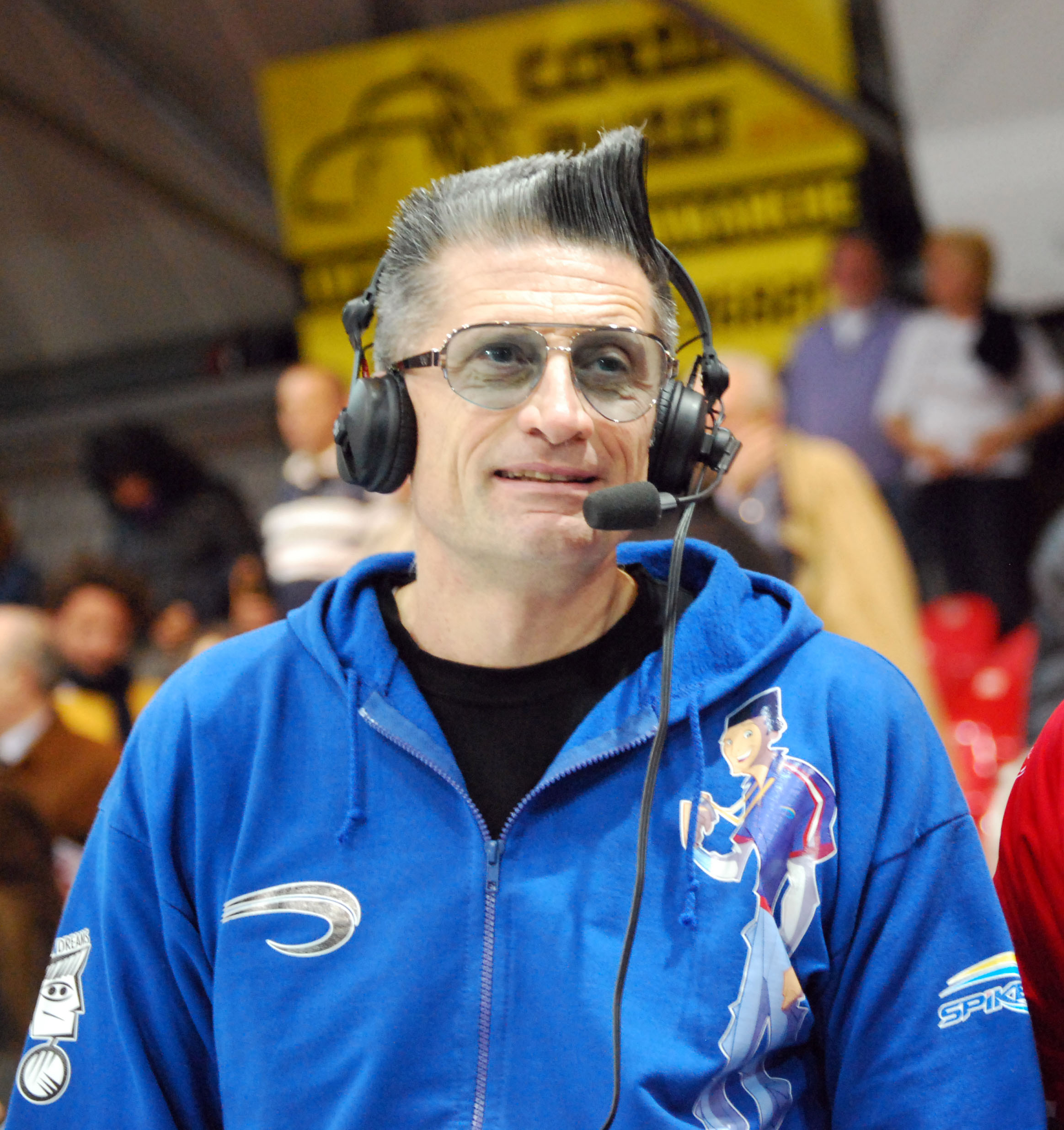
Andrea Lucchetta, born on November 25, 1962, in Treviso, Italy, is a celebrated figure in the world of volleyball, both in Italy and internationally. Known for his dynamic play on the court and his eccentric personality off it, Lucchetta has made a significant impact not only as an athlete but also as a media personality, coach, and commentator. This comprehensive exploration of his life provides detailed insights into his career, personal life, and contributions to the sport of volleyball.
Early Life and Introduction to Volleyball
Andrea Lucchetta’s journey into the world of volleyball began at a young age. Growing up in Treviso, a region with a rich sporting culture, he was naturally inclined toward athletics. His introduction to volleyball came during his teenage years, and by the time he was 17, he was already making waves in the sport. In the 1979/1980 season, Lucchetta started his professional volleyball career with Astori Mogliano Veneto in the second division. His talent and dedication were evident early on, and within a year, he moved to Treviso to play in Serie A2, the second-highest level of Italian volleyball.
Rise to Fame: The Panini Modena Years
The 1981/82 season marked a significant turning point in Lucchetta’s career. He debuted in Serie A, Italy’s top volleyball league, with Panini Modena, one of the most prestigious clubs in the country. Over the next decade, Lucchetta became a key player for Modena, leading the team to numerous victories. His tenure at Modena was marked by four Italian Championships (Scudetti), three Italian Cups, three CEV Cups, one European Cup Winners’ Cup, and one European Champions Cup.
His success at the club level translated to the international stage as well. Lucchetta made his debut for the Italian national team on July 15, 1982, in a match against the USSR in Chieti. Although Italy lost the match, it was the beginning of an illustrious international career for Lucchetta. He earned 292 caps for Italy and was a crucial part of the team that won a bronze medal at the 1984 Los Angeles Olympics, the European Championship in 1989, and the World Championship in 1990.
The Golden Era of Italian Volleyball
The late 1980s and early 1990s are often referred to as the “Golden Era” of Italian volleyball, and Lucchetta was at the heart of this success. Under the guidance of legendary coach Julio Velasco, the Italian national team became a dominant force in world volleyball. Between 1990 and 1992, Italy won three consecutive World League titles, solidifying their position as the best team in the world. Lucchetta’s role as a middle blocker was pivotal in these victories, earning him recognition as one of the best players of his generation.
However, despite the team’s success, Lucchetta and his teammates often felt that their achievements were not fully recognized by the broader sports community. In a reflective moment, Lucchetta noted that the marketing and communication efforts surrounding Italian volleyball at the time failed to capitalize on the team’s success, missing an opportunity to elevate the sport’s popularity in Italy.
Media Personality and Off-Court Ventures
Lucchetta’s larger-than-life personality made him a natural fit for the media. His trademark spiky hair, often styled in a unique “oblique brush” fashion, became a symbol of his eccentricity. This, combined with his outspoken nature, made him a media darling. In the early 1990s, he ventured into the entertainment industry, releasing a single titled “Go Lucky Go” in 1992, which he promoted at the popular “Festivalbar” music competition. The song was part of his broader effort to raise awareness about AIDS, a cause he championed throughout his career.
In 1993, he released an album titled “Schiacciamo l’Aids” (Let’s Smash AIDS), further cementing his status as a socially conscious athlete. His work in media continued as he hosted a radio show on Radio 105, also titled “Go Lucky Go,” where he combined his love for music and his advocacy work.
Continued Success and Final Playing Years
In 1994, Lucchetta moved to Alpitour Cuneo, where he continued to add to his trophy cabinet. During his time with Cuneo, he won the Italian Cup, the European Super Cup, the Italian Super Cup, and another CEV Cup. His success on the court was paralleled by his growing influence off it, as he became a spokesperson for the importance of sports in youth development. Lucchetta often spoke about how sports, especially team sports like volleyball, play a crucial role in shaping the character of young people, teaching them discipline, teamwork, and respect.
After a brief return to Modena, Lucchetta retired from professional volleyball in 2000, bringing an end to a storied playing career. However, his passion for the sport and his desire to contribute to its growth never waned.
Transition to Commentary and Coaching
Following his retirement, Lucchetta transitioned seamlessly into a career in television. In 2001, he began working as a commentator for La7, providing his expert analysis on the popular show “Robot Wars.” His engaging commentary style and deep knowledge of the sport made him a favorite among viewers.
In 2004, he expanded his media presence by participating in the reality show “La Talpa,” set in the Yucatán Peninsula, further broadening his appeal to a wider audience. His television career continued to flourish, and in 2007, he was part of a special project by the European Volleyball Confederation (CEV) to create a master league featuring the stars of the 1990s. The project brought together some of the most iconic players of that era, including Marco Bracci, Fabio Vullo, and Andrea Zorzi, among others.
That same year, Lucchetta and his “Veterans National Team” won the European Championship for their category, defeating Russia in the final. Additionally, he ventured into animation, lending his voice and likeness to the character of a volleyball coach in the Rai Fiction animated series “Spike Team,” which premiered at the Cartoons on the Bay festival in Salerno.
Recognition and Legacy
Andrea Lucchetta’s contributions to volleyball and his impact on Italian sports were formally recognized in 2010 when he was awarded the title of Cavaliere Ordine al merito della Repubblica Italiana, one of the highest honors in the country. His influence extended beyond the volleyball court as he became a cultural icon, particularly known for his involvement in promoting sports to younger generations.
In 2013, Lucchetta was chosen as a special guest for the children’s song “Mister Doing (Il signor canguro)” at the Zecchino d’Oro, a renowned Italian children’s music competition. His charisma and playful nature made him a perfect fit for the event, and he returned the following year to host one of the episodes of the competition. In 2014, he also became the face of a major advertising campaign for JYSK, a popular furniture chain, further demonstrating his enduring appeal.
The Influence of Andrea Lucchetta on Modern Volleyball
Andrea Lucchetta’s influence on modern volleyball cannot be overstated. As a player, he set new standards for middle blockers, combining power, agility, and intelligence to dominate at the net. His distinctive playing style, characterized by his aggressive blocking and quick attacks, has inspired countless players who followed in his footsteps.
Moreover, his success during the “Golden Era” of Italian volleyball helped elevate the sport’s profile in Italy, making it one of the country’s most popular sports. His contributions to the Italian national team during this period were instrumental in establishing Italy as a powerhouse in international volleyball, a legacy that continues to this day.
As a commentator and coach, Lucchetta has continued to shape the sport, offering his insights and expertise to new generations of players and fans. His work in promoting volleyball through various media platforms has helped maintain the sport’s visibility and popularity, ensuring that his legacy will endure for years to come.
Conclusion
Andrea Lucchetta is more than just a volleyball player; he is a cultural icon whose influence extends far beyond the court. From his early days in Treviso to his rise as a world champion with the Italian national team, Lucchetta’s life is a testament to the power of passion, determination, and a love for the game. His contributions to volleyball, both as a player and as a media personality, have left an indelible mark on the sport, inspiring future generations of athletes and fans alike.
As he continues to be involved in the sport he loves, whether through commentary, coaching, or advocacy, Andrea Lucchetta remains a towering figure in the world of volleyball, embodying the spirit of a true champion.


