
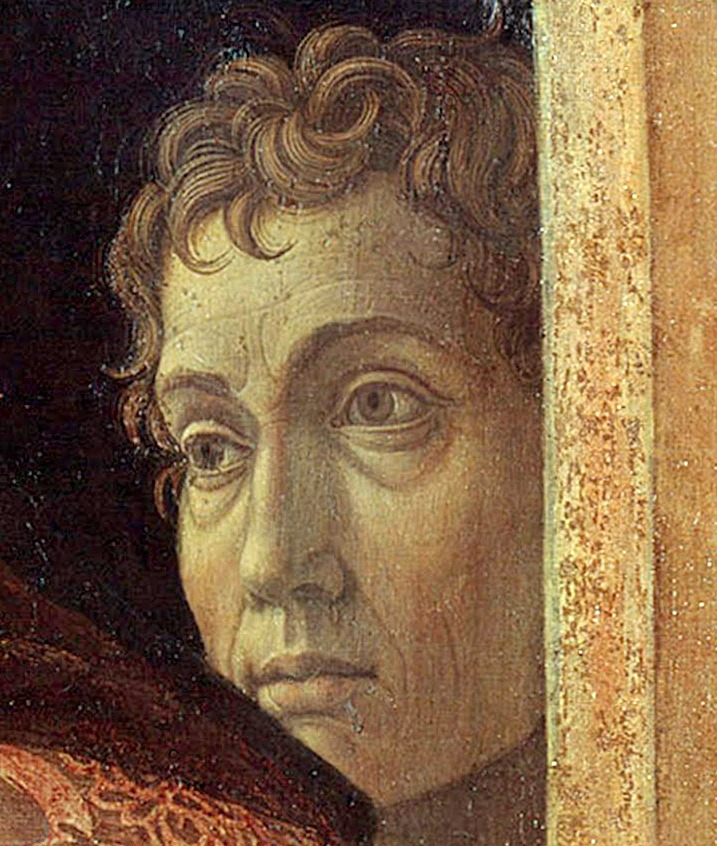
Andrea Mantegna, born around 1431 in Isola di Carturo (now known as Isola Mantegna) near Padua, Italy, was a pivotal figure in the Italian Renaissance. Renowned for his mastery of perspective and his innovative approach to composition, Mantegna’s work left an indelible mark on the history of art. His career, spanning over six decades, was characterized by significant achievements in painting, particularly frescoes, and his influence extended well beyond his lifetime. This article delves into the life, work, and legacy of Andrea Mantegna, exploring how he became one of the most celebrated artists of the 15th century.
Early Life and Artistic Beginnings
Andrea Mantegna was born into humble beginnings. His family was of modest means, and as a child, Mantegna worked as a shepherd. However, his talent for drawing became evident early on, and at the age of ten, he was apprenticed to Francesco Squarcione, a prominent painter and art collector in Padua. Squarcione, who took in several young artists to train them, recognized Mantegna’s potential and treated him like a son, referring to him affectionately as “fiiulo” (son).
Under Squarcione’s tutelage, Mantegna’s skills developed rapidly. He was particularly influenced by the works of great masters such as Paolo Uccello, Filippo Lippi, and Donatello, who were active in the Veneto region during this period. Mantegna’s early exposure to these artists helped him hone his technique, particularly in the use of perspective—a skill that would become a hallmark of his work.
Despite the strong artistic foundation he received from Squarcione, Mantegna’s relationship with his master soured over time. Squarcione, who kept the profits from his apprentices’ work, clashed with Mantegna as the young artist began to assert his independence. By 1448, at the age of 17, Mantegna had severed ties with Squarcione, even taking legal action to recover earnings from his work.
The Padua Years: Early Success and Mastery of Perspective
Mantegna’s first significant commission came in 1448 when he was hired to contribute to the frescoes in the Ovetari Chapel in the Church of the Eremitani in Padua. Still a teenager, Mantegna was tasked with painting scenes from the lives of St. James and St. Christopher. His work on these frescoes showcased his remarkable ability to create depth and realism through perspective, a technique he had studied and refined under the influence of Donatello and, later, Piero della Francesca.
The frescoes in the Ovetari Chapel, although heavily damaged during World War II, were a testament to Mantegna’s early genius. His use of perspective was groundbreaking, giving the figures and architectural elements a three-dimensional quality that was unprecedented at the time. This work established Mantegna as a master of perspective, setting him apart from his contemporaries.
During this period, Mantegna also began to attract the attention of important patrons. Among them was Leonello d’Este, the ruler of Ferrara, who commissioned Mantegna to create portraits and other works. Mantegna’s time in Ferrara allowed him to expand his artistic repertoire and further refine his technique, particularly in the depiction of naturalistic detail, influenced by the Flemish painters.
Move to Mantua: Court Artist to the Gonzagas
In 1460, after nearly a decade of work in Padua, Mantegna moved to Mantua to serve as the court painter for Ludovico III Gonzaga, the ruler of Mantua. This position marked a significant turning point in his career, offering him both financial stability and creative freedom. The Gonzaga court was a center of Renaissance culture, and Mantegna thrived in this intellectually stimulating environment.
One of Mantegna’s most celebrated works from his time in Mantua is the “Camera degli Sposi” (Room of the Newlyweds), also known as the “Camera Picta,” in the Ducal Palace. Painted between 1465 and 1474, the frescoes in this room are a tour de force of illusionistic painting. Mantegna employed his mastery of perspective to create the illusion of a domed ceiling open to the sky, with figures looking down from above. This work is often cited as one of the greatest achievements of Renaissance art and cemented Mantegna’s reputation as a leading artist of his time.
During his tenure at the Gonzaga court, Mantegna also created numerous portraits and religious works, including the “San Zeno Altarpiece” for the church of San Zeno in Verona. This altarpiece is particularly notable for its detailed depiction of architectural elements, which reflect Mantegna’s deep understanding of classical forms and perspective.
Artistic Evolution and Later Works
Mantegna’s work evolved over the years, reflecting his ongoing quest to perfect his technique and explore new artistic challenges. His relationship with Giovanni Bellini, his brother-in-law and a prominent Venetian painter, played a crucial role in this evolution. The two artists influenced each other profoundly—Mantegna adopted Bellini’s use of color, while Bellini learned from Mantegna’s mastery of perspective and compositional rigor.
In the late 1470s, Mantegna faced personal and financial difficulties following the death of his patron, Ludovico Gonzaga. However, his fortunes improved when he was invited to Rome in 1488 by Pope Innocent VIII to work on frescoes for the Belvedere Chapel in the Vatican. Although these works were later destroyed, the commission was a significant honor and highlighted Mantegna’s stature as one of the leading artists of his time.
Upon returning to Mantua, Mantegna continued to work for the Gonzaga family, producing some of his most famous late works. Among these is the “Triumphs of Caesar,” a series of nine large canvases depicting Julius Caesar’s military triumphs. These works, now housed in Hampton Court Palace in England, are considered masterpieces of narrative painting and exemplify Mantegna’s ability to convey grandeur and historical significance through his art.
Another notable work from this period is the “Lamentation over the Dead Christ” (also known as the “Foreshortened Christ”), which is housed in the Pinacoteca di Brera in Milan. This painting is remarkable for its dramatic use of foreshortening, which creates a strikingly realistic and emotionally powerful depiction of Christ’s body. The work is a testament to Mantegna’s skill in manipulating perspective to achieve a powerful visual and emotional impact.
Legacy and Influence
Andrea Mantegna’s contributions to Renaissance art cannot be overstated. His innovations in perspective, his rigorous approach to composition, and his ability to convey both grandeur and intimacy in his works had a profound influence on subsequent generations of artists. His work inspired not only his contemporaries but also later masters such as Albrecht Dürer and Raphael.
Mantegna’s influence extended beyond his own work through his collaborations and interactions with other leading artists of the time. His marriage to Nicolosia Bellini, the sister of Giovanni Bellini, created a close connection between the artistic circles of Padua, Mantua, and Venice. This network of artists and patrons helped to disseminate Mantegna’s ideas and techniques across Italy and beyond.
Moreover, Mantegna’s role as a court artist allowed him to shape the visual culture of the Renaissance courts, particularly in Mantua. His work at the Gonzaga court set new standards for courtly art, blending the classical ideals of antiquity with the emerging humanist values of the Renaissance.
Final Years and Death
In the final years of his life, Andrea Mantegna continued to produce significant works, despite facing health issues and financial difficulties. His last major commission was the “Madonna della Vittoria,” painted in 1496 to commemorate the Gonzaga family’s victory at the Battle of Fornovo. The painting, now housed in the Louvre, is a richly detailed work that exemplifies Mantegna’s enduring skill and creativity.
Mantegna passed away on September 13, 1506, in Mantua, at the age of 75. He was buried in the Church of Sant’Andrea in Mantua, a city that had been his home and the center of his artistic achievements for nearly half a century.
Conclusion: A Lasting Impact on Art
Andrea Mantegna’s legacy is one of innovation, mastery, and enduring influence. His ability to blend classical themes with cutting-edge techniques of perspective and composition set him apart as one of the most important figures of the Italian Renaissance. Mantegna’s works continue to be studied and admired for their technical precision, emotional depth, and historical significance.
As a pioneer of perspective and a master storyteller through art, Mantegna’s contributions helped to shape the course of Western art. His influence is evident in the works of later artists who built upon his techniques and ideas, ensuring that his impact would be felt long after his death. Today, Andrea Mantegna is remembered not only as a great painter but as a key figure in the cultural and artistic renaissance that transformed Europe in the 15th century.


