
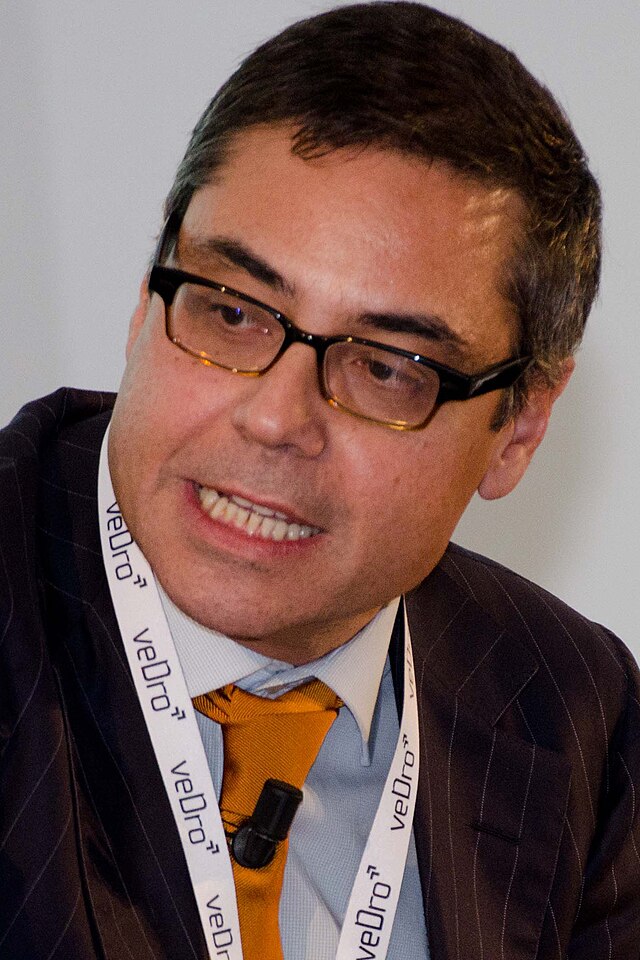
Andrea Vianello is a name that resonates within the Italian media landscape, known for his significant contributions as a journalist, television host, and media executive. Born on April 25, 1961, in Rome, Vianello’s life and career have been marked by his deep engagement with the Italian public through radio, television, and his leadership roles within the RAI (Radiotelevisione Italiana) network. This article delves into the life of Andrea Vianello, exploring his career milestones, personal challenges, and the legacy he continues to build within the Italian media industry.
Early Life and Family Background
Andrea Vianello was born into a family with a rich cultural heritage. He is the nephew of the renowned Italian poet Alberto Vianello and the popular singer Edoardo Vianello. This cultural lineage undoubtedly influenced Andrea’s path, guiding him toward a career in media and journalism. His early years were spent in Rome, where he developed a passion for storytelling and communication.
Breaking into Journalism
Vianello’s entry into journalism was marked by his success in the RAI’s first public competition for trainee journalists in 1990, a prestigious achievement that placed him alongside other notable figures such as Bruno Vespa. His career began in radio, where he made his debut on GR1, one of Italy’s leading radio news programs. Vianello quickly established himself as a voice of authority and reliability, which paved the way for his later work in television.
Rise to Fame: Radio Anch’io and Beyond
In the early 1990s, Andrea Vianello gained prominence as the host of “Radio Anch’io,” a widely respected radio program known for its in-depth discussions on current affairs. His work on this show earned him the 1993 Oscar del Giornalismo, a testament to his impact on Italian journalism. Vianello’s success in radio naturally led to opportunities in television, where he continued to build his reputation as a skilled communicator and thoughtful interviewer.
In 1997, Vianello transitioned to television with “Tele Anch’io,” a program that mirrored the format of his successful radio show. This move solidified his place in the Italian media, allowing him to reach an even broader audience.
The 2000s: Expanding Influence on Italian Television
The early 2000s saw Andrea Vianello take on increasingly prominent roles within RAI. In 2001, he became the host of “Enigma” on Raitre, a show that explored historical mysteries and unresolved cases. His work on “Enigma” was well-received, but in 2004, he handed over the reins to Corrado Augias to take on a new challenge as the host of “Mi Manda Raitre,” a consumer rights program that tackled issues affecting everyday Italians.
During this period, Vianello also ventured into writing, publishing his book “Assurdo Italia, storie incredibili ma vere di un paese paradossale” in 2010. The book offered a critical and often humorous look at the peculiarities of Italian society, further showcasing Vianello’s versatility as a storyteller.
Leadership at Raitre: Innovation and Challenges
Andrea Vianello’s career reached new heights in 2012 when he was appointed Director of Raitre, one of Italy’s most influential television channels. His leadership tenure, which began in January 2013, was marked by a commitment to innovation and the introduction of new programming that sought to engage with Italy’s intellectual and cultural elite.
Under Vianello’s direction, Raitre saw the return of “Glob,” a satirical program hosted by Enrico Bertolino, as well as the debut of “Metropoli,” a prime-time show presented by archaeologist Valerio Massimo Manfredi. Vianello was also responsible for launching “Gazebo,” a program that blended political commentary with humor, hosted by Diego Bianchi (Zoro). These programs reflected Vianello’s vision for a television network that could entertain while also provoking thought and discussion.
However, not all of Vianello’s initiatives were successful. His attempt to introduce “Masterpiece,” a talent show for aspiring writers, failed to capture the audience’s interest and was soon canceled. Despite this setback, Vianello continued to push the boundaries of what public television could offer, with shows like “Stelle Nere” and “Il Sesto Senso” reflecting his ongoing commitment to innovation.
Transition to Tg2 and Raiuno
In 2016, Andrea Vianello stepped down as Director of Raitre, a role subsequently filled by Daria Bignardi. Vianello then transitioned to Tg2, RAI’s second channel, where he served as an editorialist. His move to Tg2 was seen as a continuation of his long-standing relationship with Italian public broadcasting, albeit in a different capacity.
By 2017, Vianello had taken on the role of Deputy Director of Raiuno, Italy’s primary public television channel. In this position, he was given responsibility for overseeing some of the network’s most popular programs, including “La Vita in Diretta” and “Domenica In.” These shows, which focus on lifestyle and current affairs, are central to Raiuno’s programming and attract large audiences across Italy.
Personal Challenges: Overcoming a Stroke
In February 2019, Andrea Vianello faced one of the most significant challenges of his life when he suffered a stroke. The stroke left him temporarily unable to speak, a devastating blow for someone whose career was built on communication. However, Vianello’s resilience shone through as he embarked on a long and arduous journey of rehabilitation.
By the beginning of 2020, Vianello had regained his ability to speak and shared his experience in his book “Ogni Parola Che Sapevo” (Every Word I Knew). The book is a deeply personal account of his struggle to recover from the stroke and the impact it had on his life and career. Vianello’s story of recovery has inspired many, highlighting his determination and strength in the face of adversity.
Legacy and Continuing Influence
Andrea Vianello’s career has been marked by a continuous evolution, from his early days in radio to his leadership roles within RAI. His work has had a lasting impact on Italian media, particularly in how public television engages with its audience. Vianello’s ability to balance entertainment with intellectual rigor has set a standard for others in the industry.
Moreover, his personal journey—culminating in his recovery from a life-threatening stroke—has added a new dimension to his legacy. Vianello’s story is not just one of professional success but also of personal resilience. His willingness to share his experiences publicly has made him a role model for many who face similar challenges.
The Historical Context of Italian Media
To fully appreciate Andrea Vianello’s contributions, it is essential to understand the broader context of Italian media. The landscape of Italian television and radio has been shaped by a unique blend of public and private interests, with RAI playing a central role as the country’s primary public broadcaster. Throughout its history, RAI has been both a reflection of and an influence on Italian society, navigating political pressures and cultural shifts.
Vianello’s career has unfolded against this backdrop, with his work often intersecting with key moments in Italian history. From the turbulent 1990s, when Italy was grappling with political corruption and economic challenges, to the more recent debates over digital transformation and media pluralism, Vianello has been at the forefront of many critical discussions.
Conclusion: Andrea Vianello’s Enduring Impact
Andrea Vianello’s life and career are a testament to the power of media to shape public discourse and influence society. His journey from a young journalist to a leading figure in Italian television reflects his deep commitment to the values of public service broadcasting. Vianello’s story is also one of personal growth and resilience, marked by his recovery from a stroke and his ongoing contributions to Italian media.
As Andrea Vianello continues to engage with audiences through his work and public speaking, his influence remains strong. He represents a generation of Italian journalists who have navigated the challenges of a rapidly changing media landscape while remaining true to the principles of integrity and public service. Vianello’s legacy is one of innovation, leadership, and an unwavering dedication to the craft of journalism.


