
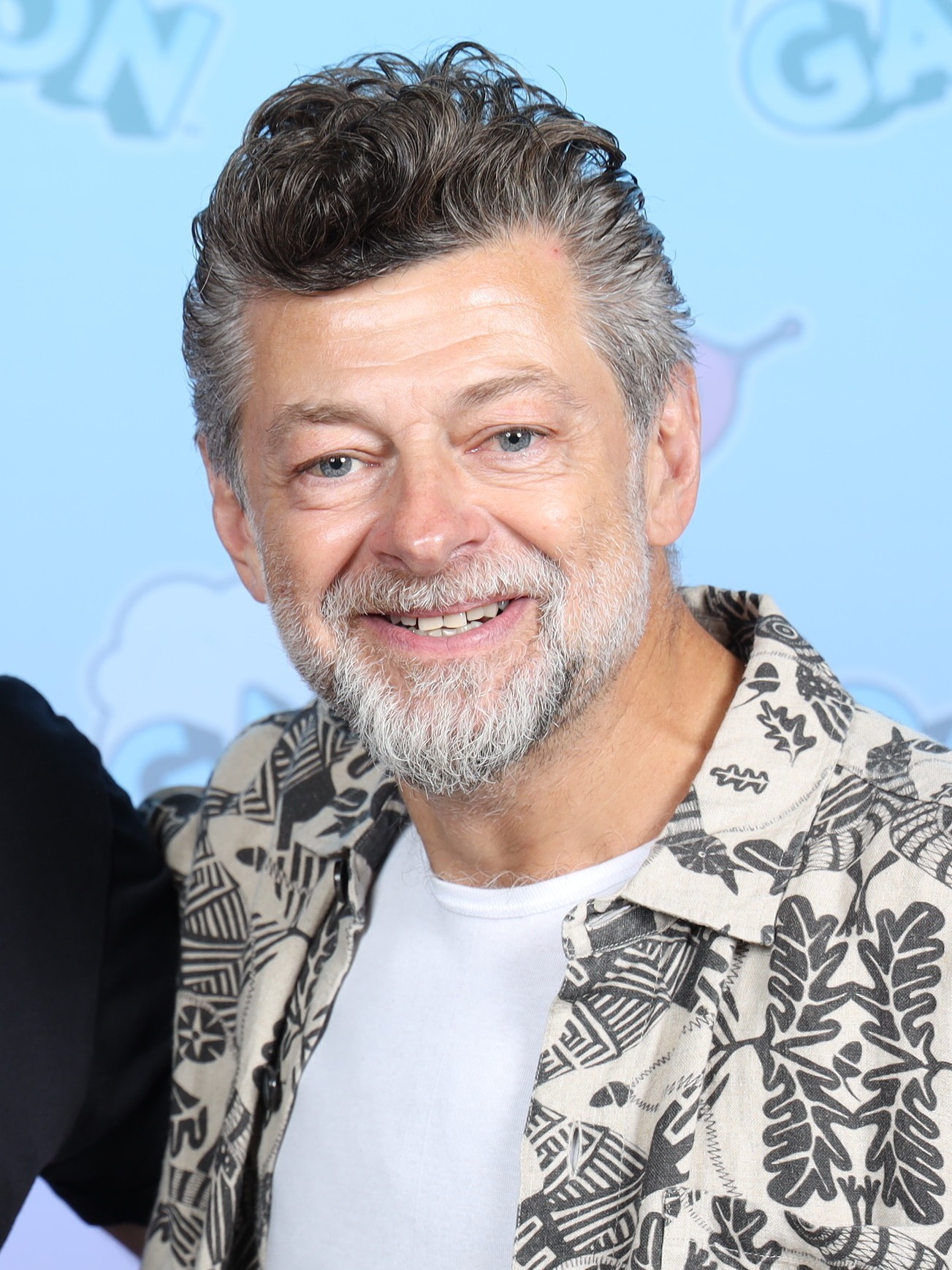
Andy Serkis is one of the most versatile and influential actors of his generation, known for pioneering the art of performance capture. Born Andrew Clement Serkis on April 20, 1964, in Ruislip Manor, West London, he has made a significant impact on the film industry, particularly through his transformative roles in groundbreaking films. Best known for his portrayal of Gollum in The Lord of the Rings trilogy, Serkis has also excelled as a director, producer, and voice actor, making him a multi-faceted figure in modern cinema.
Early Life and Education
Andy Serkis was born to Clement Serkis, an Armenian-Iraqi gynecologist, and Lylie Serkis, an English teacher. Growing up in Ruislip Manor, Serkis was exposed to diverse cultural influences that would later inform his approach to acting and storytelling. He attended St. Benedict’s School in Ealing, where he first developed an interest in the arts.
Serkis went on to study visual arts at Lancaster University, where he became actively involved in radio and theater. It was during his time at university that he began exploring acting seriously, joining the Nuffield Studio and participating in various theatrical productions. His early experiences in theater provided him with a strong foundation in character development and physical performance, skills that would become essential in his later work in performance capture.
Breaking into Acting
After graduating from university, Andy Serkis pursued a career in theater, working with the Duke’s Playhouse in Lancaster. He performed in a wide range of plays, from classic works by Shakespeare and Brecht to contemporary productions. His early stage roles included Florizel in The Winter’s Tale and the Fool in King Lear, both of which showcased his ability to bring complex characters to life through nuanced physicality and emotion.
Serkis’s move to London in the early 1990s marked the beginning of his transition from theater to television and film. He appeared in a variety of TV shows, including a notable role as Greville in the 1992 episode of The Darling Buds of May. His television work helped him gain recognition in the industry, leading to more substantial roles in films and TV movies, such as his portrayal of Bill Sikes in the 1999 television adaptation of Oliver Twist.
Rise to International Fame: Gollum and Beyond
Andy Serkis’s breakthrough role came in 2002 with his portrayal of Gollum in The Lord of the Rings: The Two Towers. Directed by Peter Jackson, the film was the second installment of the epic fantasy trilogy based on J.R.R. Tolkien’s novels. Serkis’s performance as Gollum, a character twisted by the corrupting influence of the One Ring, was a game-changer for the film industry.
What made Serkis’s portrayal of Gollum revolutionary was his use of performance capture technology. By wearing a suit equipped with sensors that captured his movements and facial expressions, Serkis brought Gollum to life in a way that had never been seen before. The character’s digital rendering was based entirely on Serkis’s physical performance, setting a new standard for CGI characters in film. His work earned him widespread acclaim and several awards, including an MTV Movie Award for Best Virtual Performance.
Serkis reprised his role as Gollum in The Lord of the Rings: The Return of the King (2003), further cementing his place in cinematic history. His performance was instrumental in making Gollum one of the most memorable and iconic characters in the trilogy, which went on to win multiple Academy Awards, including Best Picture.
Expanding His Horizons: Director, Producer, and More
After the success of The Lord of the Rings, Andy Serkis continued to explore the possibilities of performance capture. He collaborated again with Peter Jackson in 2005’s King Kong, where he provided the movements for the titular character. Serkis’s portrayal of the giant ape was both powerful and emotionally resonant, showcasing his ability to convey complex emotions through physical performance.
In 2006, Serkis appeared in The Prestige, directed by Christopher Nolan, where he played the role of Nikola Tesla’s assistant. This role highlighted Serkis’s versatility as an actor, as he shifted from the physically demanding work of performance capture to a more traditional, yet equally compelling, screen performance.
Serkis’s interest in the technical aspects of filmmaking led him to co-found The Imaginarium Studios in 2011 with producer Jonathan Cavendish. The studio, based in Ealing, London, specializes in performance capture technology and aims to create emotionally engaging digital characters. Through The Imaginarium, Serkis has been involved in various projects, both as a producer and as a director.
One of his most notable directorial efforts is the film Breathe (2017), starring Andrew Garfield. The film, which tells the inspiring true story of Robin Cavendish, a man who became paralyzed from polio, marked Serkis’s debut as a director. The film was praised for its emotional depth and Serkis’s sensitive handling of the subject matter.
In 2018, Serkis directed Mowgli: Legend of the Jungle, a darker, more mature adaptation of Rudyard Kipling’s The Jungle Book. The film, which was released on Netflix, showcased Serkis’s unique vision as a director and his ability to bring complex, multi-layered stories to life on screen.
The Ape Revolution: Caesar and the Planet of the Apes Trilogy
Another career-defining role for Andy Serkis was his portrayal of Caesar in the Planet of the Apes reboot trilogy. Starting with Rise of the Planet of the Apes (2011), Serkis played the role of the intelligent chimpanzee who leads a rebellion against human oppression. The character of Caesar allowed Serkis to further push the boundaries of performance capture technology, blending physical acting with cutting-edge CGI to create a character that was both believable and deeply empathetic.
Serkis reprised his role as Caesar in Dawn of the Planet of the Apes (2014) and War for the Planet of the Apes (2017), both of which were critical and commercial successes. His performance in these films was widely praised, with many critics and audiences calling for Serkis to be recognized by the Academy Awards for his groundbreaking work in performance capture.
Involvement in Major Franchises: Star Wars and Marvel
Andy Serkis’s talents have not been confined to performance capture alone. He has also played significant roles in some of the biggest film franchises in the world. In 2015, Serkis appeared as Supreme Leader Snoke in Star Wars: The Force Awakens, a role he reprised in Star Wars: The Last Jedi (2017) and Star Wars: The Rise of Skywalker (2019). His portrayal of the mysterious and menacing leader added a new layer of intrigue to the Star Wars saga.
In addition to his work in Star Wars, Serkis joined the Marvel Cinematic Universe (MCU) as Ulysses Klaue, a villainous arms dealer. He first appeared in Avengers: Age of Ultron (2015) and later reprised his role in Black Panther (2018). His performance in Black Panther was particularly noteworthy, as it showcased his ability to bring a complex and charismatic villain to life in a relatively short amount of screen time.
Directing Blockbusters: Venom: Let There Be Carnage
In 2021, Andy Serkis took on the challenge of directing a major Hollywood blockbuster with Venom: Let There Be Carnage. The film, a sequel to the 2018 hit Venom, starred Tom Hardy as the titular anti-hero and Woody Harrelson as the villainous Carnage. Serkis’s direction was praised for its dynamic action sequences and the way it balanced the darker elements of the story with humor and character development.
Venom: Let There Be Carnage was a commercial success, grossing over $500 million worldwide despite the challenges posed by the COVID-19 pandemic. The film further established Serkis as a talented director capable of handling big-budget productions while maintaining a strong focus on character and story.
Legacy and Impact
Andy Serkis’s contributions to the film industry extend far beyond his performances. As an actor, director, and producer, he has helped to revolutionize the way characters are created and brought to life on screen. His work in performance capture has set new standards for what is possible in cinema, paving the way for future generations of actors and filmmakers.
Serkis’s ability to fully inhabit characters, whether through performance capture or traditional acting, has made him one of the most respected and admired figures in the industry. His roles in The Lord of the Rings, Planet of the Apes, and other major franchises have left an indelible mark on popular culture, while his directorial efforts have demonstrated his versatility and creative vision.
As he continues to explore new projects and push the boundaries of what can be achieved in film, Andy Serkis remains a true pioneer in the world of cinema. His legacy is one of innovation, dedication, and an unwavering commitment to the craft of storytelling.
Conclusion
Andy Serkis is more than just an actor; he is a transformative force in the entertainment industry. From his groundbreaking work in performance capture to his successful ventures as a director and producer, Serkis has continually redefined what it means to be a creative artist in the modern age. His career serves as an inspiration to actors, filmmakers, and audiences alike, proving that with passion and perseverance, the possibilities in cinema are limitless.


