
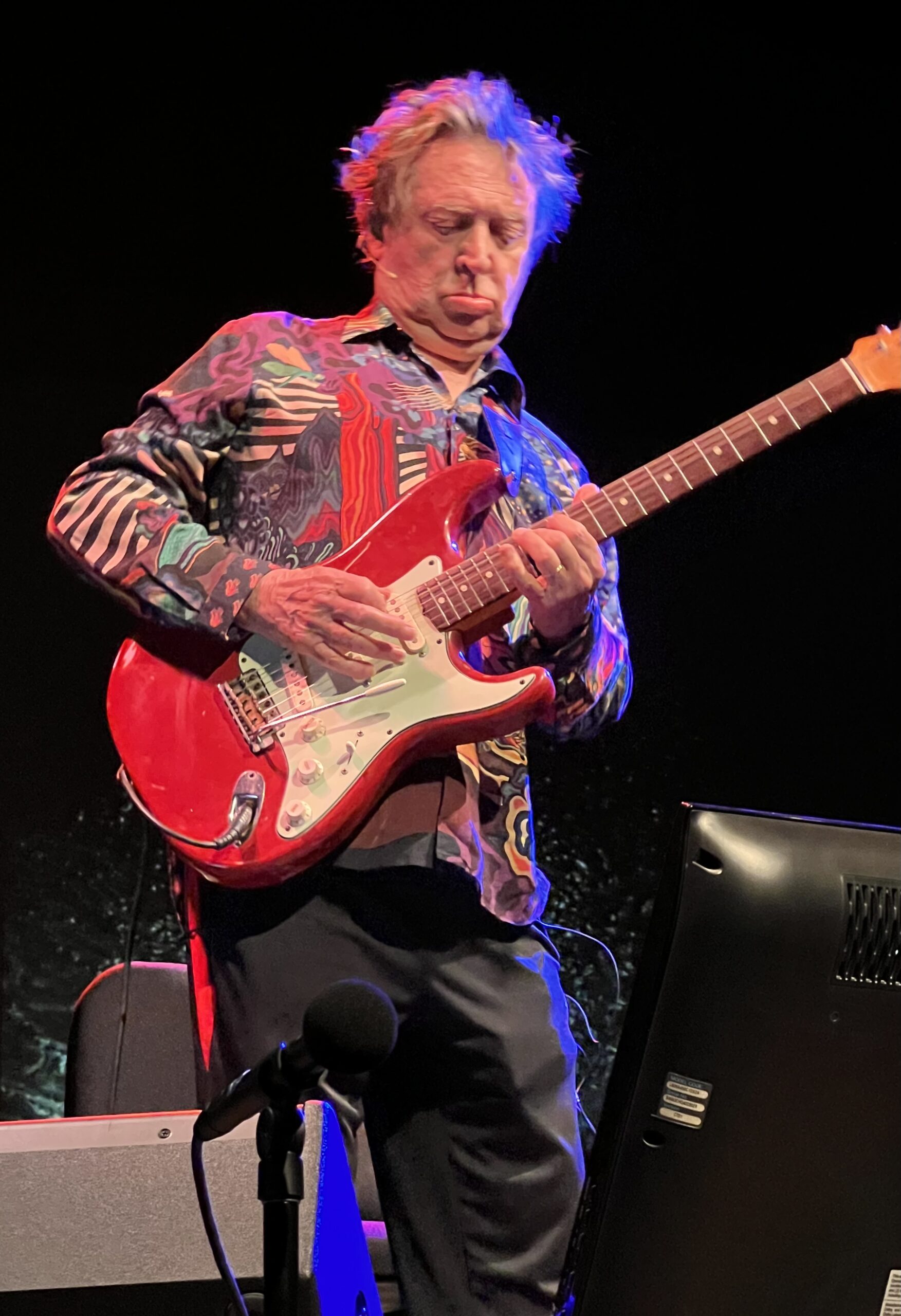
Andy Summers, born Andrew James Somers on December 31, 1942, in Blackpool, England, is a musician whose influence extends far beyond his role as the guitarist for The Police, one of the most successful and iconic bands of the late 20th century. Summers is not only a celebrated guitarist but also a composer and photographer, whose work has continued to inspire and innovate across multiple creative fields. This article delves into the life, career, and enduring legacy of Andy Summers, exploring the journey that led him to international fame and his contributions to music and the arts.
Early Life and Musical Beginnings
Andy Summers grew up in Bournemouth, England, where he developed a passion for music at an early age. His love for the guitar began during his childhood, and he quickly became dedicated to mastering the instrument. Although Summers would later be known for his innovative guitar techniques, his early years were marked by rigorous practice and a deep exploration of the musical landscape of the time.
By his teenage years, Summers was already performing in local venues, honing his craft in various clubs and hotels. His first significant break came when he was just 17, joining Zoot Money’s Big Roll Band, a group that was particularly popular among the Mods, a subculture that heavily influenced British music and fashion during the 1960s. This experience allowed Summers to tour professionally across England, gaining valuable experience and exposure in the burgeoning British music scene.
The 1960s and Early Career
The late 1960s were a transformative period for Andy Summers. After a period of intense touring and performing, he became involved with Dantalion’s Chariot, a band that reflected the changing musical trends of the time, particularly the rise of psychedelic rock. Unfortunately, Summers had to leave the band after a serious car accident, which led to a lengthy recovery period. However, this setback did not deter him from his musical ambitions.
Following his recovery, Summers moved to the United States, where he spent over six years playing with various bands, including Eric Burdon and the New Animals. This period was crucial for Summers, as it allowed him to immerse himself in the American music scene, which was experiencing a creative explosion. During this time, he also studied classical guitar, further expanding his musical repertoire and refining his technical skills.
Return to England and Formation of The Police
In the mid-1970s, Andy Summers returned to England, where he became involved in a variety of musical projects. He worked with several artists, including Neil Sedaka, and even played with the band that accompanied the “Rocky Horror Picture Show.” His versatility as a guitarist was evident as he seamlessly transitioned between different musical genres and styles.
In 1976, Summers joined forces with John Lord of Deep Purple to record an album in Munich, which led to a chance meeting with Eberhard Schoener, a composer and conductor who would later become a significant collaborator. During this period, Summers also participated in Mike Oldfield’s “Tubular Bells” project, which further solidified his reputation as a skilled and adaptable guitarist.
It was during a performance in Newcastle, where Summers was playing as part of the “Tubular Bells” tour, that he encountered a band called Last Exit, led by a young musician named Sting. The two musicians quickly hit it off, and along with drummer Stewart Copeland, they formed The Police in 1977. This collaboration would go on to become one of the most successful and influential bands of all time.
The Police: Rise to Fame
The Police quickly rose to prominence with their unique blend of rock, punk, and reggae, characterized by Sting’s distinctive voice, Copeland’s innovative drumming, and Summers’ signature guitar sound. Summers’ guitar work was a crucial element of the band’s success, known for its atmospheric use of effects such as delay and chorus, which gave The Police their distinctive sound.
The band’s debut album, “Outlandos d’Amour,” released in 1978, included hits like “Roxanne” and “Can’t Stand Losing You,” both of which showcased Summers’ innovative guitar playing. The success of the album propelled The Police to international fame, and they quickly followed up with more critically acclaimed albums, including “Reggatta de Blanc” (1979), “Zenyatta Mondatta” (1980), and “Ghost in the Machine” (1981).
Some of the band’s most iconic tracks, such as “Message in a Bottle,” “Don’t Stand So Close to Me,” and “Every Breath You Take,” highlighted Summers’ ability to create complex, textured soundscapes that became a defining feature of The Police’s music. His use of minimalist guitar riffs, combined with a sophisticated understanding of harmony and rhythm, helped set the band apart from their contemporaries.
The Police: Legacy and Impact
By the early 1980s, The Police had become one of the biggest bands in the world, selling millions of records and selling out arenas globally. Their fifth and final studio album, “Synchronicity” (1983), was a commercial and critical triumph, featuring the global hit “Every Breath You Take,” which remains one of the most played songs in radio history.
Despite their massive success, tensions within the band began to surface, particularly between Sting and Copeland. These tensions, combined with Sting’s growing interest in pursuing a solo career, led to the band’s dissolution in 1986. The Police’s breakup marked the end of an era, but their influence on music has endured, with many citing them as one of the most innovative and influential bands of the late 20th century.
Andy Summers: Solo Career and Musical Exploration
Following the breakup of The Police, Andy Summers embarked on a solo career that allowed him to explore a wide range of musical styles and genres. His solo work is characterized by its experimentation and a willingness to push the boundaries of conventional rock music.
Summers’ first solo album, “XYZ” (1987), received mixed reviews, but it showcased his continued evolution as a musician. He followed this with several more albums, including “Mysterious Barricades” (1988), “The Golden Wire” (1989), and “Charming Snakes” (1990). These albums demonstrated Summers’ interest in blending different musical traditions, from jazz to world music, and his ability to create intricate and atmospheric compositions.
In the 1990s, Summers continued to release solo albums, including “World Gone Strange” (1991) and “Synaesthesia” (1995), both of which were praised for their innovative use of guitar textures and ambient soundscapes. One of his most notable works from this period is “The Last Dance of Mr. X” (1997), an album that showcases Summers’ mastery of mood and melody, and “Earth & Sky” (2004), which further solidified his reputation as a leading figure in contemporary guitar music.
Photography and Other Artistic Endeavors
In addition to his music, Andy Summers is also an accomplished photographer. His interest in photography began during his time with The Police, and he has since developed a parallel career as a visual artist. His photographs, often black-and-white, capture the essence of life on the road, with many images offering a behind-the-scenes look at the world of rock music.
Summers has published several books of his photography, including “Throb” (1983), “I’ll Be Watching You: Inside The Police 1980-83” (2007), and “A Certain Strangeness” (2019). His work has been exhibited in galleries around the world, further establishing him as a multifaceted artist with a deep understanding of visual storytelling.
Reunion with The Police and Later Years
In 2007, Andy Summers reunited with Sting and Stewart Copeland for a highly anticipated world tour, marking the 30th anniversary of The Police’s formation. The reunion tour was a massive success, bringing together old and new fans alike and reaffirming the band’s place in the pantheon of rock legends.
Following the tour, Summers continued to work on his solo projects, both musical and photographic. He also collaborated with other musicians, including recording albums with guitarist Robert Fripp, which explored avant-garde and experimental music. Summers has remained active in the music industry, constantly seeking new avenues for creative expression.
Legacy and Influence
Andy Summers’ influence on music, particularly in the realm of guitar playing, cannot be overstated. His innovative use of effects, his ability to blend different musical styles, and his approach to creating textured, atmospheric soundscapes have inspired countless musicians. Summers’ work with The Police remains a high point in rock history, but his solo work and his contributions to photography have ensured that his legacy extends beyond just one band.
Summers’ career is a testament to his versatility and creativity. Whether through his music or his photography, he has consistently pushed the boundaries of artistic expression, leaving an indelible mark on the worlds of music and art.
Conclusion
Andy Summers is much more than the guitarist for The Police; he is a pioneering artist whose work has transcended musical genres and artistic disciplines. From his early days in the British music scene to his global success with The Police and his subsequent solo career, Summers has continually evolved as an artist. His contributions to music and photography have earned him a place among the most influential and respected artists of his generation.
As he continues to create and inspire, Andy Summers remains a vital force in the arts, his work a testament to the enduring power of creativity and innovation.


