
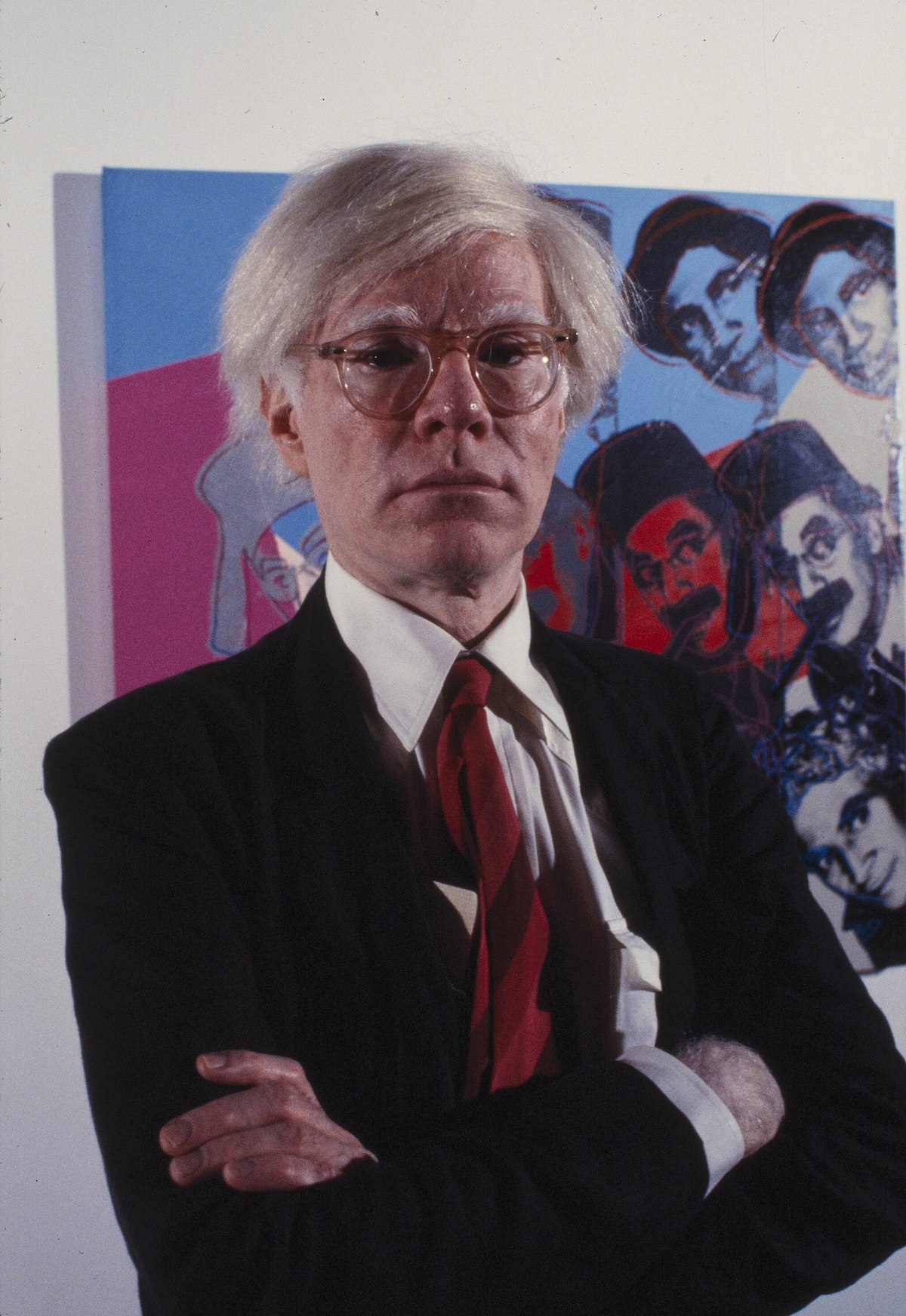
Andy Warhol, born Andrew Warhola on August 6, 1928, in Pittsburgh, Pennsylvania, is one of the most influential figures in the history of modern art. Warhol’s life and work left an indelible mark on the world, transforming the way we think about art, culture, and even fame itself. From his humble beginnings as the son of Slovak immigrants to his rise as the leading figure of the Pop Art movement, Warhol’s journey is a testament to his genius and his ability to see art where others saw only the mundane.
Early Life and Education
Warhol was born into a working-class family in Pittsburgh, the son of Andrej and Julia Warhola, who had emigrated from what is now Slovakia. His early life was marked by struggles, including a bout of rheumatic fever that left him bedridden for months. This period of illness became a turning point in Warhol’s life, as it was during this time that he developed a deep interest in drawing, storytelling, and the world of Hollywood celebrities.
Warhol attended the Carnegie Institute of Technology (now Carnegie Mellon University) in Pittsburgh, where he studied commercial art. His education laid the groundwork for his later work in advertising and design, skills that he would later master and redefine in the world of fine art. After graduating in 1949, Warhol moved to New York City, a place that would become central to his identity as an artist.
Rise to Fame: The Early Years in New York
Warhol’s early career in New York was as a commercial artist, and he quickly became one of the most sought-after illustrators in the city. His work appeared in major magazines such as Vogue, Harper’s Bazaar, and Glamour. His ability to blend art and commerce with a distinct, recognizable style set him apart from his contemporaries. Warhol’s early drawings, especially his whimsical shoe illustrations, showcased his talent and garnered significant attention.
The 1950s also saw Warhol’s first solo exhibitions, where he began to experiment with themes and techniques that would later define his career. His work was characterized by a fascination with the banal and the everyday, but it was not until the 1960s that Warhol would fully develop the style that made him a household name.
The Birth of Pop Art
The 1960s marked a significant turning point in Warhol’s career, as he transitioned from commercial art to fine art and became a leading figure in the Pop Art movement. Pop Art was characterized by its use of popular culture and consumer goods as subjects, a direct commentary on the growing consumerism of post-war America.
Warhol’s early Pop Art works featured iconic American products such as Campbell’s Soup Cans, Coca-Cola bottles, and dollar bills. These works challenged the traditional notions of art, blurring the lines between high and low culture, and forcing the art world to reconsider what could be considered art. Warhol’s use of mass production techniques, such as silk screening, further emphasized the idea of art as a product, much like the consumer goods he depicted.
One of Warhol’s most famous works from this period is his series of Marilyn Monroe portraits. After the actress’s death in 1962, Warhol created numerous prints of Monroe’s face, using a publicity still from her film Niagara. The repetitive imagery and the use of bright, unnatural colors created a haunting effect, highlighting both Monroe’s status as a cultural icon and the ephemeral nature of fame.
The Factory: A Hub of Creativity and Controversy
In 1962, Warhol established his studio, known as “The Factory,” in New York. The Factory was more than just a place where Warhol created art; it was a cultural epicenter, a gathering place for artists, musicians, writers, and celebrities. The Factory became synonymous with Warhol’s brand of art and lifestyle, a symbol of the glamorous, chaotic, and often controversial world that Warhol inhabited.
The Factory was also where Warhol began his foray into filmmaking. His films, much like his visual art, challenged conventional narratives and aesthetics. Films such as Sleep (1963), which simply shows a man sleeping for over five hours, and Empire (1964), an eight-hour film of the Empire State Building, pushed the boundaries of cinema and art.
Warhol’s involvement with the Velvet Underground, a rock band managed by Warhol, further cemented his influence on the 1960s counterculture. The band’s first album, The Velvet Underground & Nico (1967), featured a cover designed by Warhol, depicting a banana that could be peeled to reveal a flesh-colored fruit underneath. This album cover became one of the most iconic images of the era.
The Shooting and Its Aftermath
In 1968, Warhol’s life took a dramatic turn when he was shot by Valerie Solanas, a radical feminist and founder of the SCUM (Society for Cutting Up Men) manifesto. Solanas had appeared in one of Warhol’s films and had written a play that she wanted Warhol to produce. After feeling slighted by Warhol, she shot him at The Factory, nearly killing him.
Warhol survived the attack but was left physically and emotionally scarred. The shooting had a profound impact on him, leading to a more withdrawn and guarded lifestyle. Despite this, Warhol continued to create art and expanded his influence in the 1970s and 1980s, but his work took on a more introspective and less experimental tone.
Warhol’s Influence in the 1970s and 1980s
The 1970s saw Warhol diversifying his artistic output. He began producing commissioned portraits, a move that some critics saw as a shift towards commercialism. However, Warhol’s portraits of celebrities, politicians, and socialites became highly sought after, and his work during this period reflects his continued fascination with fame and the cult of celebrity.
In 1969, Warhol founded Interview magazine, a publication that focused on celebrity culture and became known for its candid interviews and avant-garde photography. The magazine was another extension of Warhol’s brand, blending art, fashion, and celebrity in a way that had never been done before.
The 1980s brought a resurgence of interest in Warhol’s work, particularly his collaborations with younger artists like Jean-Michel Basquiat and Francesco Clemente. These collaborations allowed Warhol to remain relevant in an art world that was rapidly changing. His later works, including his Reversals series and The Last Supper paintings, revisited earlier themes but with a new depth and complexity.
Legacy and Death
Andy Warhol passed away on February 22, 1987, following complications from gallbladder surgery. His death marked the end of an era, but his legacy has only grown in the years since. Warhol’s influence can be seen in virtually every corner of the art world, from contemporary painting to graphic design, and even in the way we consume media and think about celebrity culture.
The establishment of the Andy Warhol Foundation for the Visual Arts in 1987 ensured that Warhol’s impact would continue long after his death. The foundation supports the creation, presentation, and documentation of contemporary visual arts, furthering Warhol’s mission to democratize art and make it accessible to all.
In the decades since his death, Warhol has been the subject of numerous retrospectives, books, and films. His works have sold for record-breaking sums at auction, and his influence on modern art is undeniable. Warhol’s ability to anticipate and reflect the changes in American culture made him a visionary, and his work continues to inspire artists and thinkers around the world.
Conclusion: The Enduring Relevance of Andy Warhol
Andy Warhol was more than just an artist; he was a cultural phenomenon. His work transcended the traditional boundaries of art, influencing fashion, music, film, and even the way we think about fame and celebrity. Warhol’s genius lay in his ability to see the extraordinary in the ordinary, to elevate the mundane to the level of high art.
Warhol’s life was a reflection of the 20th century itself, marked by rapid change, the rise of consumer culture, and the blurring of the lines between art and commerce. His legacy is one of innovation, creativity, and an unrelenting drive to push the boundaries of what art could be.
As we look back on Warhol’s life and work, it is clear that his influence is as strong today as it was during his lifetime. From the galleries of New York to the auction houses of London, Warhol’s work continues to captivate, challenge, and inspire. His vision of art as a mirror of society, reflecting both its beauty and its flaws, remains as relevant now as it ever was.
In a world where the lines between reality and image, high art and popular culture, continue to blur, Warhol’s work offers a roadmap for understanding the complexities of modern life. His legacy is a testament to the power of art to shape and reflect the world around us, and his influence will undoubtedly continue to be felt for generations to come.


