
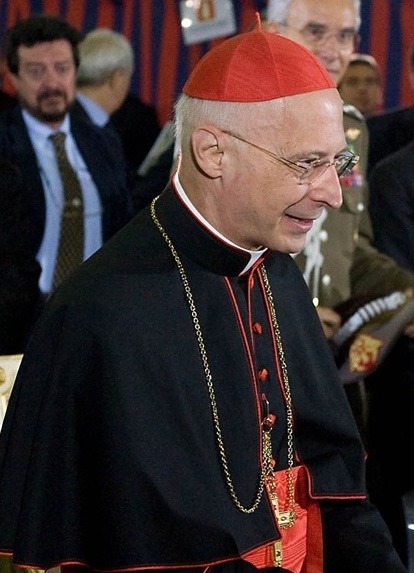
Angelo Bagnasco, a prominent figure in the Catholic Church, has held significant positions such as Cardinal, Archbishop of Genoa, and President of the Italian Episcopal Conference (CEI). Born on January 14, 1943, in Pontevico, Brescia, Bagnasco’s life is a testament to his deep commitment to his faith, his intellectual rigor, and his pastoral dedication. This article delves into the life, achievements, and significant contributions of Angelo Bagnasco, offering a detailed and insightful look at his journey from a young seminarian to a leading figure in the global Catholic community.
Early Life and Religious Calling
Angelo Bagnasco was born in Pontevico, a small town in the province of Brescia. His family, originally from Genoa, was temporarily relocated to Pontevico due to the disruptions caused by World War II. Shortly after his birth, the family returned to Genoa, where Bagnasco grew up. His father, Alfredo, worked in a confectionery factory, while his mother, Rosa, was a dedicated homemaker. Bagnasco’s early years were deeply influenced by his family’s devout Catholic faith and the rich religious traditions of Genoa.
Bagnasco’s passion for religious life became evident at a young age. He attended the Archiepiscopal Seminary of Genoa, where he completed his secondary education, focusing on classical studies. On June 29, 1966, he was ordained a priest by Cardinal Giuseppe Siri. Bagnasco’s early years in the priesthood were marked by his dedication to theological studies and pastoral work.
Theological Studies and Early Pastoral Work
Under the guidance of Cardinal Giuseppe Siri, Bagnasco pursued his theological education with a particular focus on Thomism, the theological and philosophical system developed by St. Thomas Aquinas. This rigorous intellectual foundation shaped Bagnasco’s approach to theology and pastoral care.
From 1966 to 1985, Bagnasco served as the parochial vicar at the parish of San Pietro and Santa Teresa del Bambino Gesù in Genoa. His work in this affluent area of Genoa, known as Albaro, allowed him to engage deeply with both the young and the broader community. He became the ecclesiastical assistant of the Agesci Ge 10 Scout Group, fostering a meaningful relationship with the youth from diverse backgrounds, including the working class and the bourgeoisie.
Academic Pursuits and Intellectual Contributions
Driven by a passion for intellectual growth, Bagnasco enrolled at the University of Genoa in the 1970s, where he studied philosophy under the renowned philosopher Alberto Caracciolo. This period of study exposed him to various philosophical perspectives, including Marxist and secular ideas, which he critically engaged with through the lens of Thomistic theology. In 1979, he graduated with a degree in philosophy, earning high honors.
In 1980, Bagnasco began teaching metaphysics and contemporary atheism at the Theological Faculty of Northern Italy’s Genoa section. His dual focus on theological and secular philosophies provided a rich and nuanced perspective that informed his teaching and scholarly work.
Rise to Prominence in the Church
Bagnasco’s intellectual and pastoral achievements led to a series of important ecclesiastical appointments. In 1985, he was named director of the diocesan catechetical office and regional delegate for school pastoral care. A year later, he became the president of the Higher Institute of Religious Sciences in Genoa and, in 1990, he was appointed director of the office of education, responsible for the training of religion teachers, a position he held until 1996.
In 1997, Bagnasco was appointed episcopal vicar and spiritual director of the Archiepiscopal Seminary of Genoa. These roles underscored his growing influence and leadership within the Church.
Appointment as Bishop and Archbishop
In 1998, Pope John Paul II appointed Bagnasco as Bishop of Pesaro. He was consecrated on February 7, 1998, by Cardinal Dionigi Tettamanzi. Just three years later, in 2000, Bagnasco became the first Archbishop of the newly elevated Archdiocese of Pesaro.
During the early 2000s, as Italy participated in military conflicts in the Gulf and Afghanistan, Bagnasco was appointed Military Ordinary of Italy in June 2003, a role equivalent to that of a bishop for the religious services of the Italian armed forces. This position highlighted his capacity to provide spiritual leadership in diverse and challenging contexts.
Leadership in Genoa and the CEI
On August 29, 2006, Pope Benedict XVI appointed Bagnasco as Archbishop of Genoa, a significant and historic archdiocese. His installation took place on September 24, 2006, in the Cathedral of San Lorenzo. Bagnasco’s leadership in Genoa was marked by his pastoral sensitivity and intellectual depth.
In March 2007, Bagnasco was elected President of the Italian Episcopal Conference (CEI), succeeding Cardinal Camillo Ruini. This role positioned him at the forefront of the Italian Church, where he addressed various social, political, and ethical issues, advocating for the Church’s teachings and moral perspectives.
On November 24, 2007, Pope Benedict XVI elevated Bagnasco to the College of Cardinals, assigning him the titular church of Gran Madre di Dio. As a cardinal, Bagnasco participated in the 2013 conclave that elected Pope Francis.
Contributions to the Global Church
As President of the CEI and a cardinal, Bagnasco has been a vocal advocate on numerous issues, including family values, social justice, and the role of religion in public life. His theological and philosophical expertise has informed his approach to contemporary challenges, making him a respected voice within the global Catholic community.
Bagnasco’s tenure as President of the CEI saw him navigate complex social and political landscapes in Italy, always striving to uphold the Church’s teachings while engaging constructively with the broader society. His commitment to education, youth engagement, and intellectual rigor has left a lasting impact on the Italian Church.
Later Years and Legacy
In 2020, Bagnasco’s influence extended beyond Italy when he was elected President of the Council of European Bishops’ Conferences (CCEE), further highlighting his significance within the broader European context. His leadership in this role focuses on fostering unity and collaboration among European bishops, addressing common challenges, and promoting the Catholic faith across the continent.
As Bagnasco approaches his later years, his legacy is one of profound intellectual and spiritual contributions to the Church. His work has bridged traditional theological perspectives with contemporary issues, offering a model of thoughtful and engaged ecclesiastical leadership.
Conclusion
Angelo Bagnasco’s journey from a young seminarian in Genoa to a cardinal and influential leader in the global Catholic Church is a testament to his dedication, intellectual rigor, and deep faith. His leadership has shaped the Italian Church’s response to contemporary challenges and has fostered a greater understanding of the interplay between faith and reason.
Bagnasco’s life and work continue to inspire clergy and laity alike, demonstrating the enduring relevance of thoughtful, compassionate, and intellectually engaged religious leadership. As he continues to serve the Church in various capacities, his contributions remain a guiding light for those seeking to navigate the complexities of modern faith.


