
Introduction
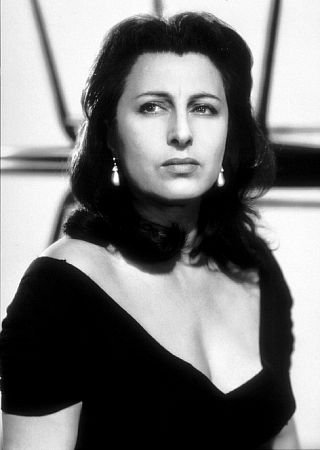
Anna Magnani, born on March 7, 1908, in Rome, Italy, remains one of the most iconic figures in Italian cinema and theater. Known for her powerful performances and strong presence, Magnani’s career spanned over four decades, marking her as a key figure in both the neorealist movement and the broader spectrum of global cinema. This article delves into Magnani’s age, career highlights, and personal life, offering an in-depth exploration of her enduring legacy.
Early Life and Education
Anna Magnani was born in Rome, though some sources erroneously cite Alexandria, Egypt. Raised in poverty by her maternal grandmother, Magnani’s early life was fraught with hardship, yet it was this very adversity that shaped her future career. From a young age, she demonstrated a keen interest in the performing arts, initially performing in local cabarets and nightclubs.
Her formal education in the arts began at the Accademia d’Arte Drammatica, where she honed her craft. Her early experiences on stage and in various theatrical productions laid the foundation for her later success in cinema.
Theatrical Beginnings
Magnani’s theatrical career took off between 1929 and 1932 with Dario Niccodemi’s theater company. She transitioned to the revue scene in 1934, working alongside prominent figures like Vittorio De Sica and Totò. Her talent quickly made her a sought-after actress in Italian light theater, showcasing her versatility and dynamic range.
Breakthrough in Cinema
Anna Magnani’s cinematic breakthrough came with her role in Vittorio De Sica’s “Teresa Venerdì” (1941), where she played a quirky chanteuse. Her true breakthrough, however, was in Roberto Rossellini’s 1945 film “Roma città aperta” (“Rome, Open City”), a cornerstone of Italian neorealism. In this film, Magnani portrayed Pina, a working-class woman whose tragic death embodies the struggle and resilience of the Italian people during World War II.
Magnani’s portrayal of Pina was lauded for its emotional depth and raw authenticity, earning her the first of five prestigious Nastro d’Argento awards. This role cemented her status as a leading figure in neorealism and showcased her extraordinary ability to convey profound human emotions.
Neorealism and Political Themes
Magnani’s career flourished in the neorealist era, where she became the archetype of the strong, defiant woman of the working class. In Luigi Zampa’s “L’onorevole Angelina” (1947), she portrayed a robust woman who unexpectedly enters politics, embodying the spirit and struggles of ordinary people. This role further established her as a symbol of authenticity and social realism in cinema.
Her collaboration with Rossellini continued with “L’amore” (1948), where she performed a poignant soliloquy in “La voce umana,” showcasing her remarkable talent for dramatic monologue. These performances were not only a testament to her acting prowess but also reflected the turbulent socio-political landscape of post-war Italy.
Notable Roles and Awards
In 1951, Magnani starred in Luchino Visconti’s “Bellissima,” portraying a mother whose aspirations for her daughter’s acting career lead to personal and familial turmoil. Her performance in this film was celebrated for its depth and complexity, earning her another Nastro d’Argento award.
Magnani’s international acclaim peaked in 1955 when she won the Academy Award for Best Actress for her role in “The Rose Tattoo,” directed by Daniel Mann. Based on Tennessee Williams’s play, the film highlighted her ability to portray profound emotional experiences with unparalleled intensity.
Despite the 1960s offering fewer prominent roles in cinema, Magnani continued to leave her mark through theater. Her performances in “La lupa” and “Medea” demonstrated her enduring talent and solidified her reputation on the European stage.
Later Years and Television
The 1970s brought a resurgence of interest in Magnani’s work through television. Between 1971 and 1973, she starred in several made-for-TV films directed by Alfredo Riannetti, including “La sciantosa,” “1943: un incontro,” “L’automobile,” and “…correva l’anno di grazia 1870.” These performances reintroduced her to audiences and showcased her versatility across different media.
Her final cinematic appearance was in Federico Fellini’s “Roma” (1972), where she played herself, reflecting her iconic status in Italian cinema.
Personal Life and Legacy
Anna Magnani’s personal life was marked by both triumph and tragedy. She had a son, Luca, with actor Massimo Serato, who was afflicted with polio. Magnani dedicated much of her life to caring for her son, reflecting her deep personal commitment and resilience.
Magnani’s death on September 26, 1973, from cancer marked the end of an era in Italian cinema. Her legacy endures through her unforgettable performances and the profound impact she had on film and theater. Her ability to embody complex, often marginalized characters with authenticity and depth remains a benchmark for actors worldwide.
Conclusion
Anna Magnani’s career is a testament to her exceptional talent and enduring influence on the arts. From her early theatrical successes to her groundbreaking roles in neorealism and international acclaim, Magnani’s contributions to cinema and theater have left an indelible mark. Her performances continue to inspire new generations, and her legacy as a pioneering actress and cultural icon remains a significant part of film history.


