
Introduction: The Iconic Editor-in-Chief
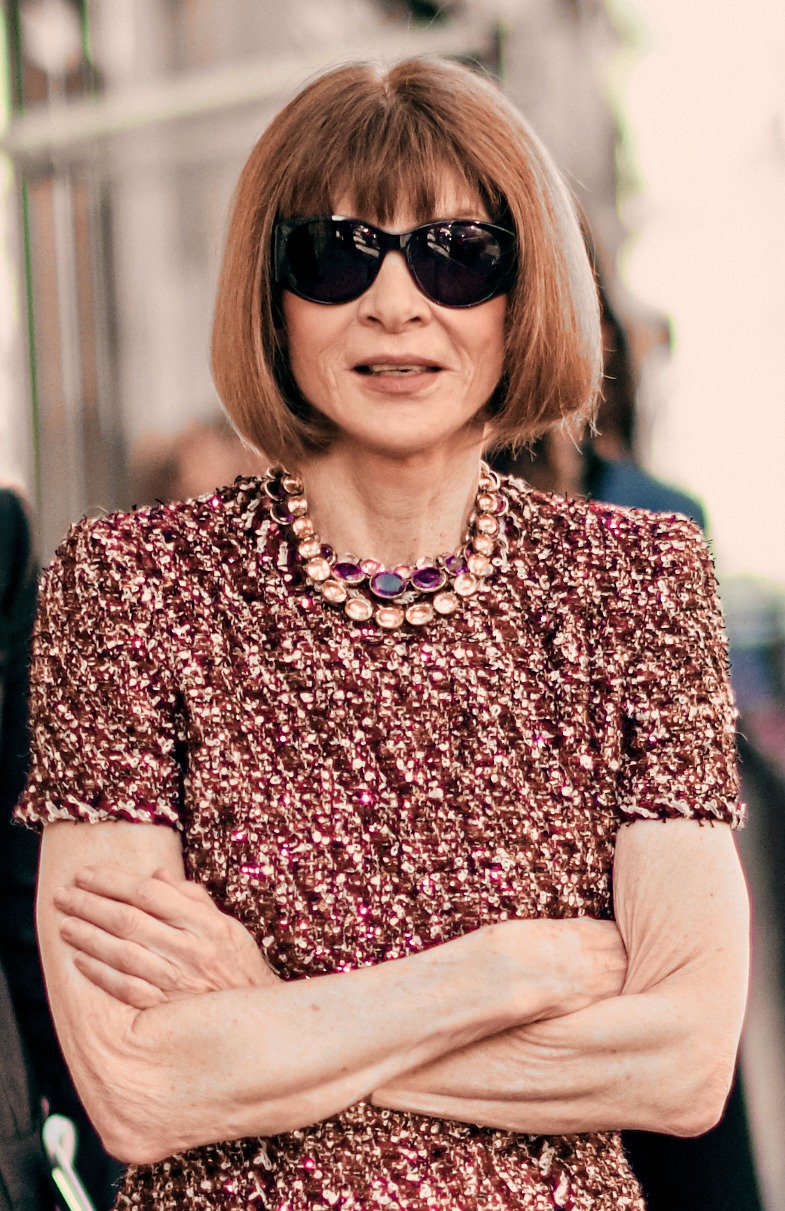
Anna Wintour, born on November 3, 1949, in London, England, is a name synonymous with the fashion industry. As the longtime Editor-in-Chief of Vogue magazine and the Artistic Director for Condé Nast, Wintour has wielded immense influence over the global fashion landscape for decades. Known for her signature bob haircut and dark sunglasses, Wintour is both revered and feared in the fashion world. Her exacting standards, keen eye for trends, and unflinching dedication to excellence have made her one of the most powerful figures in media and fashion.
Early Life: A Formidable Beginning
Anna Wintour was born into a family steeped in journalism and public service. Her father, Charles Wintour, was the editor of the Evening Standard, a prominent London newspaper, while her mother, Eleanor, was the daughter of a Harvard law professor. Growing up in a household where intellectual rigor and professional ambition were the norms, Anna was exposed to the world of media from a young age.
Wintour attended the North London Collegiate School, where her rebellious nature began to show. She often clashed with the school’s strict dress code, preferring to follow her own fashion instincts. This early defiance against conformity would later become a hallmark of her career.
At the age of 16, Wintour left school and began working at Harrods, the iconic London department store. Concurrently, she took fashion classes but quickly abandoned them, famously stating, “You either know fashion or you don’t.” This statement reflects Wintour’s belief in intuition over formal education, a philosophy that has guided her throughout her career.
Breaking into Fashion Journalism
Wintour’s entry into the world of fashion journalism was facilitated by her relationships and connections. In 1970, she secured a position at Harper’s Bazaar UK. It was here that she began to make a name for herself, discovering future supermodel Annabel Hodin and collaborating with renowned photographers like Helmut Newton. However, disagreements with her editor led to her departure from the magazine and a subsequent move to New York City.
In New York, Wintour’s career trajectory began to climb rapidly. She started at Harper’s Bazaar in 1975 but was fired after just nine months due to her radical ideas for photo shoots, which were deemed too avant-garde by her superiors. This setback did not deter Wintour. She moved on to Viva, a women’s magazine where she began to develop her reputation as a demanding and exacting boss. This was the beginning of the “Nuclear Wintour” persona, a nickname that reflects both her intensity and her formidable presence in the workplace.
Rising Through the Ranks in the 1980s
The 1980s were a pivotal decade for Wintour. After a brief hiatus, during which she split her time between Paris and New York, Wintour returned to the fashion scene, working for Savvy, a magazine targeted at career women. Her success there led to a position at New York magazine, where she began to shape her editorial vision more clearly.
In 1983, Wintour joined Vogue as the magazine’s first Creative Director. This role gave her significant influence, though it was not without its challenges. Wintour demanded creative control over every aspect of the magazine, from content to visuals, which often put her at odds with her colleagues. Her marriage to child psychiatrist David Shaffer in 1984, during this period, marked a rare intersection between her personal and professional life. The couple had two children, Charles and Bee, before their eventual divorce in 1999.
In 1985, Wintour was appointed Editor-in-Chief of British Vogue. Here, she began implementing sweeping changes, replacing much of the staff and altering the magazine’s editorial direction to align more closely with the American edition. Her aggressive approach earned her the moniker “Nuclear Wintour” among her staff. Her transformation of British Vogue laid the groundwork for her next, more significant role.
Taking the Helm at Vogue: A New Era
In 1988, Anna Wintour took over as Editor-in-Chief of Vogue in the United States, a position that would define her career and solidify her as a global icon in the fashion industry. Vogue at the time was facing stiff competition from the newly launched Elle magazine, and its relevance was waning. Wintour’s mission was clear: to rejuvenate the publication and reclaim its position as the leading fashion magazine.
Wintour’s impact was immediate and profound. She revolutionized the magazine’s aesthetic by focusing more on the clothes than the models wearing them. Her first cover, featuring a 19-year-old Michaela Bercu in a Christian Lacroix jacket and jeans, broke from the traditional glamour of Vogue covers and signaled a new, more accessible direction for the magazine. This cover, shot by Peter Lindbergh, is often cited as a turning point in fashion photography, emphasizing a high-low mix that has become a staple in fashion media.
Wintour also expanded the magazine’s coverage beyond fashion to include culture, politics, and celebrity, thereby broadening its appeal. Her knack for identifying and setting trends ensured that Vogue remained at the cutting edge of fashion and culture. Under her leadership, Vogue not only survived the challenges of the late 1980s and 1990s but thrived, becoming more influential than ever.
The Devil Wears Prada: A Cultural Phenomenon
In 2003, former assistant Lauren Weisberger published the novel The Devil Wears Prada, a thinly veiled account of her time working under Anna Wintour at Vogue. The book painted a portrait of Wintour as a tyrannical boss, obsessed with perfection and dismissive of those she deemed unworthy of her time. The novel was a bestseller, but it was the 2006 film adaptation starring Meryl Streep as the Wintour-inspired character Miranda Priestly that catapulted the story into the cultural zeitgeist.
Streep’s portrayal of Priestly was both chilling and captivating, cementing the image of Wintour as the ultimate fashion power broker. While Wintour has always maintained a distance from the comparisons, she reportedly enjoyed the film and even attended its premiere. The movie further elevated Wintour’s profile, turning her into a pop culture icon and bringing wider attention to the fashion industry.
Continued Influence and Legacy
Anna Wintour’s influence extends far beyond the pages of Vogue. As Artistic Director for Condé Nast since 2013, she has overseen the editorial direction of multiple publications under the Condé Nast umbrella, shaping the future of fashion journalism on a global scale. Her role in organizing the annual Met Gala, one of the most significant events in the fashion calendar, further underscores her status as a gatekeeper of fashion.
Wintour is known for her ability to identify and nurture new talent. Designers like John Galliano, Marc Jacobs, and Alexander McQueen owe part of their success to her early support. Her endorsement can make or break a designer’s career, a testament to the power she wields within the industry.
Despite her formidable reputation, Wintour has also been involved in philanthropic efforts, particularly through her work with the Met Gala, which raises millions for the Metropolitan Museum of Art’s Costume Institute each year. Her influence extends to the political arena as well; she has been an active fundraiser for the Democratic Party and has used her platform to advocate for various social causes.
Personal Life: Behind the Sunglasses
While Anna Wintour is best known for her public persona, her private life has also garnered attention. After her divorce from David Shaffer in 1999, Wintour entered into a long-term relationship with Shelby Bryan, a Texas-born telecommunications executive. The couple married in 2004 but separated in 2020 after 16 years of marriage.
Wintour’s personal life has often been characterized by the same discipline and focus that define her professional life. She is known to wake up before dawn each day, exercise rigorously, and maintain a strict routine. Her commitment to her work is legendary, and she is rarely seen without her trademark sunglasses, which she has said help her maintain a sense of privacy.
Wintour’s family is also accomplished in their own right. Her brother, Patrick Wintour, is a prominent political journalist for The Guardian, while her sister, Nora Wintour, works in social politics in South America. Wintour’s children, Charles and Bee, have also pursued careers in media and journalism, following in their mother’s footsteps.
The Enduring Appeal of Anna Wintour
Anna Wintour’s career is a testament to her vision, work ethic, and unrelenting pursuit of excellence. Her impact on the fashion industry is unparalleled, and her influence shows no signs of waning. As the fashion world continues to evolve, Wintour remains at the helm, guiding trends, championing new talent, and shaping the industry’s future.
Her legacy is one of transformation and innovation. Wintour took Vogue, a magazine that was struggling to maintain its relevance, and turned it into the most powerful publication in fashion. Her ability to balance the commercial aspects of the magazine with high fashion’s artistic integrity has ensured that Vogue remains at the cutting edge of both.
Anna Wintour’s story is one of determination, resilience, and vision. She has not only survived but thrived in an industry known for its fickleness, becoming a symbol of power and success in the process. As Vogue continues to adapt to the digital age, Wintour’s influence will undoubtedly continue to shape the fashion world for years to come.


