
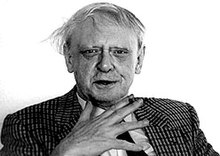
Anthony Burgess, born John Anthony Burgess Wilson on February 25, 1917, in Manchester, England, is a towering figure in 20th-century literature. Best known for his dystopian novel “A Clockwork Orange,” Burgess was a prolific writer, composer, and critic whose works spanned various genres and forms. His legacy extends far beyond his most famous book, encompassing a rich body of work that reflects his deep engagement with language, music, and the human condition. This article delves into the life, career, and enduring impact of Anthony Burgess, exploring the nuances and historical context of his work.
Early Life and Education
Anthony Burgess was born into a modest Catholic family in Manchester. His early life was marked by personal tragedies, including the death of his mother and sister during the 1918 influenza pandemic when he was just a year old. Raised by his father and an aunt, Burgess experienced a childhood that was both nurturing and challenging. Despite these early hardships, he showed a remarkable aptitude for learning and a particular interest in music and literature.
Burgess attended Xaverian College, a Catholic grammar school, where he excelled academically. His love for music was evident from a young age, and he initially pursued a career as a composer. However, his academic strengths led him to the University of Manchester, where he studied English Literature and Linguistics. He graduated with a degree in Filology and Literature, laying the groundwork for his future career as a writer and critic.
The Early Career and Wartime Experience
During World War II, Burgess served in the British Army, initially as a soldier and later as a musical director for the troops. His military service took him across Europe, where he organized and conducted musical performances for the soldiers, an experience that deepened his appreciation for music and its role in human culture.
After the war, Burgess took up a position as a lecturer in English literature and phonetics, first in the UK and later in the British colonies of Malaya and Borneo. It was during his time in Southeast Asia that Burgess began writing seriously. His early novels, including “Time for a Tiger,” “The Enemy in the Blanket,” and “Beds in the East,” collectively known as “The Malayan Trilogy,” reflect his experiences in the region and his observations on the complexities of colonial life. These works, though not widely known outside academic circles, showcase Burgess’s early talent for blending humor, satire, and social commentary.
The Diagnosis That Changed Everything
In 1959, while still living in Southeast Asia, Burgess was diagnosed with a brain tumor and was given a year to live. Faced with this grim prognosis, he decided to devote his remaining time to writing as much as possible. This period of intense creativity resulted in a remarkable output, including five novels, several plays, and numerous musical compositions. Fortunately, the diagnosis turned out to be incorrect, but the experience left Burgess with a heightened sense of urgency and a commitment to his work that would define his career.
The Creation of “A Clockwork Orange”
Perhaps the most famous of Burgess’s works, “A Clockwork Orange” was published in 1962 and quickly became a cultural phenomenon. The novel, set in a dystopian future where teenage delinquency and state control collide, explores themes of free will, violence, and the ethical implications of behavioral conditioning. The protagonist, Alex, is a young delinquent whose love for classical music contrasts sharply with his penchant for violence.
The novel’s most distinctive feature is its use of “Nadsat,” a fictional language invented by Burgess, which is a blend of English, Russian, and slang. This linguistic innovation not only adds depth to the narrative but also serves as a commentary on the malleability of language and identity. “A Clockwork Orange” is a work of profound literary experimentation, and its exploration of moral and philosophical questions has made it a subject of intense scholarly debate.
In 1971, the novel was adapted into a film by Stanley Kubrick, which brought even greater international fame to Burgess. The film’s stark portrayal of violence and its controversial themes sparked widespread debate and cemented Burgess’s reputation as a provocative and innovative writer. Despite the success of the film, Burgess often expressed frustration that his broader body of work was overshadowed by “A Clockwork Orange,” which he considered just one part of his extensive literary oeuvre.
Beyond “A Clockwork Orange”: Exploring Burgess’s Other Works
While “A Clockwork Orange” remains Burgess’s most famous work, his literary career was incredibly diverse and prolific. He authored more than 30 novels, including the “Enderby” series, which is a semi-autobiographical collection of novels about a poet named Enderby. The “Enderby” novels, including “Inside Mr. Enderby” (1963), “Enderby Outside” (1968), and “Enderby’s End” (1974), are celebrated for their sharp wit, linguistic creativity, and exploration of the creative process.
Burgess’s interest in linguistics is also evident in his novel “Nothing Like the Sun” (1964), a fictionalized account of the life of William Shakespeare, which delves into the Bard’s use of language and the personal experiences that may have influenced his work. Burgess’s ability to blend historical fiction with linguistic analysis is a testament to his intellectual versatility.
Another significant work is “Earthly Powers” (1980), which many consider Burgess’s magnum opus. The novel spans the 20th century and explores the lives of two men—a successful but disillusioned writer and a Catholic priest who rises to become Pope. The novel addresses complex themes such as power, religion, sexuality, and morality, showcasing Burgess’s ability to weave together intricate narratives with philosophical depth.
In addition to his novels, Burgess was a prolific composer and critic. He wrote several symphonies, chamber pieces, and choral works, demonstrating his lifelong passion for music. His critical writings include essays on James Joyce, Shakespeare, and the contemporary novel, further solidifying his reputation as a polymath in the literary world.
Life Abroad and Later Years
In 1968, disillusioned with life in Britain, Burgess left the country and spent the rest of his life living in various countries, including Malta, Italy, France, and the United States. His time abroad influenced many of his later works, which often reflect a deep engagement with the cultures and histories of the places he lived.
During his time in the United States, Burgess worked as a playwright and professor of English literature at several universities, including New York’s City College. His international experiences enriched his writing, and he continued to produce novels, essays, and musical compositions until his death.
Burgess’s later works include “ABBA ABBA” (1977), a fictional account of the poet John Keats’s imagined interaction with a Roman poet, and “1985” (1978), a novel that serves as both a sequel and a critique of George Orwell’s “1984.” These works reflect Burgess’s ongoing fascination with the intersections of history, literature, and politics.
Anthony Burgess passed away on November 22, 1993, in France, leaving behind a rich legacy that continues to inspire and challenge readers, writers, and scholars around the world.
Legacy and Influence
Anthony Burgess’s influence on literature, music, and culture is profound and enduring. His innovative use of language, particularly in “A Clockwork Orange,” has left a lasting mark on literary and cinematic history. The novel’s exploration of free will and state control remains relevant in contemporary discussions about human rights and the ethics of governance.
Burgess’s broader body of work, including his novels, essays, and musical compositions, reflects a mind that was deeply engaged with the cultural and intellectual currents of his time. His ability to move seamlessly between different genres and forms—novels, criticism, music—demonstrates his versatility and his commitment to exploring the complexities of the human experience.
In recent years, there has been a resurgence of interest in Burgess’s work, with new editions of his novels and critical studies that reassess his contributions to literature and culture. His life and work continue to be the subject of scholarly research, and his influence can be seen in the work of contemporary writers who share his passion for language and his willingness to tackle difficult and controversial subjects.
Conclusion: The Enduring Legacy of Anthony Burgess
Anthony Burgess was more than just the author of “A Clockwork Orange.” He was a writer, composer, critic, and thinker whose work traversed the boundaries of genre and discipline. His exploration of language, music, and the human condition has left an indelible mark on the literary world, and his legacy continues to resonate with readers and scholars alike.
As we reflect on Burgess’s life and work, it is clear that his contributions to literature and culture are far-reaching and multifaceted. His willingness to experiment with language and narrative structure, combined with his deep engagement with philosophical and ethical questions, ensures that his work remains relevant and thought-provoking. Anthony Burgess’s legacy is one of creativity, intellectual rigor, and a relentless pursuit of artistic excellence, making him one of the most important literary figures of the 20th century.


