
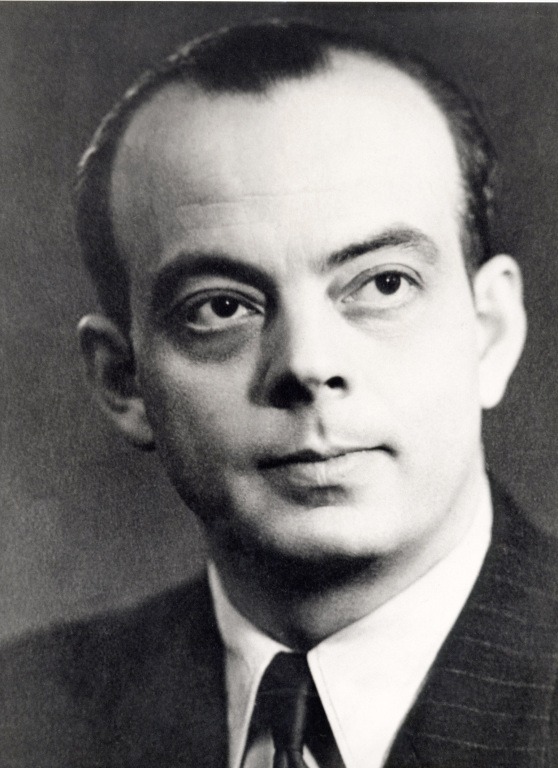
Antoine de Saint-Exupéry is a name that resonates not just in literary circles but also in the annals of aviation history. Born on June 29, 1900, in Lyon, France, into an aristocratic family, Antoine de Saint-Exupéry lived a life that was as extraordinary as the characters he created in his literary works. His life was marked by a passion for adventure, an unquenchable thirst for exploration, and a deep love for humanity, all of which are reflected in his timeless writings.
Early Life and Background
Antoine de Saint-Exupéry was the third of five children born to Jean de Saint-Exupéry, an insurance inspector, and Marie de Fonscolombe, a talented artist. The loss of his father at the tender age of four marked the beginning of a life that would be shaped by both love and loss. Raised by his mother, who moved the family to Le Mans in 1909, Antoine spent his childhood in the large and elegant Saint Maurice de Rémens mansion. The mansion, surrounded by a park of firs and lime trees, became a playground for his imagination. He was known among his friends as the most adventurous, imaginative, and sometimes even domineering, qualities that would later define his life’s work.
The Beginnings of Aviation
The 1920s were a transformative period for Antoine de Saint-Exupéry. In 1921, he began his military service, a pivotal moment in his life. He was sent to Strasbourg, where he trained to become an aviator. This was the beginning of a lifelong passion for flying. On July 9, 1921, he made his first solo flight in a Sopwith F-CTEE, an experience that solidified his love for aviation. By 1922, he had obtained his pilot’s license and returned to Paris. However, the road to becoming a celebrated aviator and writer was not smooth. The years following his return were marked by a series of unfortunate events, including failed jobs as a car salesman and accountant.
The Adventurer and Aviator
Despite the early setbacks, Saint-Exupéry’s determination never wavered. In 1928, he became the director of the remote Cap Juby airfield near Rio de Oro in the Sahara Desert. This period of his life was crucial in shaping his worldview and provided material for his future literary works. His experience in the desert, isolated from the rest of the world, deepened his understanding of human existence and the fragility of life.
In 1929, he moved to South America to work for the Aeropostale, a pioneering airmail company. He was tasked with transporting mail across the treacherous Andes Mountains, a dangerous job that tested his skills and courage. His flights over the Andes were fraught with peril, but they also offered him unparalleled views of the majestic landscape, which inspired his writings.
Literary Achievements and Fame
The 1930s marked the beginning of Saint-Exupéry’s rise to literary fame. His first notable work, “Courrier-Sud” (Southern Mail), was published in 1929. However, it was his 1931 novel “Vol de Nuit” (Night Flight) that established him as a significant literary figure. The novel, based on his experiences as an aviator, was a critical and commercial success. It was later adapted into a film in 1933, directed by Clarence Brown and starring John Barrymore, Clark Gable, Helen Hayes, Myrna Loy, and Lionel Barrymore.
Saint-Exupéry’s literary output was deeply intertwined with his experiences as a pilot. His works often explored themes of loneliness, human connection, and the struggle to find meaning in a vast and indifferent universe. In 1939, he published “Terre des Hommes” (Wind, Sand and Stars), a philosophical reflection on his experiences as a pilot. The book was well-received and won several literary awards, including the Grand Prix du Roman from the French Academy.
The War Years and Final Flights
With the outbreak of World War II, Antoine de Saint-Exupéry’s life took a dramatic turn. Despite being considered unfit for military service due to his age and numerous injuries from previous crashes, he rejoined the French Air Force. His flying missions during the war were fraught with danger, but his dedication to the cause was unwavering. He was awarded the Croix de Guerre for his bravery.
Saint-Exupéry’s final years were marked by a sense of melancholy and a longing for peace. On July 31, 1944, he embarked on what would be his last mission, a reconnaissance flight over the Grenoble-Annecy region. He never returned from that flight and was declared missing in action. His disappearance remains one of the great mysteries of the war, with various theories suggesting that he may have been shot down by enemy fire or crashed due to mechanical failure.
Literary Legacy: The Little Prince
Despite his tragic end, Antoine de Saint-Exupéry’s legacy lives on through his writings, the most famous of which is “Le Petit Prince” (The Little Prince). Published in 1943, this philosophical tale is a timeless exploration of love, loss, and the search for meaning. The book, illustrated by Saint-Exupéry himself, is dedicated to his friend Léon Werth but is meant for the child within every adult. “The Little Prince” has been translated into more than 300 languages and remains one of the most translated and best-selling books in the world.
“The Little Prince” is not just a children’s book; it is a profound meditation on the human condition. The story of the little prince, who leaves his asteroid to explore the universe, is a metaphor for the journey of self-discovery that each of us must undertake. Through his encounters with various characters, the little prince learns about the nature of love, responsibility, and the importance of seeing with the heart rather than just the eyes.
The Man Behind the Legend
Antoine de Saint-Exupéry was more than just a writer and aviator; he was a man of deep convictions, a romantic idealist who believed in the power of the human spirit. His life was filled with contradictions—he was both a dreamer and a man of action, a solitary figure who sought connection with others. His relationships were often tumultuous, marked by intense passion and profound sadness. Yet, through it all, he remained committed to his belief that life was a journey worth taking, no matter how difficult the path.
Saint-Exupéry’s writings reflect his complex personality and his deep philosophical musings. He once said, “One must live to write,” and indeed, his life and work are inextricably linked. His literary works are not mere fiction but are infused with his personal experiences, transformed into romantic chronicles of real events. Perhaps it is this merging of life and art that has made his writings so enduring.
Conclusion: A Lasting Legacy
Antoine de Saint-Exupéry’s life was cut short at the age of 44, but his legacy endures. He is remembered not only as a pioneering aviator and war hero but also as a literary giant whose works continue to inspire readers around the world. His stories remind us of the importance of imagination, the value of human connections, and the necessity of looking beyond the surface to understand the true essence of life.
In the end, Antoine de Saint-Exupéry was a man who lived his life as if it were a novel, filled with adventure, love, loss, and profound reflection. His writings are a testament to the indomitable human spirit and a reminder that, even in the face of great adversity, one can find beauty and meaning in the world. As we remember Antoine de Saint-Exupéry, we are reminded of the words of the little prince: “It is only with the heart that one can see rightly; what is essential is invisible to the eye.”


